Why Sheep Separate From the Flock: Causes, Warning Signs, and Management Solutions.
Don’t let paperwork hold you back. Empower your farm, save time, and grow smarter. Download now!
Sheep are naturally social animals that prefer staying close to the flock for safety, comfort, and feeding. In healthy conditions, sheep move, graze, and rest together as a group. When one sheep suddenly isolates itself or stays away from the flock, it is often a sign that something is wrong.
Farmers should pay close attention to this behavior because separation from the flock commonly indicates illness, injury, stress, weakness, or environmental discomfort. A sheep that isolates itself may be trying to avoid competition, cope with pain, or conserve energy. In some cases, the behavior may appear before obvious physical symptoms develop.
Understanding why sheep separate from the flock helps farmers detect health and management problems early. Quick intervention can prevent disease spread, reduce production losses, and improve animal welfare. This blog explains the common reasons sheep isolate themselves, warning signs to observe, what the behavior means, and practical ways to manage and prevent the problem.
Understanding Flock Behavior in Sheep
Sheep are highly social animals with strong flocking instincts. Staying together protects them from predators and reduces stress. Group behavior also helps sheep locate food, water, and shelter more efficiently.
Because sheep naturally avoid isolation, separation from the flock usually signals discomfort or abnormal conditions. Farmers should consider this behavior an important warning sign requiring immediate attention.
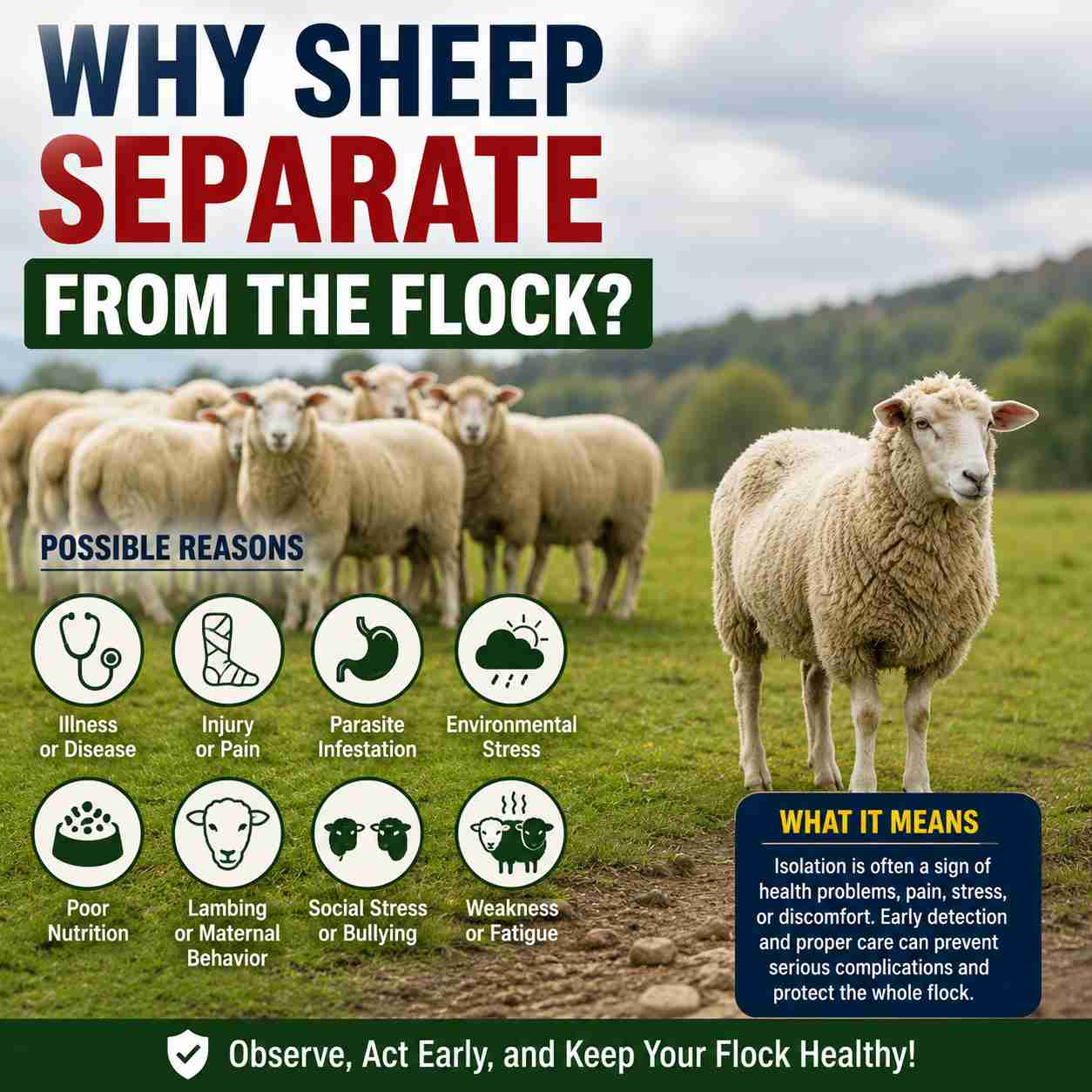
Why Sheep Separate From the Flock
Illness and Disease
Sick sheep often isolate themselves from the flock to conserve energy and avoid movement. Illness reduces appetite, strength, and activity levels, making affected sheep less likely to follow the group.
Diseases such as pneumonia, digestive infections, parasitic infestations, foot rot, and fever commonly cause separation behavior. In many cases, isolation appears before severe symptoms become visible.
Farmers who identify isolated sheep early can begin treatment before the condition worsens.
Injury or Pain
Sheep experiencing pain may avoid moving with the flock. Injuries to the legs, hooves, joints, or body can make walking difficult and uncomfortable.
Lameness is one of the most common reasons sheep remain behind while grazing or traveling. Injured sheep may spend more time lying down or standing alone in quiet areas.
Checking isolated sheep for wounds, swelling, or limping helps identify physical problems quickly.
Weakness and Poor Body Condition
Thin or weak sheep often struggle to keep up with healthy animals. Poor nutrition, disease, parasites, or old age may reduce energy levels and stamina.
Weak sheep sometimes isolate themselves because they cannot compete effectively for feed and water within the group.
Monitoring body condition regularly helps farmers detect vulnerable animals before serious health decline occurs.
Lambing and Maternal Behavior
Pregnant ewes often separate themselves shortly before giving birth. This natural behavior allows the ewe to find a quiet and safe place for lambing.
After delivery, ewes may remain isolated temporarily while bonding with their lambs. This behavior is normal unless accompanied by signs of illness or distress.
Farmers should still monitor isolated pregnant ewes closely to ensure safe delivery and healthy lamb development.
Parasite Infestation
Heavy parasite burdens weaken sheep and reduce nutrient absorption. Internal parasites commonly cause weight loss, weakness, diarrhea, and anemia.
Affected sheep may become tired easily and separate themselves from the flock due to reduced energy levels.
Regular deworming and fecal monitoring help prevent parasite-related isolation behavior.
Heat Stress or Environmental Pressure
Extreme weather conditions can cause sheep to isolate themselves. During hot weather, sheep may seek shade or cooler areas away from the flock to reduce heat stress.
Cold, wet, or windy conditions can also affect flock behavior. Sheep experiencing environmental discomfort may avoid movement and remain separated.
Providing proper shelter and ventilation supports normal flock activity.
Nutritional Deficiencies
Deficiencies in energy, protein, vitamins, or minerals weaken sheep and affect normal behavior. Poor-quality forage or insufficient feeding can reduce activity and social interaction.
Deficient sheep often appear weak, thin, and less active compared to the rest of the flock.
Balanced nutrition supports immune function, growth, and healthy flock behavior.
Social Stress and Bullying
Dominant sheep sometimes prevent weaker animals from accessing feed or resting areas. Social pressure within overcrowded groups may force timid sheep to isolate themselves.
Young, sick, or submissive animals are more likely to separate when facing aggression from stronger flock members.
Providing enough feeding space reduces competition and stress.
Signs That Accompany Isolation Behavior
Reduced appetite
Sheep that isolate themselves often eat less than normal due to illness, pain, or stress. A reduced appetite can quickly lead to weakness and weight loss, making the animal more vulnerable to disease and poor recovery.
Weight Loss
Noticeable weight loss is a common sign of ongoing health problems such as parasites, poor nutrition, or chronic illness. Sheep that lose body condition may lack the strength to move and graze with the flock.
Lethargy or Weakness
Weak or lethargic sheep usually appear tired, inactive, and less responsive. They may spend more time lying down or standing alone because they lack the energy to follow the flock normally.
Limping or Difficulty Walking
Lameness often causes sheep to separate from the group due to pain or discomfort while moving. Foot rot, injuries, or joint problems can make walking difficult and reduce grazing activity.
Diarrhea
Diarrhea may indicate digestive infections, parasites, or poor-quality feed. Affected sheep often become dehydrated and weak, leading them to isolate themselves from the flock.
Labored Breathing
Sheep with breathing difficulties may struggle to keep up with the flock, especially during movement or grazing. Respiratory infections such as pneumonia commonly cause rapid or difficult breathing.
Pale Gums or Eyelids
Pale gums and eyelids are often signs of anemia caused by heavy parasite infestations or blood loss. Anemic sheep usually appear weak and less active than healthy flock members.
Poor Wool Condition
Dull, rough, or patchy wool may indicate poor nutrition, disease, or parasite problems. Sheep in poor condition often separate themselves because their overall health has declined.
Fever
A fever usually signals infection or illness within the body. Sheep with elevated body temperature may appear weak, isolated, and unwilling to move or feed normally.
Reduced Rumination
Healthy sheep spend time chewing cud regularly. Reduced rumination often indicates digestive discomfort, stress, or illness. Sheep with digestive problems may isolate themselves and show less interest in grazing.
What Separation From the Flock Means
Isolation behavior usually means the sheep is physically stressed, sick, injured, or uncomfortable. Since sheep instinctively stay together for protection, voluntary separation often indicates a serious issue.
In some cases, separation may represent natural maternal behavior during lambing. Persistent isolation outside lambing periods, however, should never be ignored.
Early observation and quick response improve recovery rates and reduce losses within the flock.
Health Risks of Ignoring Isolation Behavior
Delayed Disease Detection
Ignoring isolated sheep may allow diseases to worsen before treatment begins. Some illnesses spread rapidly within flocks if affected animals are not identified early.
Reduced Productivity
Sick or stressed sheep often experience poor growth, lower wool production, reduced fertility, and weight loss.
Higher Mortality Risk
Weak or isolated sheep are more vulnerable to predators, severe illness, dehydration, and environmental stress.
Disease Transmission
Contagious diseases can spread to healthy animals if sick sheep remain within the flock without treatment or isolation.
How to Manage Sheep That Separate From the Flock
Observe the Sheep Closely
Carefully examine isolated sheep for signs of illness, injury, or weakness. Check appetite, breathing, posture, temperature, and movement.
Early assessment helps determine the appropriate response.
Provide Immediate Care
Offer clean water, nutritious feed, and a quiet resting area for weak or sick sheep. Supportive care improves recovery chances.
Treat Health Problems Promptly
Consult a veterinarian when symptoms are severe or unclear. Timely treatment prevents complications and reduces disease spread.
Implement Regular Parasite Control
Routine deworming and fecal testing help reduce parasite-related weakness and isolation behavior.
Improve Nutrition
Provide balanced diets containing adequate energy, protein, vitamins, and minerals. High-quality forage supports immune function and recovery.
Reduce Stress and Overcrowding
Ensure sheep have enough space, shelter, and feeding access. Reducing competition improves flock harmony and animal welfare.
Monitor Pregnant Ewes Carefully
Long-Term Prevention Strategies
Preventing isolation behavior requires consistent flock management practices. Regular health monitoring, proper feeding, clean housing, and stress reduction support healthier sheep.
Accurate record-keeping helps farmers track recurring health issues and identify patterns within the flock. Livestock management tools can simplify monitoring of treatments, nutrition, and breeding records.
Daily observation remains one of the most effective ways to detect problems early and maintain strong flock performance.
Conclusion
When sheep separate from the flock, it is often a sign that they are experiencing illness, pain, weakness, stress, or environmental discomfort. Since sheep naturally prefer staying together for safety and comfort, isolation behavior should always be taken seriously by farmers and livestock keepers. Early observation can help identify health problems before they become severe and reduce the risk of disease spreading within the flock.
Proper nutrition, regular parasite control, clean housing, and routine health monitoring are essential for preventing many of the conditions that cause sheep to isolate themselves. Farmers should closely examine any sheep showing reduced appetite, weakness, limping, or abnormal behavior to ensure timely treatment and recovery.
Understanding flock behavior allows farmers to respond quickly and manage their sheep more effectively. Consistent care and good management practices support healthier animals, better productivity, improved welfare, and long-term success in sheep farming.
Join Our Community ()
Empower your farm and your life! Simplify tasks, save time, and grow smarter. Download our apps today!
