How to Feed Sheep for Maximum Weight Gain.
A happier, more productive farm is just a click away. Take charge and simplify with our apps today!
Feeding sheep for maximum weight gain requires more than increasing feed quantity. Growth performance depends on balanced nutrition, proper feed timing, pasture quality, breed potential, and overall flock health. When sheep receive the right combination of energy, protein, minerals, and fiber, they convert feed more efficiently and reach market weight faster with stronger body condition. A strategic feeding program also lowers feed waste, improves rumen function, and supports sustainable production.
This guide explains how farmers can design an effective feeding system for weight gain using structured nutritional planning, forage quality improvement, controlled supplementation, and consistent monitoring of body condition. The goal is to help farmers raise healthier, faster-growing sheep while improving profitability and maintaining long-term flock productivity.
Understand Nutritional Requirements for Growth
Maximum weight gain begins with understanding what sheep need at different growth stages. Lambs, growers, finishing sheep, and breeding rams require different levels of protein and energy. Young growing lambs require higher protein for muscle development, while finishing animals benefit from higher energy diets that support fat cover and carcass finish.
Energy is the main driver of weight gain, and it usually comes from grains, quality pastures, and fermented feeds. Protein supports muscle and tissue development, especially in growing lambs and fast-maturing breeds.
A diet that lacks protein results in slow growth, weak muscle structure, and delayed finishing time. When farmers match nutritional needs with growth stage, sheep convert feed efficiently and gain weight at a steady, healthy rate.
Prioritize High-Quality Forage as the Feeding Foundation
Forage forms the core of any sheep feeding program. High-quality pasture or hay supports rumen health, encourages natural grazing behavior, and supplies fiber required for digestion. Sheep achieve better weight gain when forage is leafy, tender, and free from mold or spoilage.
Pastures dominated by legumes such as clover or alfalfa provide higher protein levels and improve growth performance in growing lambs. Good forage management, such as rotational grazing, allows grass to rest and regrow, creating a constant supply of nutritious feed. Overgrazed pastures reduce energy intake and slow growth, while well-managed forage systems provide consistent weight gain across seasons.
Use Energy-Dense Feeds to Support Faster Growth
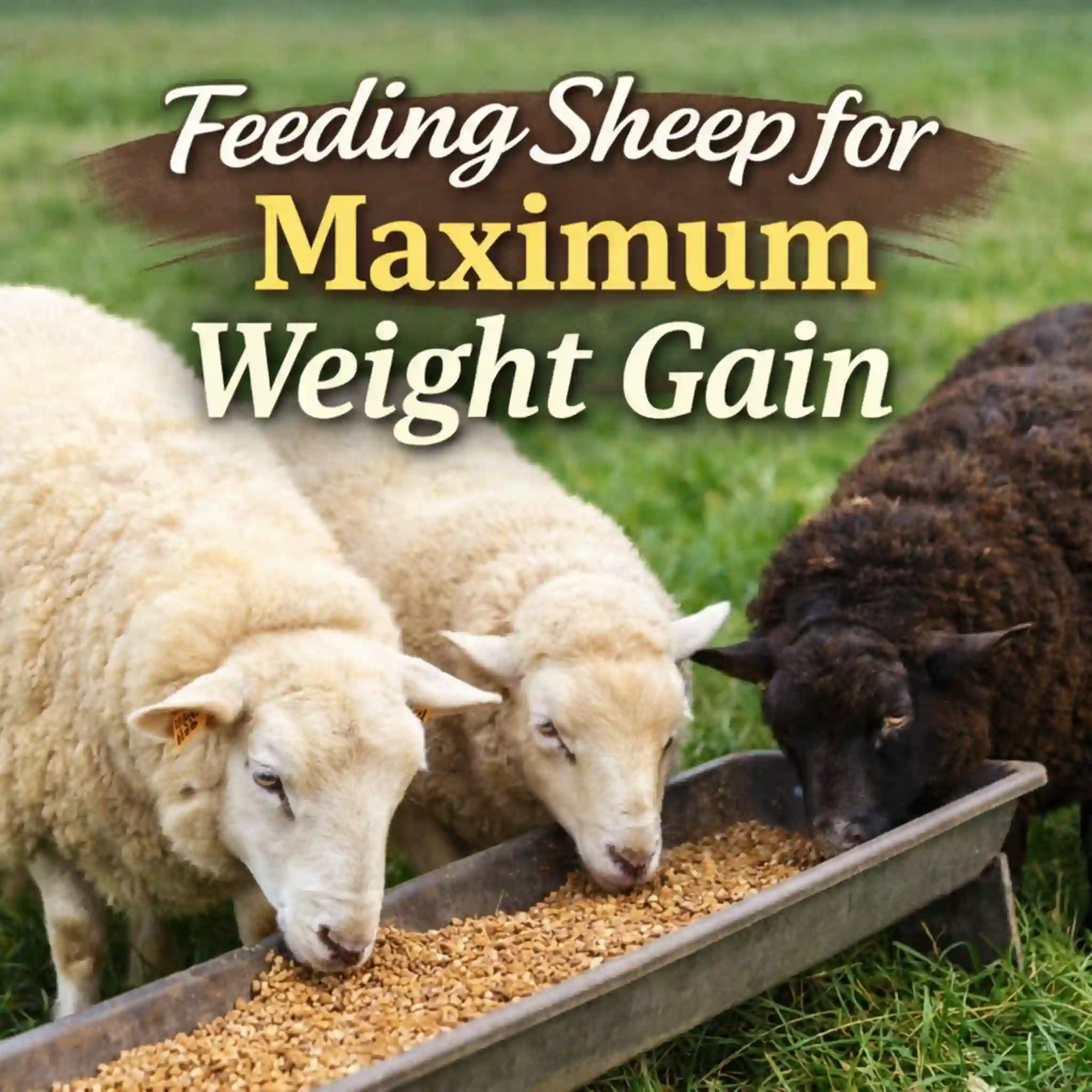
Energy-rich feeds increase daily weight gain when forage alone is insufficient. Common energy supplements include maize, barley, sorghum, and commercial finishing pellets. These feeds provide concentrated calories that help sheep grow faster and reach market condition in a shorter timeframe.
Supplementation works best when introduced gradually to prevent digestive upset. Sheep should always have access to roughage while receiving grain, as fiber helps maintain normal rumen activity. A balanced finishing ration enhances muscle development, improves carcass grading, and supports uniform flock growth.
Ensure Adequate Protein Intake for Muscle Development
Protein is essential for tissue growth, bone development, and immune strength. Growing lambs and finishing sheep require diets that support fast muscle formation. Common protein sources include soybean meal, cottonseed cake, alfalfa hay, and quality legume pasture.
Insufficient protein results in weak muscle structure and poor weight gain, even when energy intake is adequate. Farmers who monitor protein levels in the ration achieve stronger frame development, improved growth uniformity, and better finishing performance across their flock.
Provide Minerals, Salt, and Vitamins for Efficient Feed Conversion
Minerals and vitamins play a major role in growth rate, fertility, immunity, and feed efficiency. Key nutrients for weight gain include calcium, phosphorus, copper (in safe breed-specific amounts), selenium, and zinc. Loose mineral supplements or mineral blocks support bone strength, appetite, and rumen function.
Sheep lacking trace minerals often show poor appetite, stunted growth, and weak immune responses. A well-managed mineral program enhances feed utilization and supports steady weight gain, especially in intensively raised lambs and feedlot systems.
Maintain a Consistent Feeding Schedule
Sheep perform better when their feeding routine remains predictable. Sudden changes in feed composition or timing cause digestive stress and may reduce feed intake. A stable feeding schedule encourages efficient rumen activity and improves growth consistency.
Small, frequent meals promote better digestion than large, irregular feeding portions. When feed remains consistent, sheep adapt well, maintain appetite, and convert nutrients more effectively into body mass.
Control Competition and Provide Adequate Feeding Space
Weight gain is influenced by flock behavior and feeding access. Dominant sheep often consume more feed, leaving weaker animals underweight. Providing enough feeding space reduces competition and allows every animal equal access to supplements and roughage.
Separate smaller, weaker, or slow-growing sheep into a different feeding group. This strategy creates uniform growth rates, improves finishing time, and helps farmers identify high-performing genetic lines for future breeding programs.
Support Gut Health and Prevent Digestive Disorders
Healthy digestion is essential for maximum weight gain. Sudden introduction of grain can cause rumen acidosis, bloat, or feed refusal. Introducing supplements gradually allows microbes in the rumen to adjust safely.
Clean water availability is equally important. Sheep reduce feed intake when water is dirty or limited, resulting in slower growth. Proper hydration improves digestion, nutrient absorption, and daily weight gain performance.
Monitor Body Condition and Track Weight Progress
Regular assessment is key to feeding success. Body condition scoring allows farmers to evaluate fat cover and growth progress without weighing every animal. Visual inspection and periodic weighing help identify slow growers, over-conditioned animals, or nutrition imbalances in the ration.
Farm management apps and record systems play a vital role in monitoring feeding progress and growth trends. Using tools such as the My Sheep Manager farm app helps farmers track body weight changes, feed intake records, health performance, and growth milestones across the flock.
Tracking data over time allows farmers to refine rations, improve feed conversion efficiency, identify underperforming animals early, and design structured feeding strategies for future production cycles.
Conclusion
Feeding sheep for maximum weight gain requires strategic planning, quality forage, balanced supplementation, mineral support, and consistent feeding routines. Growth performance improves when farmers tailor diets to age, breed potential, and production goals.
A structured feeding program strengthens rumen function, enhances feed efficiency, and reduces finishing time, leading to better economic returns and healthier flock development.
With thoughtful nutrition management, sheep gain weight steadily, reach market condition faster, and maintain strong body condition across production seasons.
Join Our Community ()
Your farm, your rules. Ditch the paperwork and take control with our intuitive apps. Get started today!
