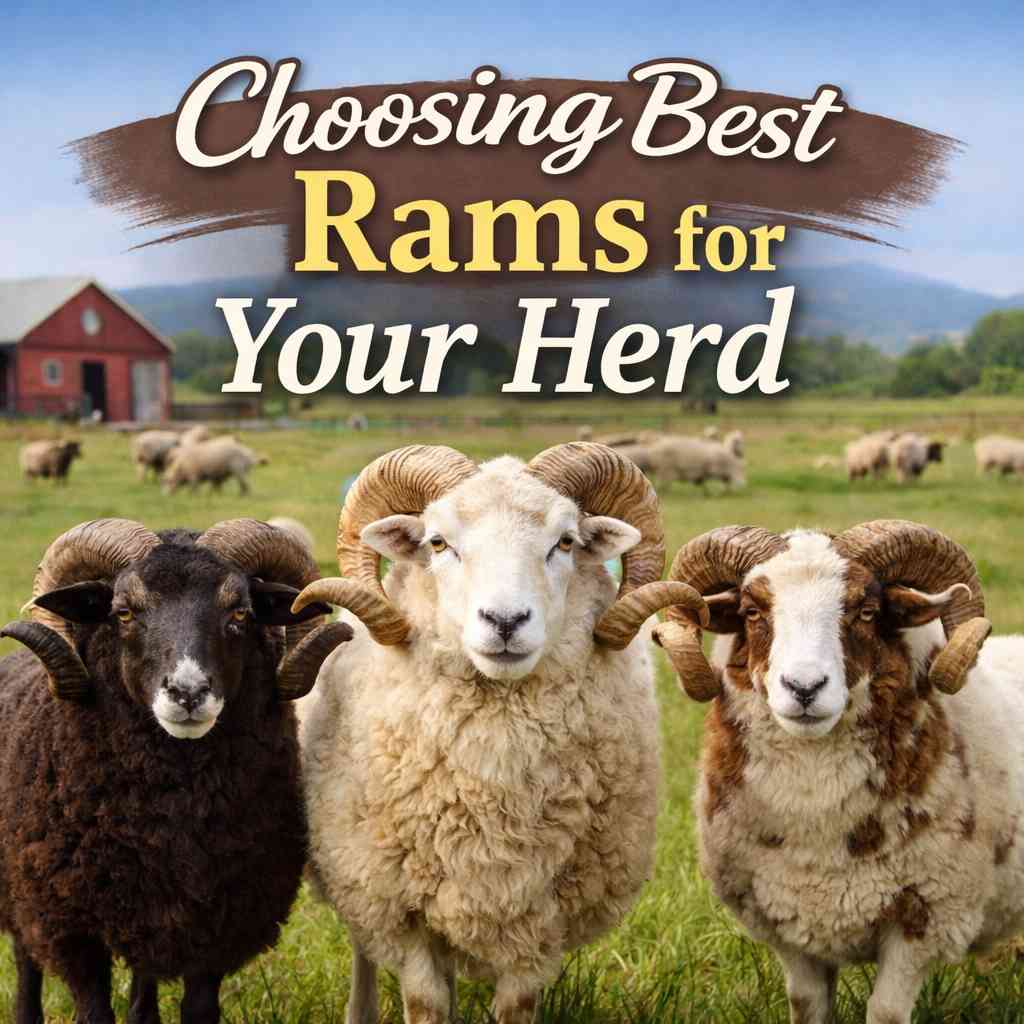
How to Choose the Best Rams for Your Herd.
Don’t let paperwork hold you back. Empower your farm, save time, and grow smarter. Download now!
Selecting the right ram is one of the most important decisions a livestock farmer can make. A single ram contributes a large share of genetic influence across every breeding season, shaping the growth rate, fertility, carcass quality, disease resistance, and long-term productivity of the entire flock.
A high-quality ram strengthens herd performance and market value, while a poorly selected ram can weaken genetics for several generations. This guide explains how to choose the best rams for your herd by focusing on health, structure, performance records, fertility traits, and breeding goals, helping farmers invest wisely in strong and productive sires.
Understand Your Breeding Goals Before Selecting a Ram
Ram selection should begin with a clear breeding objective. Farmers often aim to improve areas such as growth rate, meat quality, reproductive efficiency, disease tolerance, wool yield, or maternal performance. A terminal breeding program may prioritize carcass traits and fast weight gain, while a maternal breeding program emphasizes fertility, lamb survival, and longevity.
Defining the purpose of the flock helps farmers choose rams with traits that strengthen productivity rather than introduce unwanted qualities. A clear breeding direction also prevents random selection and encourages structured herd improvement over several generations.
Evaluate Body Structure and Physical Soundness
A high-quality ram must stand on a strong and balanced frame. Body structure influences mobility, grazing ability, mating performance, and long-term health. Farmers should examine the ram from front, side, and rear views to assess alignment and balance. Strong legs, firm pasterns, straight hocks, and a broad chest indicate good musculoskeletal strength.
The back should appear straight and well-muscled, showing capacity for power and endurance. Rams with weak legs, bent joints, or lameness often struggle to mount ewes and experience early breeding fatigue. Sound structure supports durability and improves breeding performance across multiple seasons.
Assess Muscle Development and Growth Traits
Rams play a major role in shaping flock growth rate and carcass quality. Good breeding candidates display a deep loin, wide hindquarters, and firm, well-defined muscle coverage. These features suggest strong meat yield potential and efficient feed conversion. Farmers should compare body condition with age to avoid selecting overweight rams that appear impressive but lack true muscle quality.
Growth traits supported by performance records or Estimated Breeding Values (EBVs) provide reliable insight into expected offspring performance. Selecting rams with proven growth characteristics helps farmers build a herd that reaches market weight faster and delivers better economic returns.
Check Fertility Traits and Reproductive Readiness
Ram fertility has a direct impact on conception rates and lambing success. A sound breeding ram should have well-formed and evenly sized testicles, free from swelling, injury, or hardness. The scrotal circumference should be appropriate for age and breed standards, as larger measurements are often associated with improved sperm production and earlier puberty in offspring.
A breeding soundness examination by a veterinarian can confirm semen quality and reproductive capability before the breeding season. High fertility rams improve pregnancy rates, tighten lambing intervals, and reduce empty ewe numbers, leading to higher productivity across the flock.
Review Health Status and Disease History
A healthy ram is essential for protecting herd welfare and limiting disease transmission. Farmers should avoid animals showing signs of respiratory problems, parasites, chronic weight loss, skin lesions, or foot disorders. Rams must walk freely without stiffness or pain. Vaccination and deworming records provide important insight into preventive care history.
Where possible, rams should originate from farms that practice biosecurity and disease screening programs for conditions such as footrot, caseous lymphadenitis, and brucellosis. Introducing a ram without health validation increases the risk of economic losses and long-term herd challenges.
Analyze Pedigree, Genetics, and Performance Records
Genetics plays a powerful role in herd improvement. Rams with reliable performance records, herd-book registration, or EBVs offer greater confidence in expected breeding outcomes. Records may include growth rates, lamb survival data, mothering traits, carcass grading, or wool performance.
Line-breeding risks, inbreeding level, and family temperament should also be reviewed to avoid genetic weaknesses. Rams from proven bloodlines typically produce offspring with better uniformity and predictable characteristics, supporting long-term selection programs and structured flock development.
Observe Temperament and Behavioral Traits
Temperament affects handling safety, mating behavior, and flock management. A good breeding ram should remain alert yet manageable, showing confidence without aggression or excessive nervousness. Overly aggressive rams create handling risks, while timid or stressed animals may perform poorly during mating.
Calm and stable behavioral traits tend to reflect better adaptability to farm environments and human interaction. Selecting a balanced temperament contributes to safer farm operations and consistent breeding performance.
Match the Ram to Your Production Environment
Rams must thrive in the same environmental conditions as the flock. Climate tolerance, feeding system adaptation, terrain suitability, and grazing style influence long-term survival and productivity.
A ram raised in intensive feedlot conditions may struggle in an extensive grazing system, while a high-altitude ram may not adapt well to humid lowland environments. Selecting rams that are already adapted to similar management conditions supports resilience, reduces stress, and improves breeding efficiency.
Perform a Pre-Purchase Quarantine and Observation Period
Before introducing a new ram into the flock, farmers should quarantine and observe the animal for a set period. Quarantine allows time for disease screening, deworming, hoof inspection, and health stabilization. It also provides an opportunity to monitor behavior, appetite, and mobility in a controlled setting. A proper introduction process reduces biosecurity risks and protects the herd from costly disease outbreaks or hidden health conditions.
Conclusion
Choosing the best rams for your herd is a strategic investment that shapes flock performance for many breeding seasons. A successful selection process focuses on genetic quality, body structure, fertility, growth traits, health records, and compatibility with production goals. Each ram carries the potential to influence meat yield, reproductive success, flock uniformity, and long-term profitability.
Farmers who evaluate rams carefully and align purchases with planned breeding objectives build stronger herds, improve productivity, and create a sustainable foundation for future livestock success.
Join Our Community ()
No more endless forms, no more confusion. Our apps are your lifeline for a paperless, productive farm. Start now!
