Signs a Sheep is about to give birth (Lambing Signs)
Don’t let paperwork hold you back. Empower your farm, save time, and grow smarter. Download now!
Lambing is one of the most sensitive and economically important stages in sheep farming. The success of this period directly influences lamb survival rates, ewe recovery, future fertility, and overall flock productivity. Even well-managed farms can experience losses when lambing signs are overlooked or misunderstood. As pregnancy advances, a ewe’s body begins preparing for birth weeks in advance, with internal changes appearing first and visible signs becoming clearer as delivery approaches.
Learning to recognize these signs gives farmers the advantage of timely preparation and informed decision-making. By understanding physical changes, behavioral shifts, and differences between first-time and experienced ewes, farmers can create a safe lambing environment, monitor animals more effectively, and intervene at the right moment when assistance is required.
This guide explains the key lambing signs in detail, helping sheep farmers manage the lambing period with greater confidence, precision, and success.
Understanding the Lambing Process
Before identifying the signs of lambing, it is important to understand the normal gestation and birthing process in sheep. The average gestation period in sheep is around 147 days, though it may range between 144 and 152 days depending on breed, nutrition, and litter size. As lambing approaches, hormonal changes prepare the ewe’s body for delivery. These changes affect the udder, pelvic region, behavior, and appetite. Observing these changes daily during late pregnancy helps farmers predict lambing time more accurately.
Udder Development and Bagging Up
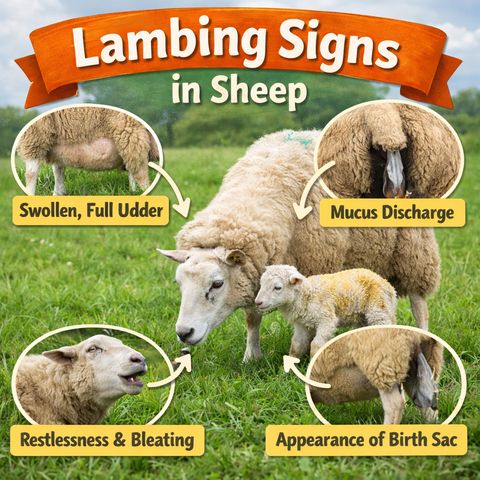
Udder development, commonly known as bagging up, is one of the earliest visible indicators that lambing is approaching. This process usually starts two to three weeks before birth as hormonal changes stimulate milk production. The udder gradually increases in size, becoming rounder and more prominent. In multiparous ewes, this change happens slowly and predictably. In first-lambing ewes, udder enlargement may appear suddenly and much closer to delivery.
As lambing draws near, the udder skin becomes tight, smooth, and shiny. The teats enlarge and feel firm to the touch. A fully developed udder signals that the ewe’s body is preparing to nourish newborn lambs immediately after birth. Careful recording of udder changes helps farmers identify patterns and estimate lambing dates more accurately across different ewes.
Teat Changes and Milk Secretion
As lambing approaches, the teats undergo noticeable changes. They become stiff, point outward, and may leak small amounts of colostrum. Colostrum is thick, yellowish milk that provides essential antibodies to newborn lambs. The presence of colostrum signals that lambing is very close, often within 12 to 48 hours. Checking teats gently during late pregnancy helps farmers estimate how soon delivery may occur.
Vulva Swelling and Color Change
The vulva is another important indicator of lambing readiness. In late pregnancy, the vulva becomes swollen, elongated, and softer due to hormonal effects and pelvic relaxation. The color may shift to a pinkish or reddish tone. This swelling allows easier passage of lambs during delivery. As lambing becomes imminent, a clear or whitish mucus discharge may appear, showing that the cervix is beginning to dilate.
Mucus Discharge from the Vulva
A stringy mucus discharge hanging from the vulva is a classic lambing sign. This discharge occurs as the cervical plug loosens and the birth canal prepares for labor. The discharge may appear several hours to a day before delivery. In some ewes, it appears earlier and dries up, while in others it remains visible until labor begins. Observing this sign helps farmers know that lambing is approaching very soon.
Relaxation of Pelvic Ligaments
As lambing approaches, the ligaments around the tail head and pelvis begin to soften. This causes the area on either side of the tail to feel sunken or hollow. The tail may appear more raised or loose. This ligament relaxation allows the pelvis to widen during birth, making delivery easier. This sign usually becomes obvious within 24 hours of lambing and is a strong indicator that labor is close.
Changes in Body Shape and Abdomen Drop
In the final days before lambing, the ewe’s abdomen may appear to drop or hang lower. This happens as lambs move into position for birth. The ewe may look less rounded from the side and more elongated. This change is easier to observe when ewes are seen daily and compared over time. A sudden shift in body shape often indicates that lambing is near.
Behavioral Changes and Restlessness
Behavioral changes often provide the clearest warning that lambing is close. A ewe nearing delivery may appear uneasy and restless, frequently standing up, lying down, or changing position. She may stretch her body, turn her head toward her flank, or paw the ground repeatedly. These movements are linked to early uterine contractions and internal discomfort.
Many ewes instinctively separate themselves from the flock, choosing quiet and sheltered locations. This isolation behavior is a natural survival instinct that reduces disturbance during birth and protects newborn lambs from trampling or predation. Close familiarity with each ewe’s normal behavior makes it easier to detect these changes early.
Reduced Appetite and Feeding Behavior
A ewe approaching lambing often shows reduced interest in feed. She may eat slowly or refuse food altogether as labor nears. This change occurs because the lambs occupy more abdominal space and early contractions create discomfort. A sudden drop in appetite in a heavily pregnant ewe should prompt closer observation.
Increased Vocalization and Attention-Seeking
Some ewes become more vocal before lambing, bleating more frequently than usual. This behavior may be linked to discomfort or early labor pains. Others may seek human attention, following caretakers more closely or appearing unusually calm. These changes vary among individuals and breeds, making familiarity with each ewe’s normal behavior very helpful.
Nesting and Pawing Behavior
As lambing approaches, ewes may show nesting behavior by pawing bedding, straw, or soil. This action helps create a comfortable spot for delivery. In housed systems, ewes may repeatedly rearrange bedding. In pasture systems, they may choose sheltered spots such as corners, bushes, or fence lines. This behavior usually appears shortly before labor begins.
Signs of Active Labor
Active labor begins when strong, regular contractions start. The ewe may lie on her side, strain visibly, and extend her neck. The water bag may appear at the vulva, followed by the lamb’s front feet and nose in a normal presentation. At this stage, lambing typically progresses quickly, especially in experienced ewes. Prolonged straining without progress signals the need for intervention.
Differences Between First-Time and Experienced Ewes
Physical signs before lambing:
First-time ewes usually show weaker and later physical signs such as udder development and vulva swelling, which can make lambing harder to predict. Experienced ewes show clearer and earlier changes, allowing farmers to estimate lambing time more accurately.
Behavior near lambing:
Maiden ewes often appear restless, anxious, or unsure and may not isolate themselves from the flock. Experienced ewes tend to act calmly, separate themselves naturally, and choose a quiet place to lamb.
Labor duration and progress:
Lambing in first-time ewes is usually slower because the cervix dilates less efficiently and pushing is weaker. Experienced ewes generally have shorter and smoother labor with faster delivery.
Risk of lambing complications:
First-time ewes face a higher risk of prolonged labor, difficult births, and delivery delays. Experienced ewes have fewer complications, though large lambs or multiple births can still create challenges.
Maternal behavior after birth:
Maiden ewes may hesitate to lick lambs or allow suckling, which can delay colostrum intake. Experienced ewes usually show strong maternal instincts and help lambs nurse quickly.
Monitoring and management needs:
First-time ewes require closer supervision and earlier assistance during lambing. Experienced ewes still need observation, though intervention is less often required.
Importance of Close Observation During Late Pregnancy
Close observation during the final four weeks of pregnancy plays a major role in successful lambing outcomes. Subtle changes often go unnoticed when ewes are checked casually or from a distance. Hands-on observation allows farmers to assess udder firmness, vulva changes, appetite, and behavior accurately.
Checking pregnant ewes at least twice daily is recommended, with increased frequency as the expected lambing window approaches. Night checks are especially important, as many ewes prefer to lamb during quiet, low-disturbance hours. Using structured records and reminders helps farmers keep track of expected lambing dates and identify high-risk ewes that need closer supervision.
Preparing for Lambing Based on These Signs
Recognizing lambing signs early allows farmers to prepare well in advance. Clean, dry lambing pens should be ready with fresh bedding to reduce the risk of infections. Access to clean water, energy-rich feed, and mineral supplements supports the ewe during labor and early lactation.
Essential lambing supplies such as disposable gloves, iodine for navel dipping, clean towels, lubricant, and a lambing rope should be easily accessible. An organized lambing routine reduces stress, saves time, and improves overall lambing efficiency. Early intervention in difficult births can save both ewe and lambs.
When to Seek Veterinary Assistance
While most ewes lamb without problems, certain situations require veterinary help. Prolonged labor, abnormal discharge with a foul smell, excessive bleeding, or incorrect lamb presentation are warning signs. Prompt veterinary attention prevents serious complications and improves survival outcomes.
Role of My Sheep Manager During Lambing
While traditional observation remains the foundation of successful lambing, record-keeping and planning play a major role in reducing losses. My Sheep Manager supports farmers by helping them track breeding dates, estimate expected lambing windows, record lambing outcomes, and note complications for each ewe. These records become especially valuable in larger flocks, where individual monitoring is difficult.
By reviewing past lambing data, farmers can identify problem-prone ewes, improve nutrition planning, and make better breeding decisions in future seasons. Using a dedicated sheep management system during lambing improves consistency, accountability, and long-term flock performance.
Conclusion
Lambing is a defining stage in sheep production, where careful observation and timely action determine the health of both ewes and lambs. Physical changes such as udder development, teat filling, vulva swelling, mucus discharge, pelvic relaxation, and changes in body shape provide valuable clues that lambing is near. Behavioral signs, including restlessness, isolation, nesting, reduced appetite, and increased vocalization, offer equally important confirmation as labor approaches.
Understanding how first-time and experienced ewes differ helps farmers monitor them more effectively and provide timely assistance. Careful observation, proper lambing preparation, and readiness to intervene reduce losses and improve lambing success. When good stockmanship is supported by planning and record-keeping, lambing becomes easier to manage, leading to healthier ewes, stronger lambs, and improved flock productivity.
Join Our Community ()
Your farm deserves the best. Maximize productivity, cut stress, and embrace simplicity. Get started today!
