Signs a Ewe Is Ready to Breed.
Empower your farm and your life! Simplify tasks, save time, and grow smarter. Download our apps today!
Successful sheep reproduction depends heavily on identifying the correct time for breeding. Even healthy ewes with good genetics may fail to conceive if mating occurs outside the fertile window. Recognizing when a ewe is ready to breed allows farmers to maximize conception rates, reduce repeat breeding, and plan lambing seasons more efficiently. Poor heat detection often leads to missed breeding opportunities, uneven lambing, and economic losses.
Ewes express readiness for breeding through a combination of behavioral changes, physical signs, and subtle hormonal cues. These signs may appear stronger or weaker depending on breed, season, nutrition, and overall health. Understanding these indicators helps sheep farmers respond at the right moment.
This guide explains each sign in detail, offering practical insights that support better breeding decisions and long-term flock performance.
The Role of Season in Ewe Breeding Readiness
Most sheep breeds are seasonal breeders, meaning ewes naturally come into heat when daylight hours begin to shorten. This seasonal response is controlled by changes in melatonin levels, which influence reproductive hormones. During the breeding season, estrus signs become more frequent and pronounced, making detection easier.
In tropical or subtropical regions, some breeds cycle throughout the year, though heat signs may still vary in intensity. Farmers should understand the seasonal behavior of their specific breed to avoid assuming poor fertility when the ewe is simply outside her natural breeding period.
Hormonal Changes That Trigger Estrus
When a ewe enters estrus, estrogen levels rise, preparing the reproductive tract for ovulation and pregnancy. These hormonal changes affect both behavior and physical appearance. The uterus becomes more receptive to sperm, the cervix relaxes, and ovulation occurs shortly after peak estrus.
These internal changes explain why timing is critical. Breeding too early or too late reduces the chance of fertilization. Observing external signs helps farmers align mating with these hormonal shifts.
Behavioral Changes in an Ewe Ready to Breed
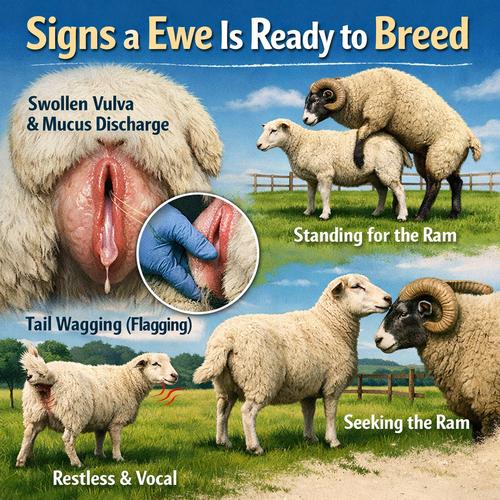
A ewe approaching estrus often becomes more alert and restless. She may pace frequently, vocalize more than usual, or appear distracted from normal grazing or feeding routines. This behavior reflects heightened sensitivity caused by hormonal activity.
In group housing, such ewes may separate themselves from the flock or move repeatedly toward areas where rams are present. These changes are often the first clues that estrus has begun.
Standing Reflex as a Key Indicator
The most reliable behavioral sign of estrus is the standing reflex. When a ewe stands still and allows a ram to mount without resistance, it indicates she is in peak heat. This response confirms that ovulation is near, making it the ideal time for mating.
Ewes that walk away, kick, or lie down are usually not ready. Farmers relying on natural mating should watch closely for this sign, especially during early morning and late evening when sheep are more active.
Physical Changes in the Vulva
Physical examination reveals clear signs of breeding readiness. The vulva becomes swollen, soft, and slightly enlarged due to increased blood circulation. Its color may appear pinker than usual, especially in light-colored breeds.
These changes can be subtle, so routine observation helps farmers recognize normal versus estrus-related appearance. First-time breeders may show milder swelling, requiring closer attention.
Presence of Mucus Discharge
Mucus discharge is a strong indicator that a ewe is fertile. The discharge may be clear, watery, or slightly cloudy and is designed to help sperm travel through the reproductive tract. It may be seen hanging from the vulva or sticking to the tail wool.
This sign usually appears during peak estrus. Once the discharge becomes thick or disappears, the fertile window may be closing.
Tail Flagging Behavior
Tail flagging occurs when a ewe repeatedly lifts and moves her tail from side to side. This behavior exposes the vulva and signals receptiveness to the ram. Tail flagging often becomes more intense when a ram is nearby.
While tail flagging alone is not enough to confirm estrus, it becomes significant when observed alongside vulva changes and standing behavior.
Interaction With Other Ewes
Ewes in heat may interact differently with flock mates. Some become more assertive, while others tolerate mounting attempts from other ewes. These social behaviors result from hormonal stimulation and should prompt closer monitoring.
In tightly grouped flocks, these interactions can help identify ewes entering estrus even before a ram is introduced.
Changes in Feed Intake and Grazing Patterns
Hormonal shifts during estrus may cause temporary changes in appetite. Some ewes eat less, graze intermittently, or show reduced interest in feed. This behavior is usually short-lived and returns to normal after estrus ends.
Tracking feeding behavior alongside physical signs strengthens heat detection accuracy.
Body Condition and Breeding Readiness
A ewe must be in proper body condition to cycle regularly and express strong estrus signs. Undernourished ewes may experience delayed or silent heat cycles. Overconditioned ewes may ovulate irregularly.
An ideal body condition score between 2.5 and 3.5 supports consistent hormone production and successful conception. Strategic nutrition before breeding improves estrus expression and ovulation rates.
Use of Teaser Rams for Heat Detection
Teaser rams are vasectomized or apron-fitted rams used to identify ewes in heat. These rams stimulate estrus behavior without causing pregnancy. Ewes showing interest or standing for the teaser are likely ready for breeding.
This method is highly effective in large flocks where individual observation is challenging.
Importance of Accurate Record Keeping
Tracking estrus signs and breeding dates improves reproductive efficiency. Records help predict future cycles, manage ram exposure, and plan lambing seasons accurately. Without records, farmers risk missing heat periods and uneven lambing patterns.
Using tools like My Sheep Manager allows farmers to record heat signs, mating dates, and reproductive history for each ewe. This structured data supports better planning, timely breeding, and long-term genetic improvement.
Conclusion
Identifying the signs that a ewe is ready to breed is a fundamental skill in sheep farming. Behavioral changes, physical indicators, and hormonal responses work together to signal the fertile window. Careful observation, good nutrition, and proper management increase the likelihood of successful conception.
By understanding and responding to these signs at the right time, farmers can improve lambing rates, reduce breeding failures, and build a more productive flock. Consistent monitoring and accurate records ensure each breeding season contributes to sustainable and profitable sheep production.
Join Our Community ()
Make every moment on your farm count! Simplify, streamline, and succeed. Download our apps now!
