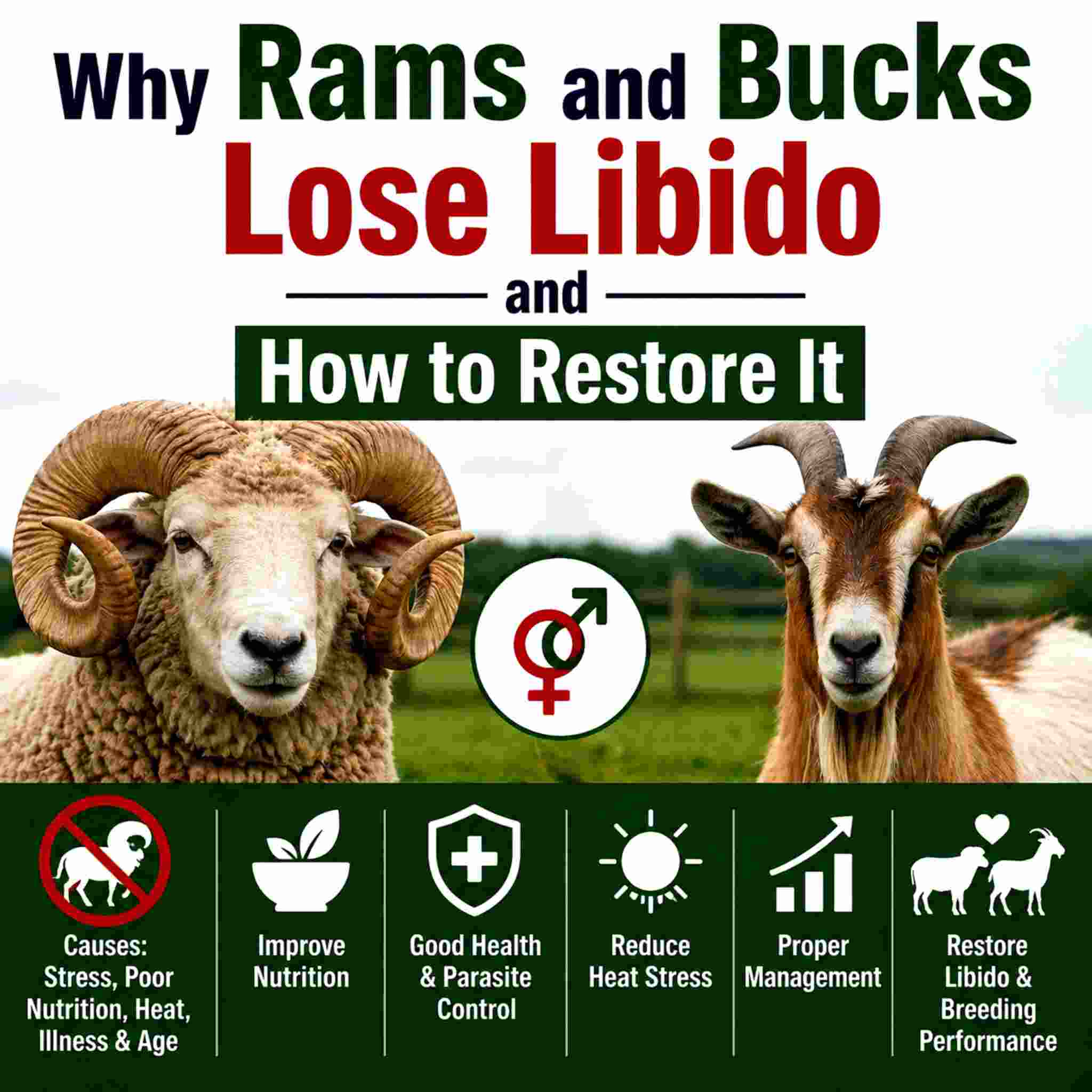
Why Rams and Bucks Lose Libido and How to Restore It.
The future of farming is at your fingertips. Reduce stress, boost efficiency, and manage with ease. Download now!
Efficient reproduction in sheep and goat farming depends heavily on the sexual drive of breeding males. Rams and bucks with strong libido ensure timely mating, better conception rates, and a smooth production cycle. When this natural drive declines, farmers begin to notice fewer successful matings, delayed lambing or kidding, and reduced overall herd productivity.
Many farmers mistake low libido for permanent infertility, which can lead to unnecessary culling of valuable breeding animals. In reality, libido loss is often linked to manageable issues such as feeding practices, health status, environmental stress, and breeding pressure. A clear understanding of these factors allows farmers to take corrective action early and restore normal reproductive behavior.
This blog explores the major reasons behind libido loss in rams and bucks and provides practical, farm-level strategies to bring breeding performance back on track.
What Is Libido in Rams and Bucks?
Libido refers to the sexual drive or willingness of a male animal to seek out and mate with females. In rams and bucks, libido is influenced by testosterone levels, overall health, body condition, and environmental cues such as the presence of females in heat. A healthy breeding male shows active interest, mounting behavior, and the ability to serve multiple females efficiently during the breeding season.
When libido declines, mating activity becomes irregular or completely absent. This can happen even when the male appears physically healthy, which is why careful observation and proper evaluation are important.
Common Causes of Libido Loss in Rams and Bucks
Poor Nutrition and Mineral Imbalance
Nutrition is one of the most common reasons for reduced libido. Rams and bucks require adequate energy, protein, and essential minerals to maintain hormone production and reproductive function. Diets lacking in zinc, selenium, and phosphorus often result in reduced testosterone levels and poor sperm quality.
Underfed animals tend to conserve energy for survival rather than reproduction. Over-conditioned males also show reduced activity and lower mating interest. Maintaining an ideal body condition score ensures that the animal has enough reserves to sustain active breeding without becoming sluggish.
Heat Stress and Environmental Pressure
High temperatures negatively affect reproductive performance in small ruminants. Heat stress interferes with sperm production and reduces hormone levels, leading to a noticeable drop in libido. Rams and bucks exposed to prolonged heat may avoid mating activity altogether.
In tropical climates, breeding males often perform better during cooler hours of the day. Lack of shade, poor ventilation, and overcrowding increase stress levels, which further suppress sexual behavior.
Internal and External Parasites
Parasites weaken animals by draining nutrients and reducing overall vitality. Heavy worm infestations can lead to anemia, weight loss, and fatigue. Under such conditions, breeding activity becomes a low priority for the animal.
External parasites such as ticks and lice cause irritation and discomfort. Constant scratching and restlessness reduce focus on mating behavior. Routine parasite control is essential for maintaining reproductive performance.
Reproductive Diseases and Infections
Certain diseases directly affect the reproductive organs, leading to pain, swelling, or infertility. Conditions like Brucellosis can cause serious reproductive failure in flocks. Testicular inflammation, commonly known as Orchitis, results in discomfort that discourages mating.
Even mild infections accompanied by fever can temporarily suppress libido. Early diagnosis and treatment help prevent long-term damage.
Overuse and Breeding Fatigue
Breeding males that are exposed to too many females without adequate rest often experience exhaustion. Continuous mating attempts reduce sperm reserves and lead to physical fatigue. Overworked males gradually lose interest and show delayed response to females in heat.
Young rams and bucks are especially vulnerable when introduced too early into heavy breeding programs. Their reproductive systems are still developing, and excessive demand can reduce long-term performance.
Age-Related Decline
Age has a direct impact on libido. Very young males may lack the experience or maturity required for efficient mating. Older males experience a natural decline in hormone production and stamina.
Regular evaluation helps determine whether a male is still suitable for breeding. Replacing aged or underperforming males maintains productivity within the flock.
Lameness and Physical Discomfort
Physical ability is essential for successful mating. Conditions such as hoof overgrowth, foot rot, or joint pain restrict movement and make mounting difficult. Even when libido is present, the male may avoid mating due to discomfort.
Routine hoof care and prompt treatment of injuries support active breeding behavior.
Seasonal Breeding Patterns
Sheep are seasonal breeders, and goats often show seasonal tendencies depending on breed and location. Libido tends to increase during favorable seasons when environmental conditions support reproduction. During off-season periods, sexual activity may decline naturally.
Changes in daylight length influence hormone production. Farmers should align breeding programs with these natural cycles for better results.
How to Restore Libido in Rams and Bucks
Improve Feeding Strategy
Providing balanced nutrition is the first step in restoring libido. High-quality forage combined with energy-rich concentrates supports hormone production and stamina. Mineral supplementation should include zinc, selenium, and phosphorus to correct deficiencies.
Introducing a flushing diet a few weeks before breeding helps prepare males for active service.
Implement Effective Parasite Control
Strategic deworming based on farm conditions improves overall health and energy levels. Controlling external parasites reduces irritation and stress. Healthier animals show stronger mating behavior and better endurance.
Reduce Heat Stress
Creating a comfortable environment encourages natural breeding activity. Providing shade, clean water, and proper ventilation lowers stress levels. Scheduling mating during cooler parts of the day improves success rates.
Ensure Proper Breeding Management
Maintaining the correct male-to-female ratio prevents exhaustion. Rotating breeding males allows recovery time and maintains consistent performance. Monitoring mating activity helps identify early signs of fatigue.
Treat Health Conditions Promptly
Regular health checks help detect reproductive issues early. Swelling, pain, or abnormal behavior should be addressed quickly. Veterinary support is necessary for treating infections and restoring reproductive health.
Maintain Optimal Body Condition
Adjust feeding programs to keep males within the ideal body condition range. Animals that are too thin or too heavy require dietary adjustments. Consistent monitoring ensures that breeding males remain active and capable.
Use Controlled Exposure to Females
Separating males from females for a period before breeding can stimulate strong sexual response when reintroduced. This method increases mating enthusiasm and improves breeding efficiency.
Consider Supplementation Support
Vitamin and mineral injections, especially those containing vitamin E and selenium, support reproductive function. These supplements enhance stamina and improve semen quality when used appropriately.
Conclusion
Loss of libido in rams and bucks can disrupt breeding programs and reduce farm profitability, yet it is rarely without a cause. Most cases are linked to nutrition gaps, health challenges, environmental stress, or poor breeding management. Identifying these issues early allows farmers to correct them before long-term damage occurs.
Restoring libido requires a consistent approach that includes proper feeding, effective parasite control, timely health care, and balanced breeding practices. Attention to body condition, comfort, and recovery time ensures that males remain active and capable throughout the breeding season.
With regular monitoring and informed management, farmers can maintain strong libido in their breeding males, leading to improved fertility, better kidding and lambing rates, and a more productive flock.
Join Our Community ()
Don’t let paperwork hold you back. Empower your farm, save time, and grow smarter. Download now!
