Why Goats Grind Their Teeth: Causes, Signs, and Effective Treatment Guide.
Farming made easy, efficient, and stress-free. Take charge of your farm’s future. Start today!
Goats are expressive animals that often communicate discomfort through behavior rather than obvious symptoms. One of the most concerning signs a farmer may notice is teeth grinding, also known as bruxism. This sound can be subtle at first, yet it often indicates that something is wrong internally.
Ignoring this behavior can lead to serious health issues, as it is commonly linked to pain, digestive disturbances, or underlying disease. Early recognition and proper interpretation of teeth grinding can help farmers take timely action and protect the health of their herd.
This blog explains why goats grind their teeth, what it means in different situations, and how to respond effectively to maintain herd health and productivity.
Understanding Teeth Grinding in Goats
Teeth grinding in goats is an involuntary action where the animal clenches and rubs its teeth together, often producing a noticeable sound. This behavior is usually a sign of discomfort or pain rather than a normal habit.
Unlike chewing cud, which is rhythmic and relaxed, teeth grinding appears tense and irregular. It is often accompanied by changes in posture, appetite, or activity level. Recognizing this difference is important for accurate diagnosis.
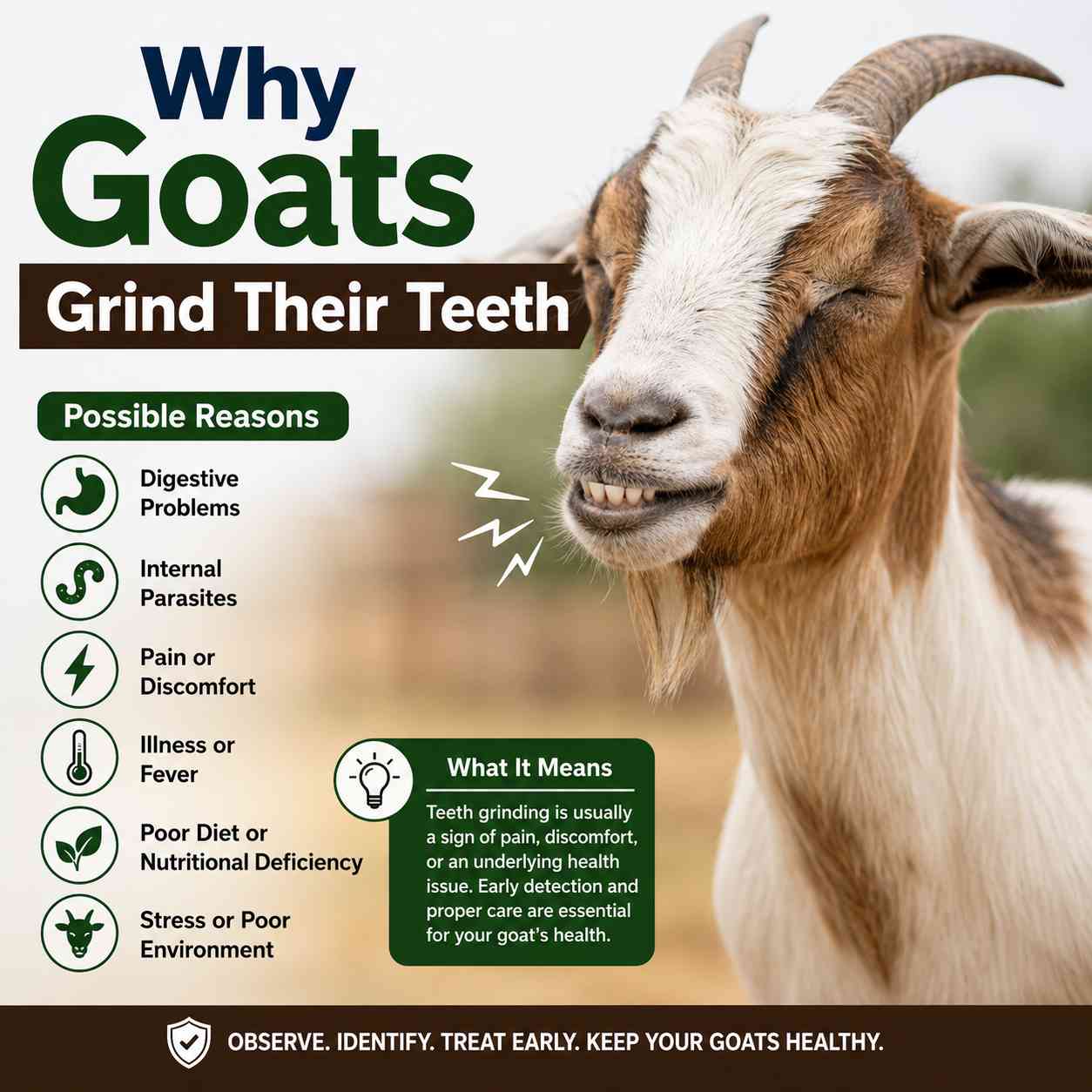
Why Goats Grind Their Teeth
Digestive Disorders
Digestive issues are one of the most common causes of teeth grinding. Conditions such as acidosis, bloat, or indigestion can cause abdominal pain, leading goats to grind their teeth.
Sudden diet changes, excessive grain intake, or poor-quality forage can disrupt the rumen environment. This imbalance leads to discomfort, which is expressed through grinding behavior.
Internal Parasites
Heavy parasite loads can cause irritation and damage to the digestive tract. Worm infestations reduce nutrient absorption and weaken the animal over time.
Goats affected by parasites often show signs such as weight loss, diarrhea, pale mucous membranes, and teeth grinding. The discomfort caused by internal parasites can trigger this behavior.
Pain and Injury
Any form of pain can lead to teeth grinding. Injuries, hoof problems, or infections may cause continuous discomfort.
Goats experiencing pain may also show signs such as limping, reluctance to move, or abnormal posture. Teeth grinding in such cases is a response to ongoing distress.
Urinary Problems
Urinary issues, including urinary stones, can cause severe pain, especially in male goats. Difficulty in passing urine often leads to restlessness and teeth grinding.
This condition requires urgent attention, as it can become life-threatening if not treated promptly.
Illness and Fever
Systemic infections or diseases can lead to general discomfort, resulting in teeth grinding. Fever, weakness, and reduced appetite often accompany this behavior.
Conditions such as pneumonia or bacterial infections may present with grinding as an early warning sign.
Stress and Environmental Factors
Stress can affect goats in various ways. Overcrowding, sudden environmental changes, poor housing conditions, or lack of proper nutrition can lead to discomfort.
Stressed goats may grind their teeth as a response to physical or psychological pressure.
Nutritional Deficiencies
Lack of essential nutrients such as calcium or fiber, can disrupt normal bodily functions. Poor nutrition affects digestion and overall health, leading to discomfort.
Goats fed imbalanced diets may show teeth grinding along with poor growth and reduced productivity.
Signs That Accompany Teeth Grinding
Teeth grinding rarely occurs alone. It is often seen alongside other symptoms that help identify the underlying cause.
Common signs include reduced feed intake, weight loss, diarrhea, bloating, abnormal posture, and decreased activity. In severe cases, goats may isolate themselves from the herd.
Observing these signs together provides a clearer picture of the animal’s health condition.
What Does Teeth Grinding Mean in Different Situations
The meaning of teeth grinding depends on the context in which it occurs. In young kids, it may indicate digestive upset or nutritional imbalance. In adult goats, it often points to pain or illness.
Persistent grinding is always a warning sign that requires attention. Occasional grinding should still be monitored closely to ensure it does not develop into a serious problem.
How to Respond When Goats Grind Their Teeth
Check Feeding and Diet
Evaluate the goat’s diet to ensure it is balanced and appropriate. Avoid sudden changes in feed, and provide high-quality forage.
Ensure access to clean water and proper mineral supplementation to support digestion and overall health.
Monitor for Digestive Issues
Look for signs of bloating, diarrhea, or reduced rumination. Early detection of digestive problems allows for quick treatment and recovery.
Providing fiber-rich feed helps maintain a stable rumen environment.
Implement Regular Deworming
Parasite control is essential for preventing discomfort caused by internal worms. Follow a strategic deworming schedule based on local conditions and veterinary advice.
Regular fecal checks can help determine parasite levels and guide treatment.
Inspect for Injuries or Pain
Examine the goat for signs of injury, lameness, or swelling. Treat wounds promptly and provide supportive care to reduce pain.
Pain management is important for improving comfort and recovery.
Maintain Clean and Comfortable Housing
Provide a clean, dry, and well-ventilated environment. Proper housing reduces stress and prevents disease.
Adequate space allows goats to move freely and reduces competition within the herd.
Seek Veterinary Assistance
If teeth grinding persists or is accompanied by severe symptoms, consult a veterinarian. Professional diagnosis helps identify the exact cause and ensures appropriate treatment.
Timely intervention can prevent complications and improve survival rates.
Long-Term Prevention Strategies
Preventing teeth grinding requires consistent management practices. Balanced nutrition, proper housing, and regular health monitoring support overall well-being.
Maintaining accurate records of feeding, health treatments, and behavioral changes helps identify patterns and detect problems early. Selecting strong and healthy breeding stock also improves herd resilience.
Conclusion
Teeth grinding in goats is an important warning sign that should never be ignored. It often indicates pain, digestive problems, or underlying health conditions that can worsen if left untreated. Recognizing this behavior early allows farmers to act quickly and prevent serious complications.
Understanding the possible causes and observing related symptoms helps in identifying the exact problem. Proper nutrition, regular health checks, good housing conditions, and timely treatment are essential steps in managing and preventing this issue.
With consistent care and close monitoring, farmers can maintain a healthy and comfortable environment for their goats. This approach leads to improved animal welfare, better productivity, and a more sustainable goat farming system.
Join Our Community ()
Your farm’s growth starts here! Streamline operations, eliminate paperwork, and embrace efficiency. Download now!
