Goat Hoof Trimming: When, Why, and How Often for Healthy Hooves.
Take control of your farm like never before! Say goodbye to paperwork and hello to freedom. Download our apps now!
Hoof care is a basic part of goat management that directly affects animal health and productivity. Goats depend on strong and well-shaped hooves for movement, feeding, and overall comfort. When hooves are not maintained properly, goats can develop pain, infections, and difficulty walking. This can reduce growth, breeding performance, and milk production.
Understanding when and how often to trim hooves helps prevent these problems. With regular care and observation, farmers can keep their goats active, healthy, and free from foot-related issues.
Why Hoof Trimming Is Important
Goat hooves grow continuously, and without regular trimming, they can become overgrown and misshapen. In natural environments, rough ground helps wear down the hooves, though in most farm systems, especially where goats are kept on soft bedding or pasture, this natural wear is limited. This leads to excess growth that needs to be managed through trimming.
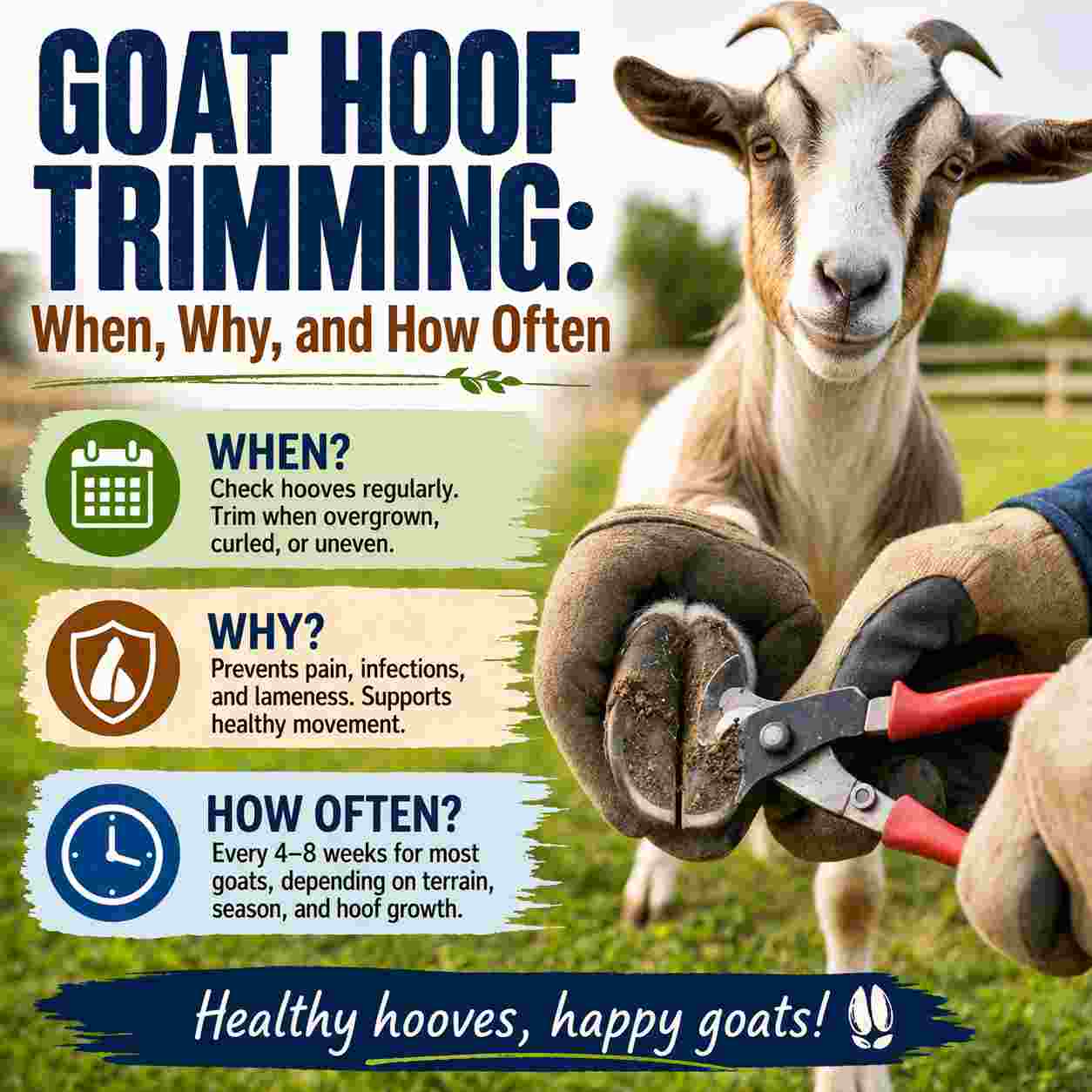
Overgrown hooves can trap dirt, manure, and moisture inside, creating a suitable environment for infections such as foot rot. These conditions cause pain, swelling, and difficulty in walking. Regular trimming keeps the hooves clean and reduces the chances of infection, helping goats stay healthy.
Proper hoof trimming maintains the correct shape of the hoof, which supports balanced movement. When hooves grow unevenly, goats may walk abnormally, placing extra pressure on joints and legs. Over time, this can lead to lameness and reduced mobility.
Healthy hooves allow goats to move freely in search of feed and water. When movement is comfortable, goats eat better, grow well, and maintain good overall condition. Regular trimming supports daily activity and improves productivity in both meat and dairy goats.
Ignoring hoof care can lead to serious health issues that require more time and effort to treat. Simple and regular trimming helps prevent these problems and ensures that goats remain active, comfortable, and productive.
When Should You Trim Goat Hooves?
Goat hooves should be trimmed based on their condition rather than waiting for a fixed schedule. Regular inspection is important to identify when trimming is needed. When hooves begin to overgrow, they change shape and can affect how the goat walks and stands.
One clear sign is when the hoof wall starts to curl or fold over. This creates pockets where dirt and manure collect, increasing the risk of infection. If the bottom of the hoof is no longer flat, it is time to trim.
Changes in movement can also indicate the need for trimming. Goats may start limping, walking unevenly, or avoiding putting weight on a leg. These signs show discomfort and should be addressed quickly to prevent further problems.
Seasonal conditions affect how often trimming is required. During wet seasons, hooves tend to grow faster and stay softer, which means trimming may be needed more often. In dry conditions, growth may slow down, though regular checks are still necessary.
Routine observation is the best approach. Checking hooves every few weeks helps farmers act early, keeping hooves in good condition and preventing health issues.
How Often Should Goat Hooves Be Trimmed?
Goat hooves are usually trimmed every 4 to 8 weeks, depending on how fast they grow and the conditions in which the goats are kept. This range works well for most farms and helps prevent overgrowth before it becomes a problem.
Goats raised on soft bedding or pasture often need more frequent trimming because their hooves do not wear down naturally. In contrast, goats kept on rough or rocky surfaces may require less frequent trimming since the ground helps reduce hoof growth.
Young goats may not need trimming as often, though regular checks are still important to ensure proper development. Adult goats, especially those in intensive systems, tend to require consistent trimming to maintain good hoof shape and balance.
Seasonal changes can also affect trimming frequency. During wet seasons, hooves grow faster and remain softer, increasing the need for more regular trimming. In drier conditions, growth slows down, though routine inspection is still necessary.
Maintaining a regular trimming schedule helps prevent lameness, infections, and uneven walking. Consistent care ensures that goats remain comfortable, active, and healthy throughout the year.
How to Trim Goat Hooves Properly
Trimming goat hooves should be done carefully to keep the animal safe and comfortable. The process begins by restraining the goat in a calm and secure position. This can be done using a stand or by gently holding the goat to limit movement. Keeping the goat relaxed reduces stress and makes the task easier.
Before trimming, the hooves should be cleaned thoroughly to remove dirt, mud, and manure. Cleaning allows you to clearly see the hoof structure and identify the areas that need trimming. A hoof pick or a brush can be used to clear out debris from the hoof.
Using a sharp hoof trimmer, start cutting away the overgrown parts of the hoof wall. Trim small sections at a time to avoid cutting too deep. The goal is to make the bottom of the hoof flat and even so the goat can stand properly.
Care should be taken to avoid cutting into the sensitive inner part of the hoof. Cutting too deep can cause bleeding and pain. If a pinkish layer becomes visible, it is a sign to stop trimming further in that area.
After trimming, check that the hoof is balanced and that the goat can stand evenly on all four legs. A properly trimmed hoof supports good posture and comfortable movement. Regular practice improves skill and makes the process faster and safer over time.
Signs of Poor Hoof Health
Goats with poor hoof health often show changes in movement. Limping or walking unevenly is a common sign, as the goat tries to avoid putting pressure on a painful hoof. Some goats may walk slowly or appear stiff when moving.
Reduced activity is also a clear indicator. Goats may spend more time lying down and show less interest in grazing or moving around. This happens because standing and walking become uncomfortable.
The hooves themselves may appear overgrown or misshapen. The hoof wall can curl or fold over, creating spaces where dirt and manure collect. This buildup increases the risk of infection and further damage.
A bad smell from the hooves can indicate infection, especially conditions like foot rot. In some cases, there may be swelling, discharge, or soft areas in the hoof, which show that the condition has worsened.
Weight loss can occur over time because goats with painful hooves may eat less. Difficulty in moving to feed and water sources affects their overall condition.
Early detection of these signs allows farmers to take action quickly. Regular inspection and proper care help prevent minor issues from developing into serious hoof problems.
Best Practices for Hoof Care
Keeping the goat housing area clean and dry helps maintain healthy hooves. Wet and dirty conditions allow bacteria to grow, which can lead to infections such as foot rot. Regular cleaning of pens and proper drainage reduces moisture and keeps hooves in better condition.
Providing rough surfaces like gravel or stones in the enclosure helps wear down hooves naturally. This reduces the rate of overgrowth and lowers how often trimming is needed. Goats that walk on such surfaces tend to have stronger and better-shaped hooves.
Regular inspection is important for early detection of problems. Checking hooves every few weeks allows farmers to notice overgrowth, cracks, or signs of infection before they become serious. Early action helps prevent pain and long-term issues.
Using proper tools for trimming ensures clean and safe cuts. Sharp and well-maintained hoof trimmers make the process easier and reduce the risk of injury. Good tools improve accuracy and help maintain the correct hoof shape.
Maintaining a routine trimming schedule keeps hooves in good condition throughout the year. Consistent care prevents sudden overgrowth and reduces stress during trimming. A regular routine supports healthy movement and overall well-being.
Good nutrition supports strong hoof growth and structure. Feeding a balanced diet with essential minerals helps maintain hoof strength and reduces the risk of cracks or deformities. Healthy goats are more likely to have healthy hooves.
Common Mistakes Farmers Make
Many farmers delay hoof trimming until the problem becomes severe. This leads to pain and difficulty in walking for the goat. Regular maintenance prevents such issues.
Using dull or improper tools can damage the hoof and make trimming difficult. Sharp and well-maintained tools ensure clean cuts and reduce stress on the animal.
Poor handling during trimming can cause fear and injury. Keeping the goat calm and using proper restraint improves safety and makes the process easier.
Conclusion
Goat hoof trimming is an essential part of maintaining a healthy and productive flock. Regular trimming prevents overgrowth, reduces the risk of infection, and supports proper movement. Understanding when and how often to trim hooves helps farmers manage their goats more effectively.
With consistent care, proper tools, and regular monitoring, hoof problems can be minimized. Healthy hooves allow goats to move freely, feed properly, and perform well, leading to better outcomes for any goat farming operation.
Join Our Community ()
A happier, more productive farm is just a click away. Take charge and simplify with our apps today!
