How Long After Kidding Can a Goat Be Mated Again?
Your farm deserves the best. Maximize productivity, cut stress, and embrace simplicity. Get started today!
Understanding the right time to rebreed a doe after kidding is essential for maintaining herd productivity, improving reproductive efficiency, and protecting the health of your goats. Many farmers are eager to shorten kidding intervals to increase production, especially in meat and dairy operations. At the same time, rushing the process can lead to poor conception rates, weak kids, and long-term reproductive issues.
This guide explains how long after kidding a goat can be mated again, what happens inside the doe’s body after birth, and how to decide the best breeding time based on practical farm conditions. Whether you manage a small backyard herd or a commercial goat farm, this information will help you make confident breeding decisions.
What Happens After Kidding?
After a doe gives birth, her body enters a recovery phase known as the postpartum period. During this time, the reproductive system gradually returns to its normal state. The uterus shrinks back to its original size, the lining repairs itself, and hormone levels stabilize.
This process is called uterine involution, and it usually takes around 3 to 4 weeks under healthy conditions. Even though the body may appear to recover quickly, internal healing continues beyond what is visible. Breeding too early during this stage may result in failed conception or early embryonic loss.
The doe also invests a significant amount of energy in milk production. If she is nursing kids, her nutritional demands increase sharply, which influences how soon she can return to a fertile cycle.
When Does a Doe Come Into Heat After Kidding?
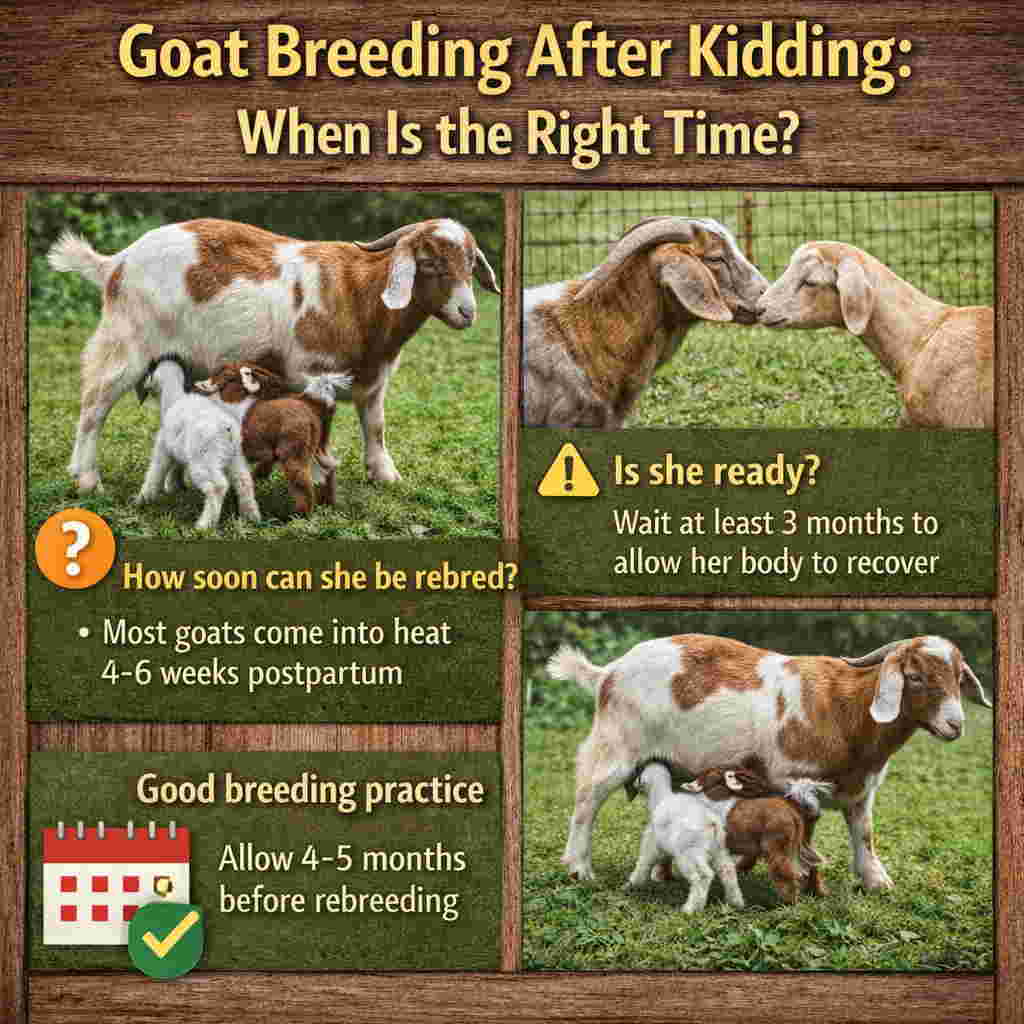
Most goats can return to heat relatively soon after giving birth. In some cases, a doe may show signs of heat as early as 2 to 3 weeks postpartum. This early heat is often referred to as “silent heat” or a weak cycle and may not lead to successful conception.
A stronger and more fertile heat cycle usually occurs 4 to 6 weeks after kidding. This is when the reproductive system has recovered enough to support pregnancy.
Even though early heat cycles may appear, breeding at this stage is generally avoided in well-managed herds.
Ideal Time to Mate a Goat After Kidding
This time frame allows the doe’s body to fully recover after kidding, giving the uterus enough time to heal properly, restoring her body condition, and stabilizing hormonal cycles. As a result, the chances of successful conception are significantly improved when breeding is done within this period.
For high-producing dairy goats or does that delivered multiple kids, waiting closer to 2 to 3 months is often the better option. This allows the animal to regain strength and maintain milk production without excessive stress.
In meat production systems where rapid breeding is preferred, some farmers aim for a shorter interval of around 45 days, though this requires excellent nutrition and close monitoring.
Factors That Influence Rebreeding Time
Body Condition Score
A doe should be in good physical condition before breeding. If she appears thin or weak after kidding, breeding should be delayed. Poor body condition leads to low conception rates and weak offspring.
A healthy doe should have a balanced body with no visible ribs and a smooth muscle cover. Proper feeding after kidding supports faster recovery and readiness for breeding.
Nutrition and Feeding
Nutrition directly affects fertility. A doe requires a diet rich in energy, protein, vitamins, and minerals after kidding. Feeding high-quality forage along with concentrate supplements helps restore body reserves.
Minerals such as calcium, phosphorus, and trace elements like selenium and zinc are essential for reproductive health. A well-fed doe is more likely to return to heat sooner and conceive successfully.
Lactation Stress
Does that are producing large amounts of milk or feeding multiple kids experience higher stress levels. Their bodies prioritize milk production over reproduction.
In such cases, early breeding may reduce milk yield and affect kid growth. Allowing more recovery time ensures both the doe and her kids remain healthy.
Breed and Genetics
Some goat breeds recover and return to heat at different rates due to their genetic makeup. Dairy breeds such as Saanen goat and Alpine goat often cycle earlier after kidding, while meat breeds like the Boer goat may take a bit longer depending on management and nutrition. These genetic differences influence fertility, heat expression, and overall reproductive efficiency in the herd.
Season and Environment
Goats are seasonal breeders in many regions. If kidding occurs outside the breeding season, the doe may not return to heat immediately.
Environmental conditions such as extreme heat, poor housing, or stress can delay the return to normal cycles. Providing a comfortable environment helps improve reproductive performance.
Signs That a Doe Is Ready for Breeding
Before mating a doe after kidding, it is important to confirm that she is truly ready by observing clear signs of heat. Frequent tail wagging is one of the earliest signs, showing that the doe is becoming receptive and responsive to hormonal changes.
A swollen and moist vulva indicates that the reproductive tract is active and prepared for mating. This physical change is a reliable sign that the doe is entering a fertile period.
Clear mucus discharge from the vulva is a strong indicator of heat, as it helps facilitate sperm movement and signals that ovulation is approaching.
Restlessness and increased activity are behavioral signs that the doe is in heat. She may move around more, bleat frequently, and show interest in the presence of a buck.
Standing still when mounted by a buck is one of the most definite signs that the doe is ready for breeding. This behavior confirms that she is in peak heat and that mating at this time has a high chance of success.
Risks of Breeding Too Early
Breeding a doe too soon after kidding can result in low conception rates because her reproductive system may not have fully recovered. The uterus may still be healing, which reduces the chances of successful fertilization and implantation.
There is a higher risk of uterine infections when breeding happens too early. The reproductive tract is still vulnerable after kidding, and introducing breeding at this stage can increase the likelihood of infections that affect fertility.
Kids born from early breeding are often weak or underdeveloped since the doe may not have regained enough body reserves to support proper fetal growth. This can lead to low birth weights and reduced survival rates.
Milk production can decline if the doe is bred too soon, as her body is forced to divide nutrients between lactation and a new pregnancy. This affects the growth and health of the current kids she is nursing.
Repeated early breeding can cause long-term reproductive issues, including reduced fertility and shorter productive lifespan. The doe’s body may become exhausted over time, leading to poor performance in future breeding cycles.
Benefits of Proper Breeding Timing
Allowing enough recovery time before breeding improves fertility because the doe’s reproductive system has fully healed and is ready to support pregnancy. This increases the chances of successful conception and reduces the likelihood of failed breeding attempts.
Stronger and healthier kids are produced when the doe is bred at the right time, as her body is in better condition to nourish the developing fetus. This leads to better birth weights, improved immunity, and higher survival rates among kids.
Proper breeding timing helps maintain good milk production since the doe is not overburdened by handling both early pregnancy and lactation at the same time. This ensures that her current kids receive enough milk for proper growth.
Giving the doe adequate rest between pregnancies supports a longer productive life. It prevents excessive strain on her body, reduces health problems, and allows her to remain fertile and productive for more years.
Well-timed breeding contributes to better overall herd performance by creating a more balanced and efficient production system. It helps farmers achieve consistent kidding intervals, healthier animals, and improved farm productivity.
Practical Breeding Strategies for Farmers
Controlled Breeding Plan
Nutritional Support
Provide high-quality feed immediately after kidding. Include green fodder, dry forage, and concentrates to boost recovery.
Buck Management
Introduce the buck only when the doe shows strong heat signs. Continuous exposure may lead to missed or poorly timed breeding.
Health Monitoring
Check for any signs of infection or complications after kidding. A healthy reproductive system is essential for successful mating.
Weaning Management
In some systems, early weaning of kids may help the doe recover faster and return to heat sooner. This approach should be used carefully based on farm goals.
How many times can a goat give birth in one year?
Under intensive management, some farmers aim for three kiddings in two years. This system requires precise timing, strong nutrition, and careful monitoring.
In most cases, allowing one kidding per year is a safer and more sustainable approach, especially for small-scale farmers. This ensures the doe remains productive over many years without excessive strain.
Conclusion
Breeding a doe at the right time after kidding is essential for achieving strong reproductive performance and maintaining herd health. While goats may return to heat within a few weeks, waiting between 45 and 90 days allows full recovery of the reproductive system, restoration of body condition, and better hormonal balance. This leads to higher conception rates, healthier kids, and sustained milk production.
Careful attention to nutrition, body condition, and heat signs helps farmers make well-timed breeding decisions. Avoiding early breeding reduces health risks and supports the long-term productivity of the doe. With proper management and patience, farmers can build a more efficient, profitable, and sustainable goat production system.
Join Our Community ()
Paperwork stealing your peace? Reclaim your time and energy with our farmer-focused apps. Download now!
