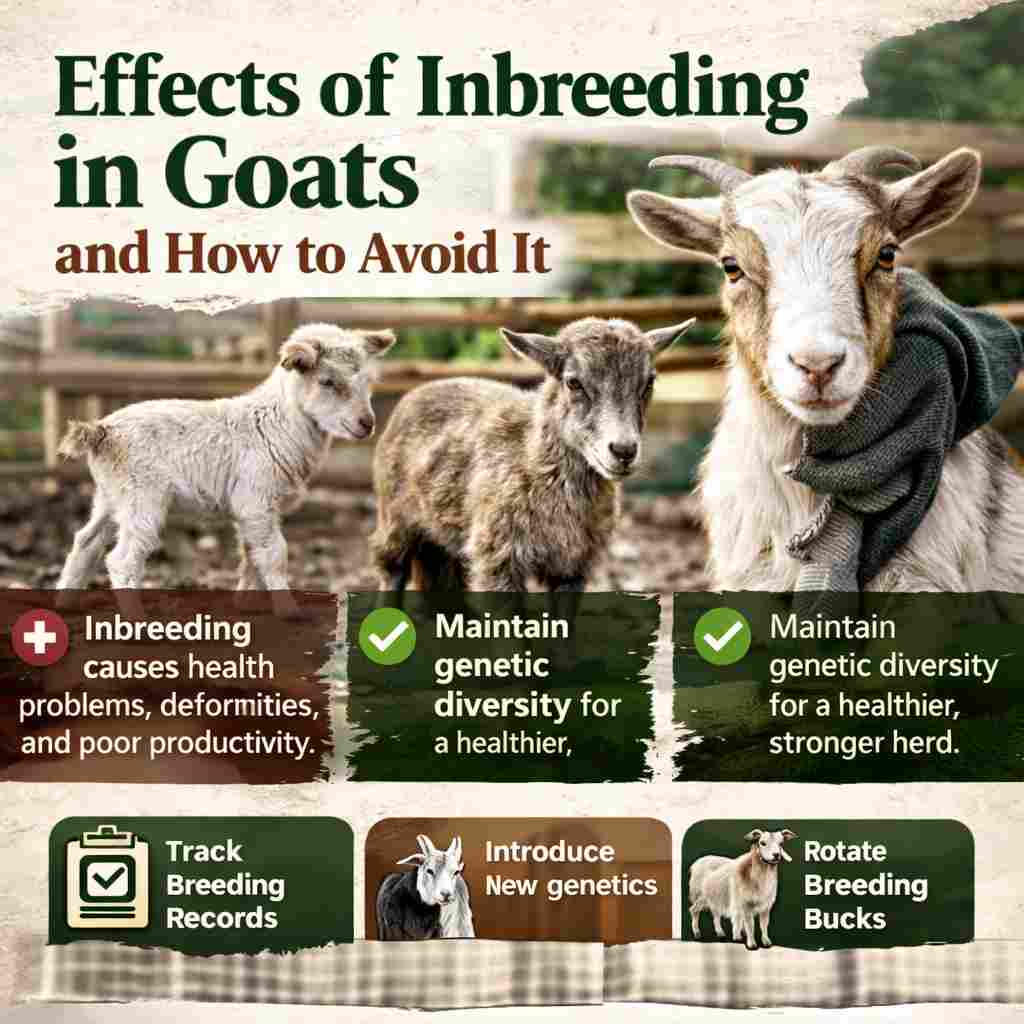
Effects of Inbreeding in Goats and How to Prevent It for a Healthy Herd.
Don’t let paperwork hold you back. Empower your farm, save time, and grow smarter. Download now!
Breeding management is a critical part of successful goat farming, as it directly affects herd health, productivity, and long-term performance. When closely related goats are bred over time, inbreeding can develop, leading to weaker animals and reduced efficiency on the farm. This issue is common in small herds where breeding options are limited.
Understanding the effects of inbreeding and how to avoid it helps farmers protect their herd from genetic problems. With proper planning, careful selection of breeding animals, and good record keeping, farmers can maintain strong genetics and improve overall herd quality.
What Is Inbreeding in Goats?
Inbreeding occurs when goats that are closely related, such as siblings, parents and offspring, or close relatives, are bred together. This increases the chances that harmful genetic traits will be passed on to the offspring.
Over time, repeated inbreeding reduces genetic diversity within the herd. A lack of diversity makes goats more vulnerable to disease, poor growth, and reduced reproductive performance.
Effects of Inbreeding in Goats
Reduced Growth Rate
Inbred goats often show slower growth compared to well-managed herds. Kids may take longer to reach market weight, which affects farm income. Poor growth also reflects weaker genetic potential.
Lower Fertility
Fertility can decline in inbred goats. Does may have difficulty conceiving, and bucks may show reduced breeding performance. This leads to fewer pregnancies and reduced herd expansion.
Increased Kid Mortality
Kids born to inbred parents are more likely to be weak at birth. They may have lower survival rates due to poor immunity and developmental issues. This increases losses and reduces overall productivity.
Higher Risk of Genetic Defects
Inbreeding increases the chances of inherited defects appearing in the herd. These may include physical deformities, poor body structure, or internal health problems. Such defects can affect the animal’s ability to survive and perform well.
Weak Immune System
Inbred goats often have weaker immune systems, making them more prone to diseases. They may require more care and treatment, which increases management costs.
Poor Milk Production
Does from inbred lines may produce less milk. This affects both kid growth and dairy production, leading to lower farm output.
Signs of Inbreeding in a Goat Herd
Goats in an inbred herd often show slow growth and smaller body size compared to healthy animals. Kids may take longer to reach maturity, and overall weight gain may be poor, which affects productivity.
Low fertility is a common sign. Does may struggle to conceive, and kidding rates may decline over time. In some cases, there may be more cases of abortion or weak pregnancies.
Increased kid mortality can also indicate inbreeding. Newborns may be weak, fail to stand or suckle properly, and may not survive the early stages of life. This leads to higher losses in the herd.
Physical abnormalities may appear in some goats. These can include poor body structure, deformities, or unusual features that affect movement and overall health.
Frequent illness is often seen in inbred herds. Goats may get sick more often due to weaker immune systems, and recovery may take longer compared to healthy animals.
Reduced milk production in does is another warning sign. Lower milk yield affects kid growth and overall farm output, making it harder to maintain good performance in the herd.
Early identification of these signs helps farmers take corrective action and improve herd genetics before the problem becomes severe.
How to Avoid Inbreeding in Goats
Keep Accurate Breeding Records
Maintaining detailed records of each animal helps track relationships within the herd. This makes it easier to avoid mating closely related goats. Using tools like My Goat Manager or farm record systems can simplify this process.
Introduce New Breeding Stock
Bringing in unrelated bucks or does improves genetic diversity. This reduces the risk of inbreeding and strengthens the overall herd. New genetics can improve growth, fertility, and disease resistance.
Use Controlled Breeding
Allowing random mating increases the chance of inbreeding. Controlled breeding ensures that only selected animals are paired. Separating males and females when not breeding helps manage this effectively.
Rotate Breeding Bucks
Using the same buck for many years increases the risk of breeding related animals. Rotating or replacing bucks regularly helps maintain genetic variation and reduces inbreeding.
Avoid Close Relative Mating
Farmers should avoid breeding goats that are closely related. Planning mating pairs carefully helps maintain healthy genetic diversity within the herd.
Benefits of Avoiding Inbreeding
Healthier Offspring
Avoiding inbreeding reduces the risk of genetic defects, deformities, and inherited diseases in kids.
Higher Fertility
Goats from diverse genetic backgrounds have better reproductive performance, with higher conception rates and fewer stillbirths.
Faster Growth and Development
Kids born from non-inbred matings grow faster, gain weight efficiently, and reach maturity sooner.
Stronger Immunity
Genetic diversity helps goats resist diseases and cope better with environmental stress.
Better Production
Avoiding inbreeding supports optimal milk yield, meat quality, and overall productivity.
Longer Lifespan and Survival
Non-inbred goats tend to live longer, with higher survival rates among kids and adults.
Sustainable Herd Improvement
Maintaining genetic diversity allows for better selection of desirable traits over generations, improving herd quality over time.
Conclusion
Inbreeding in goats can cause serious challenges such as poor growth, low fertility, weak immunity, and reduced production. These problems can lower farm performance and increase management costs over time.
Farmers who focus on controlled breeding, introduce new genetics, and keep accurate records can prevent inbreeding and maintain a healthy herd. Consistent management and attention to breeding practices help ensure stronger goats, better productivity, and long-term success in goat farming.
Join Our Community ()
Paperwork stealing your peace? Reclaim your time and energy with our farmer-focused apps. Download now!
