Signs a Pig Is About to Give Birth (Farrowing Signs)
No more endless forms, no more confusion. Our apps are your lifeline for a paperless, productive farm. Start now!
Knowing when a pig is about to give birth is one of the most important skills for any pig farmer. Farrowing is a critical period that directly affects piglet survival, sow health, and overall farm productivity. Missing early warning signs can lead to complications such as stillbirths, weak piglets, or stress-related problems in the sow. When farmers can correctly identify farrowing signs, they are better prepared to provide timely support, create a calm environment, and reduce losses.
This guide explains the clear physical, behavioral, and environmental signs that indicate a sow is close to farrowing. Each sign is explained in detail so farmers can act with confidence and improve outcomes on both small-scale and commercial pig farms.
Understanding Farrowing in Pigs
Farrowing is the process by which a pregnant sow gives birth to piglets. The average gestation period in pigs is about 114 days, commonly remembered as “3 months, 3 weeks, and 3 days.” As the due date approaches, the sow’s body undergoes noticeable changes. These changes are natural responses to hormonal shifts, preparing her for delivery and nursing.
Recognizing farrowing signs early allows farmers to prepare clean farrowing pens, monitor the sow closely, and reduce stress. Proper preparation during this stage leads to healthier piglets, smoother labor, and faster recovery for the sow.
1. Udder Development and Teat Changes
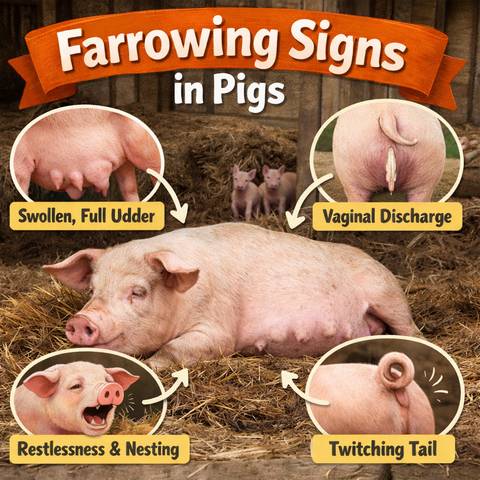
One of the earliest and most reliable signs that a pig is about to give birth is udder development. Around one to two weeks before farrowing, the sow’s udder becomes larger and firmer. The teats become more visible and may point slightly outward.
In the final few days before farrowing, the udder appears tight and swollen due to milk production. A clear or milky fluid may be released when the teats are gently pressed. This fluid later turns into colostrum, which is essential for piglet immunity. When milk can be easily expressed, farrowing usually occurs within 24 hours.
2. Swelling and Reddening of the Vulva
Changes in the vulva strongly indicate that farrowing is near. As the birth canal prepares for delivery, the vulva becomes swollen, elongated, and softer. Its color often changes to a deep pink or reddish tone.
These changes are caused by increased blood flow and hormonal activity. Swelling becomes more noticeable in the last three to five days before farrowing. When combined with other signs such as nesting behavior or milk release, vulva changes signal that labor is approaching quickly.
3. Nesting Behavior
Nesting behavior is one of the most visible farrowing signs in pigs. A sow close to giving birth becomes restless and starts arranging bedding materials such as straw, grass, or hay. She may use her mouth to carry materials or paw at the ground to create a comfortable nest.
This instinctive behavior helps provide warmth and safety for newborn piglets. Nesting usually begins 24 to 48 hours before farrowing. If a sow suddenly becomes active after a period of calm pregnancy behavior, it is a strong sign that delivery is near.
4. Restlessness and Behavioral Changes
As farrowing approaches, behavioral changes become noticeable. A sow may stand up and lie down frequently, appear uncomfortable, or isolate herself from other pigs. She may refuse to feed or eat less than usual.
Some sows become more vocal, grunting softly or showing signs of agitation. These behaviors indicate discomfort caused by uterine contractions starting internally. Close observation during this stage helps farmers identify when labor is about to begin.
5. Drop in Body Temperature
A slight drop in body temperature is a subtle yet reliable farrowing indicator. About 12 to 24 hours before farrowing, a sow’s rectal temperature may drop by one degree Celsius or slightly more.
Regular temperature monitoring during the final week of pregnancy can help farmers predict farrowing time accurately. When this temperature drop occurs alongside other physical signs, it signals that labor is imminent.
6. Reduced Appetite or Feed Refusal
Many sows show a reduced appetite shortly before giving birth. A sow that usually eats well may suddenly leave feed untouched or eat much less than normal.
This change happens as hormonal shifts prepare the body for labor. While reduced appetite is normal at this stage, complete refusal of feed combined with discomfort strongly suggests that farrowing will begin soon.
7. Milk Let-Down (Colostrum Production)
Milk let-down is one of the clearest signs that a pig is about to give birth. When gentle pressure on the teats produces a milky or thick yellowish fluid, colostrum production has begun.
Colostrum is rich in antibodies and vital for piglet survival during the first hours of life. Milk let-down usually occurs within 12 to 24 hours before farrowing. Once this sign is observed, the sow should be monitored continuously.
8. Visible Abdominal Contractions
As labor begins, visible abdominal contractions may be seen. The sow’s belly tightens rhythmically as the uterus contracts to push piglets through the birth canal.
These contractions increase in frequency and intensity as farrowing progresses. Once strong contractions are present, piglets are usually delivered within a few hours.
9. Vaginal Discharge
A clear or slightly cloudy vaginal discharge may appear shortly before farrowing. This discharge is part of the natural lubrication process that prepares the birth canal.
Heavy discharge mixed with blood before piglets appear may indicate complications and should be monitored carefully. Normal discharge combined with contractions is a positive sign that labor is underway.
10. Lying on Her Side for Extended Periods
When a sow begins lying on her side for long periods, farrowing is very close. This position allows easier delivery of piglets and reduces discomfort during contractions.
Once the sow remains in this position and shows rhythmic straining, piglets are expected soon. At this stage, quiet observation is essential to avoid disturbing the sow.
Importance of Preparing for Farrowing
Proper preparation before farrowing greatly improves piglet survival and protects the health of the sow. When farmers recognize farrowing signs early, they gain enough time to prepare a clean, dry, and quiet farrowing area. A well-prepared environment reduces stress, which helps the sow progress through labor more smoothly and lowers the risk of prolonged farrowing.
Clean bedding is essential to prevent infections in newborn piglets, especially through the umbilical cord. Warmth is equally important, since piglets are born with limited ability to regulate body temperature. Preparing heat lamps or creep areas helps prevent chilling, which is a common cause of early piglet mortality. Adequate ventilation without drafts keeps both the sow and piglets comfortable during and after birth.
Preparation also allows farmers to monitor the sow closely without interfering. Having basic supplies ready, such as clean towels, iodine for navel dipping, and access to fresh drinking water, ensures quick action if assistance is needed. Farms that consistently prepare for farrowing experience fewer losses, stronger piglets, and faster recovery of the sow.
Record Keeping During Farrowing
Accurate record keeping is a valuable management practice during the farrowing period. Recording the expected farrowing date, observed farrowing signs, and the actual birth time helps farmers understand individual sow patterns. These records make it easier to predict future farrowing dates and plan housing and labor more efficiently.
Details such as the number of piglets born, live births, stillbirths, and average piglet weight provide clear insight into sow productivity and herd performance. Tracking farrowing duration and any complications allows farmers to identify sows that may need closer monitoring in future pregnancies.
Using digital tools like the My Piggery Manager simplifies this process by allowing farmers to record breeding dates, farrowing events, piglet numbers, and health observations in one place. The app helps keep records organized, reduces paperwork, and supports better decision-making over time. Consistent digital records improve breeding planning, health monitoring, and overall farm profitability.
Conclusion
Understanding the signs that a pig is about to give birth is essential for successful pig farming. Physical changes such as udder development, vulva swelling, and milk let-down combine with behavioral signs like nesting and restlessness to provide clear warnings that farrowing is near. Careful observation during the final days of pregnancy allows farmers to act early, reduce stress, and protect both sow and piglets.
By mastering these farrowing signs, pig farmers can improve piglet survival rates, support sow health, and increase overall farm efficiency. Consistent monitoring, calm handling, and proper preparation turn farrowing into a manageable and rewarding stage of pig production.
Join Our Community ()
Farming made easy, efficient, and stress-free. Take charge of your farm’s future. Start today!
