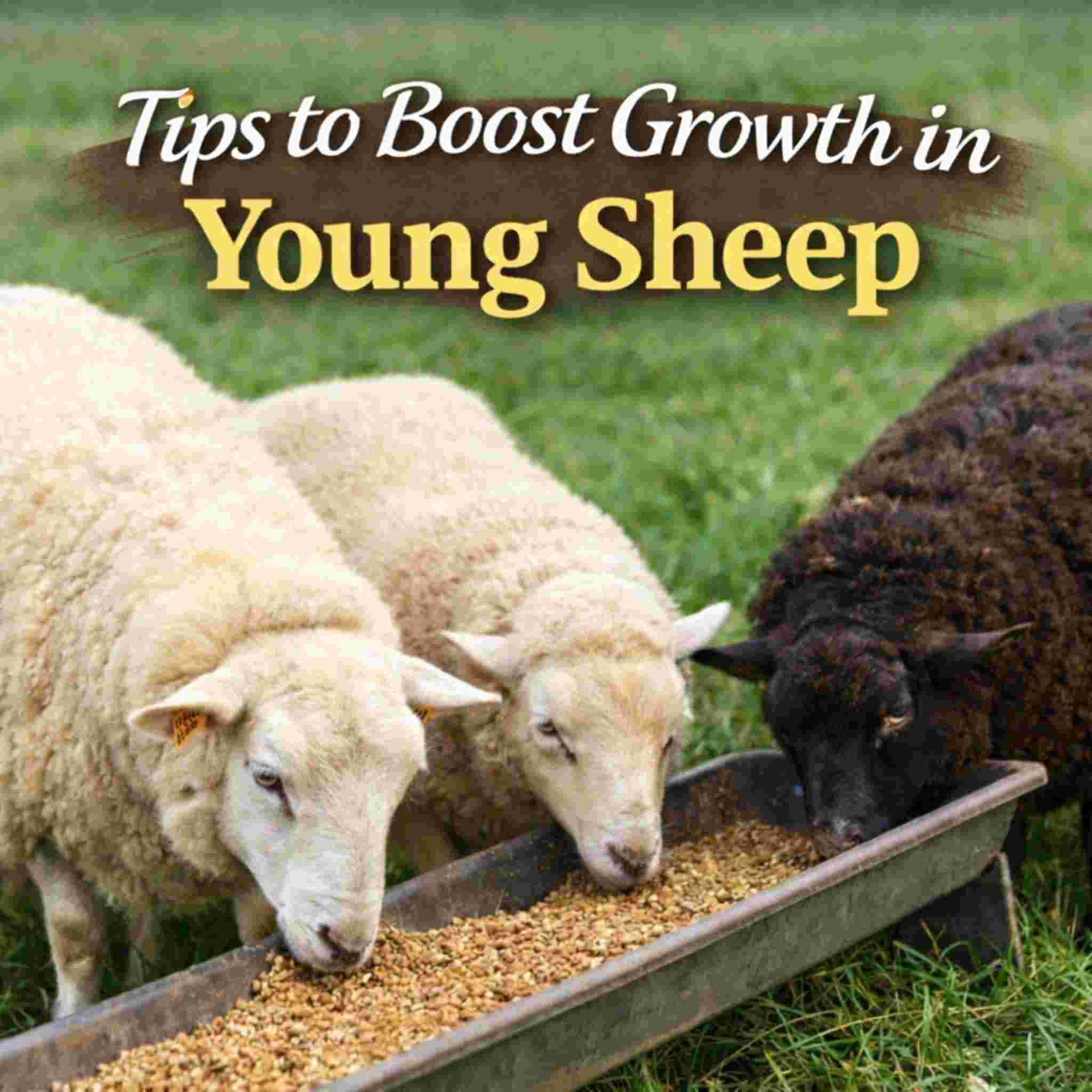
Tips to Boost Growth in Young Sheep.
Transform your farm into a well-oiled machine! Streamline tasks, save time, and focus on growth. Download now!
The growth rate of young sheep plays a major role in flock profitability, genetic progress, and overall farm efficiency. Lambs that grow steadily during the early stages of life reach market weight sooner, show stronger immunity, and develop better reproductive potential as adults. Poor early growth often results in delayed finishing, higher feed costs, and increased disease risk, which affects long-term flock performance.
Boosting growth in young sheep requires a balanced approach that combines nutrition, health management, environmental comfort, and consistent monitoring. From colostrum intake at birth to strategic feeding and parasite control, each stage influences muscle development, bone strength, and feed efficiency.
This guide explains practical, farm-tested strategies to help young sheep achieve optimal growth and long-term productivity.
Ensure Early Colostrum Intake After Birth
Growth performance begins immediately after birth. Colostrum supplies essential antibodies, energy, and nutrients that protect lambs against early-life infections. Lambs that receive adequate colostrum within the first few hours develop stronger immune systems and show better feed utilization later in life. Weak or orphaned lambs should receive assisted feeding to prevent early growth setbacks.
Healthy colostrum intake supports gut development and improves nutrient absorption, which directly influences weight gain during the first weeks. Poor colostrum management often leads to scours, respiratory illness, and slow growth, creating challenges that persist throughout the production cycle.
Provide Balanced Milk and Creep Feeding Programs
Milk intake remains a key growth driver during the early weeks. Ewes with good body condition produce higher-quality milk, which supports rapid lamb growth. In situations where milk supply is limited, creep feeding introduces lambs to solid feed early and supports rumen development.
Creep feed should contain adequate protein and energy to support muscle formation and frame growth. Clean, fresh feed offered in small amounts encourages intake without digestive stress. Lambs exposed to creep feeding transition more smoothly at weaning and maintain better post-weaning growth rates.
Focus on High-Quality Forage for Early Rumen Development
Forage quality influences how efficiently young sheep convert feed into body mass. Soft, leafy pasture or well-cured hay promotes early rumen activity and improves digestion. Exposure to quality forage at a young age helps lambs adapt to grazing systems and reduces growth slumps after weaning.
Poor forage quality limits energy intake and slows muscle development. Rotational grazing and pasture management ensure young sheep have continuous access to nutrient-dense forage, supporting steady growth throughout the grazing season.
Support Protein Intake for Muscle and Frame Growth
Protein plays a central role in muscle development, skeletal strength, and enzyme production. Young sheep require higher protein levels than mature animals to support rapid tissue growth. Protein sources may include legume pasture, oilseed meals, or commercial lamb rations formulated for growth.
Insufficient protein leads to poor weight gain and weak frame development, even when energy intake appears adequate. Matching protein levels to growth stage improves daily weight gain and prepares lambs for efficient finishing.
Control Internal Parasites Early
Parasite burden remains one of the most common causes of poor growth in young sheep. Worm infestations reduce appetite, damage the digestive tract, and limit nutrient absorption. Lambs may appear stunted, weak, or unthrifty despite good feeding.
Strategic deworming programs, pasture rotation, and regular monitoring reduce parasite pressure and support efficient feed use. Healthy lambs convert nutrients into growth more effectively, resulting in improved weight gain and stronger immunity.
Provide Mineral and Vitamin Supplementation
Trace minerals and vitamins influence bone development, immune strength, and feed efficiency. Deficiencies in selenium, zinc, or vitamin E often lead to weak growth, muscle disorders, and poor disease resistance. Balanced mineral supplementation supports steady development and reduces health complications.
Minerals should be provided in loose form or through balanced feed rations. Clean water access enhances mineral intake and supports digestion, especially during warm weather and periods of rapid growth.
Maintain Comfortable Housing and Reduce Stress
Environmental stress limits growth potential in young sheep. Cold, damp, overcrowded, or poorly ventilated housing can increase energy loss and suppress appetite. Lambs kept in clean, dry, and well-ventilated conditions show better feed intake and improved daily weight gain.
Stress from handling, transport, or sudden management changes affects hormone balance and reduces growth efficiency. Gentle handling and consistent routines help lambs remain calm and productive.
Manage Weaning Carefully to Prevent Growth Slumps
Weaning is a critical transition that often results in reduced feed intake and temporary weight loss. Gradual weaning strategies that combine creep feeding, high-quality forage, and familiar environments help maintain growth momentum.
Monitoring lambs closely during this period allows early intervention if weight gain slows. Smooth weaning enhances post-weaning performance and prepares lambs for finishing or selection as replacements.
Track Growth and Feeding Performance
Monitoring growth helps farmers identify nutritional gaps and management issues early. Regular weighing or body condition assessment provides valuable insight into flock performance. Farm management apps such as My Sheep Manager support record-keeping, weight tracking, feed monitoring, and performance evaluation across growth stages.
Tracking growth data over time allows farmers to refine feeding strategies, improve feed conversion efficiency, and select high-performing animals for future breeding programs.
Conclusion
Boosting growth in young sheep depends on strong early nutrition, health management, parasite control, environmental comfort, and consistent monitoring. Lambs that receive balanced diets, quality forage, mineral support, and stress-free care develop faster and show improved lifetime performance. Strategic management during early life stages leads to better finishing rates, reduced production costs, and stronger genetic progress within the flock.
By focusing on these practical growth-enhancing strategies, farmers can raise healthier, more productive sheep while improving long-term farm sustainability.
Join Our Community ()
Transform your farm into a well-oiled machine! Streamline tasks, save time, and focus on growth. Download now!
