How to Prevent Tail Biting in Pigs: Causes, Signs, and Effective Prevention Strategies.
Save time, reduce mistakes, and enjoy farming again. Our apps make it possible. Get started today!
Tail biting in pigs is one of the most challenging behavioral problems in pig farming. It affects animal welfare, reduces growth performance, and can lead to serious infections or even death if not controlled early. For farmers, it brings economic losses through reduced weight gain, treatment costs, and carcass condemnation.
This behavior does not occur randomly. It is usually a response to stress, discomfort, or unmet needs within the pig’s environment. Understanding the root causes and applying proper management practices can greatly reduce the risk of tail biting.
This blog explains why tail biting occurs, how to identify early warning signs, and practical methods to prevent it, ensuring healthier pigs and improved farm productivity.
Understanding Tail Biting in Pigs
Tail biting is an abnormal behavior where pigs chew or bite the tails of pen mates. It often starts as mild nibbling and can quickly escalate into severe injuries. Once the behavior spreads within a group, it becomes difficult to control.
Pigs are naturally curious and active animals. When their environment does not meet their physical and behavioral needs, they redirect their energy toward harmful behaviors such as tail biting.
Causes of Tail Biting in Pigs
Lack of Environmental Enrichment
Pigs need materials to explore, chew, and manipulate. When they are kept in barren environments without stimulation, boredom develops. This frustration often leads pigs to bite each other’s tails.
Providing enrichment materials such as straw, ropes, or chewable objects helps satisfy natural instincts and reduces harmful behavior.
Overcrowding and Limited Space
High stocking density increases competition for resources such as feed, water, and resting areas. Pigs under crowded conditions experience stress and aggression.
Limited space restricts movement and prevents pigs from escaping aggressive pen mates, increasing the chances of tail biting.
Poor Nutrition
Imbalanced diets can lead to deficiencies in essential nutrients, causing irritation and abnormal behavior. Pigs lacking adequate salt, protein, or minerals may start biting as a response to nutritional stress.
Consistent feeding and access to clean water are essential for maintaining normal behavior.
Inadequate Ventilation and Temperature Stress
Poor air quality and extreme temperatures create discomfort. High ammonia levels, heat stress, or cold stress can make pigs restless and irritable.
Uncomfortable pigs are more likely to develop aggressive behaviors, including tail biting.
Sudden Changes in Environment or Routine
Pigs are sensitive to changes. Sudden mixing of unfamiliar animals, relocation, or changes in feeding schedules can increase stress levels.
This stress often triggers abnormal behaviors, especially in growing pigs.
Health Problems and Parasites
Diseases, skin irritation, and parasite infestations can cause discomfort, leading pigs to bite or be bitten. Injured or weak pigs are often targeted by others in the group.
Maintaining good health management reduces the risk of such behavior.
Genetic and Behavioral Factors
Some pigs are more prone to aggressive or exploratory behavior. Once tail biting starts, it can spread quickly within a group as pigs imitate each other.
Signs of Tail Biting
Early detection is critical for preventing severe damage, as tail biting can escalate very quickly once it begins. Farmers should closely observe pig behavior and physical signs on a daily basis. Identifying early warning signs allows for timely intervention, reducing injuries, stress, and economic losses within the herd.
Pigs showing unusual interest in others’ tails
One of the earliest signs of tail biting is when pigs begin to focus excessively on the tails of their pen mates. This may start as gentle nibbling or repeated sniffing. While it may appear harmless at first, it often indicates boredom or frustration. If this behavior continues, it can quickly develop into aggressive biting, making early intervention essential.
Redness, swelling, or wounds on tails
Physical changes on the tail are clear indicators that biting has already started. Redness and swelling suggest irritation, while open wounds indicate more severe damage. These injuries can attract more biting from other pigs, as they are drawn to the affected area. Without prompt treatment, infections can develop, leading to serious health complications.
Restlessness and increased aggression
Pigs that are uncomfortable or stressed often become more active and aggressive. Restlessness may include frequent movement, fighting, or difficulty settling down. Increased aggression within the group can trigger tail biting, especially in crowded or poorly managed environments. Monitoring these behavioral changes helps identify problems before they worsen.
Pigs avoiding certain areas or animals
Injured or stressed pigs may try to escape from aggressive pen mates or avoid specific areas within the pen. This behavior is a sign that the animal is being targeted or is experiencing discomfort. Isolation or withdrawal from the group should be taken seriously, as it often indicates ongoing tail biting or social stress.
Presence of blood in the pen
Blood is a strong warning sign that tail biting has reached a serious stage. Even small amounts of blood can attract other pigs and intensify the behavior, leading to rapid spread within the group. Immediate action is required to separate affected animals and address the cause to prevent further injury.
Immediate action at this stage can prevent escalation. By responding quickly to these signs, farmers can control tail biting before it becomes widespread, protecting both animal welfare and overall farm productivity.
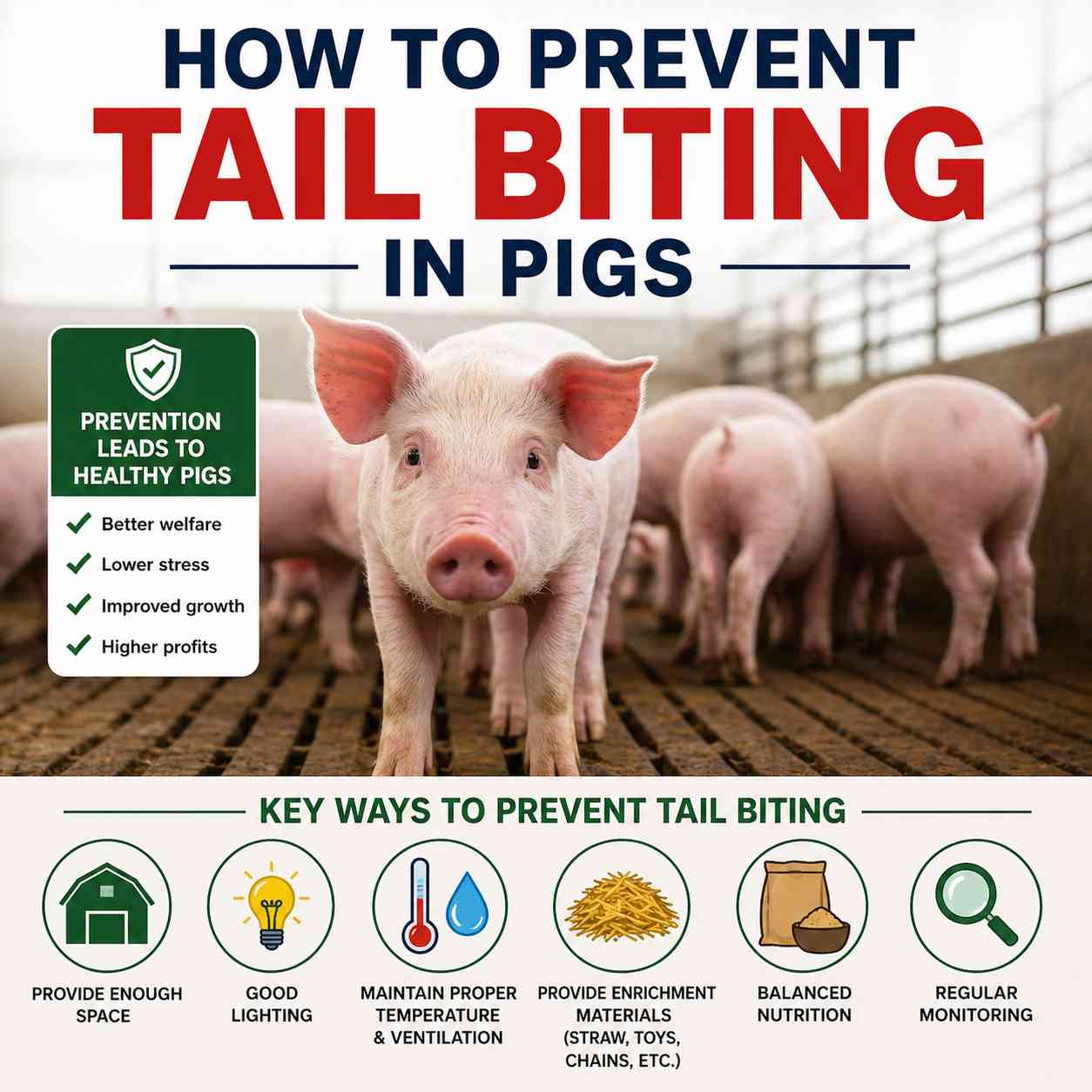
How to Prevent Tail Biting in Pigs
Provide Environmental Enrichment
Introduce materials that pigs can chew and explore. Straw is one of the most effective options. Hanging ropes, wooden blocks, or rubber toys also helps reduce boredom.
Regularly replace or refresh these materials to maintain interest.
Maintain Proper Stocking Density
Ensure that pigs have enough space to move, rest, and feed comfortably. Adequate space reduces competition and stress.
Follow recommended stocking guidelines based on the age and weight of pigs.
Ensure Balanced Nutrition
Check feeders regularly to ensure all pigs have access to feed. Clean water must be available at all times.
Improve Housing Conditions
Maintain good ventilation to reduce harmful gases such as ammonia. Keep temperature within the comfort range for pigs.
Dry and clean bedding improves comfort and reduces stress levels.
Minimize Stress and Sudden Changes
Avoid frequent mixing of unfamiliar pigs. When mixing is necessary, do it carefully and monitor behavior closely.
Maintain consistent feeding times and routines to reduce stress.
Monitor Health and Treat Problems Early
Regular health checks help identify sick or injured pigs quickly. Treat wounds immediately to prevent infection and stop other pigs from biting.
Implement parasite control programs to maintain overall health.
Separate Affected Animals
Remove pigs that are biting others and isolate injured pigs for treatment. This helps prevent the spread of the behavior within the group.
Providing a recovery area allows injured pigs to heal without further stress.
Long-Term Management Strategies
Preventing tail biting requires consistent management. Good housing design, proper nutrition, and regular observation create a stable environment for pigs.
Record-keeping helps identify patterns and recurring issues, allowing farmers to track changes in behavior, health problems, and environmental conditions over time.
Using tools like the My Piggery Manager app makes this process easier by organizing data on feeding, health, and daily observations in one place. Selecting calm and less aggressive pig breeds can also improve overall herd behavior, creating a more stable and manageable production system.
Training farm staff to recognize early signs ensures quick response and better outcomes.
Conclusion
Tail biting in pigs remains a major challenge that can quickly affect both animal welfare and farm profitability if left unmanaged. It often develops as a response to stress, poor living conditions, or unmet behavioral needs, making it essential for farmers to understand and address the root causes.
Effective prevention depends on creating a well-balanced environment where pigs have enough space, proper nutrition, good housing conditions, and opportunities for natural behavior through enrichment. Close observation of early warning signs enables quick intervention, reducing the risk of severe injuries and the spread within the group.
Consistent management, supported by proper record-keeping and tools like the My Piggery Manager app, helps farmers monitor trends and respond to issues promptly. With the right approach, tail biting can be minimized, leading to healthier pigs, improved growth performance, and a more productive pig farming operation.
Join Our Community ()
Your farm, your rules. Ditch the paperwork and take control with our intuitive apps. Get started today!
