Signs a Cow Is About to Give Birth (Calving Signs)
Stop struggling with paperwork and start farming with joy! Our apps make it simple. Take the first step today!
Calving is one of the most important stages in cattle production. A successful birth determines calf survival, future growth, and the overall productivity of the herd. Knowing when a cow is about to give birth allows farmers to prepare the calving area, provide proper supervision, and reduce the risk of complications. Many losses during calving happen because early warning signs go unnoticed or are misunderstood.
Cows show several physical and behavioral changes as calving approaches. Some appear weeks before birth, while others happen only hours before labor begins. Learning to recognize these signs helps farmers respond at the right time and ensure both the cow and calf remain safe. This guide explains each calving sign in detail and outlines how to manage the final stage of pregnancy effectively.
Understanding the Calving Timeline
The average gestation period for cattle ranges from 279 to 287 days, depending on breed and nutrition. As calving approaches, hormonal changes prepare the cow’s body for delivery. These changes affect the udder, pelvic area, appetite, and overall behavior.
Tracking breeding dates offers a general idea of when calving will occur. Physical signs provide clearer confirmation. Close observation during the last three weeks of pregnancy is essential, especially for first-calf heifers that may experience more difficulty during labor.
Udder Enlargement and Teat Changes
One of the earliest visible signs of approaching calving is udder development. The udder gradually fills as milk production begins. In mature cows, this process may start two to three weeks before calving. In heifers, udder filling often occurs closer to the delivery date.
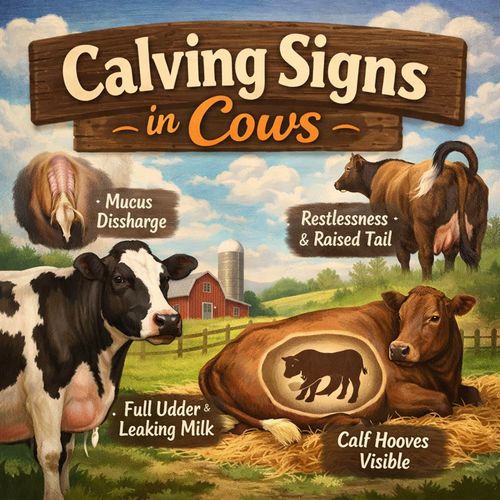
As calving nears, the teats become swollen and firm. The udder may feel tight and warm to the touch. In the final days, a yellowish fluid known as colostrum may leak from the teats. This fluid contains essential antibodies that protect the newborn calf during its first days of life.
Swelling of the Vulva and Pelvic Relaxation
Changes in the vulva provide strong indicators that calving is near. The vulva becomes enlarged, soft, and slightly elongated due to increased blood flow and hormonal shifts. This change allows the birth canal to stretch during delivery.
The ligaments around the tail head loosen as calving approaches. When these ligaments relax, the tail appears more raised, and the area around the pins looks sunken. This sign often appears within 12 to 48 hours before labor begins and is one of the most reliable indicators of impending birth.
Behavioral Changes in the Cow
Behavior often changes noticeably during the final stages of pregnancy. Cows may become restless, separate themselves from the herd, or seek quiet areas. Some walk in circles, paw the ground, or lie down and stand up repeatedly.
Loss of appetite is common during the hours leading up to calving. Cows may appear uneasy, turn their heads toward their flanks, or kick at their belly due to uterine contractions. Increased vocalization may occur, especially in heifers experiencing their first calving.
Mucus Discharge and Cervical Dilation
As the cervix begins to open, a thick, clear mucus discharge may appear from the vulva. This discharge indicates that the body is preparing for labor. The mucus may hang in long strands or appear as a sticky patch on the tail or hind legs.
This stage can last several hours or even a day. Once the discharge appears, calving usually follows soon. Close monitoring during this time helps prevent missed signs of labor progression or complications.
Signs of Active Labor
Active labor begins when the cow starts having visible abdominal contractions. She may strain, lie on her side, or stand and push intermittently. The water bag often appears as a fluid-filled sac protruding from the vulva.
Once the water bag breaks, the calf should be delivered within one to two hours. Normal presentation includes the front hooves followed by the nose. Prolonged straining without progress may indicate malpresentation or calving difficulty and requires prompt assistance.
Importance of a Clean Calving Environment
A clean and dry calving area reduces the risk of infection for both cow and calf. Mud, manure, and moisture increase the chance of navel infections and uterine disease. Providing fresh bedding and good drainage supports a safe delivery environment.
Proper space allows the cow to move freely during labor. Quiet surroundings help reduce stress and encourage natural calving behavior. Frequent observation ensures a quick response if problems arise.
Monitoring the Cow After Calving
After delivery, the cow should stand and begin licking her calf. This stimulates breathing and strengthens bonding. The placenta is usually expelled within a few hours. Retention beyond 12 hours may require veterinary attention.
The cow should show interest in feed and water soon after calving. Lack of appetite, fever, or foul-smelling discharge indicates possible infection. Monitoring during the first 24 hours is essential for early problem detection.
Ensuring Calf Health After Birth
A healthy calf should attempt to stand within 30 to 60 minutes. Nursing should occur shortly afterward so the calf receives colostrum. This first milk contains antibodies that protect against disease.
The navel should be disinfected to prevent infection. Weak calves may require assistance with feeding or warming. Early care significantly improves survival and long-term growth.
Value of Record Keeping in Calving Management
Accurate records help farmers track breeding dates, calving outcomes, and health issues. These records reveal patterns that guide future management decisions and improve herd performance.
Using digital tools such as My Cattle Manager allows farmers to monitor pregnancy status, record calving dates, track calf health, and receive reminders for follow-up care. Organized data leads to better planning and reduced losses over time.
Conclusion
Recognizing the signs that a cow is about to give birth is essential for successful calving management. Physical changes, behavioral shifts, and visible labor signs provide clear indicators when birth is near. Careful observation, clean facilities, and timely intervention help ensure safe delivery and healthy calves.
By understanding these signs and preparing in advance, farmers improve calf survival, protect cow health, and strengthen overall herd productivity. Proper calving management remains one of the most valuable investments in any cattle operation.
Join Our Community ()
The future of farming is at your fingertips. Reduce stress, boost efficiency, and manage with ease. Download now!
