How to Wean Lambs Without Stress.
A happier, more productive farm is just a click away. Take charge and simplify with our apps today!
Weaning is one of the most important stages in lamb management. This transition marks the point where lambs shift from dependence on their mothers’ milk to complete reliance on solid feed and water. When handled correctly, weaning supports strong growth, stable health, and efficient flock management. When handled poorly, it may cause weight loss, weakened immunity, digestive problems, and behavioral distress.
Stress during weaning affects both lambs and ewes. Lambs face nutritional changes and social separation, while ewes experience hormonal adjustments and udder pressure. Understanding how to manage this process carefully allows farmers to protect animal welfare and maintain productivity.
This guide explains proven methods to wean lambs with minimal stress, covering timing, preparation, feeding strategies, housing management, and post-weaning care.
Understanding the Weaning Process in Lambs
Weaning refers to the gradual removal of milk from the lamb’s diet until the lamb becomes fully independent. In natural systems, lambs reduce nursing slowly over several weeks. In managed systems, farmers control the timing to improve breeding schedules, milk availability, and lamb growth performance.
The digestive system of a young lamb changes significantly during early life. At birth, the rumen is undeveloped, and milk digestion occurs in the abomasum. As the lamb begins eating forage and concentrate, the rumen develops and becomes functional. Successful weaning depends on allowing enough time for this digestive transition to complete before milk removal.
Choosing the Right Time to Wean
Timing plays a central role in stress-free weaning. Most lambs are weaned between six and twelve weeks of age, depending on breed, nutrition, production goals, and management system. Lambs that consume adequate solid feed and show steady weight gain are better prepared for weaning.
Body weight provides a reliable indicator. Lambs should reach at least two to three times their birth weight before weaning. Lambs that are too small or weak face higher risks of illness and growth setbacks. Observing feed intake, rumination activity, and general vitality helps confirm readiness.
Preparing Lambs Before Weaning
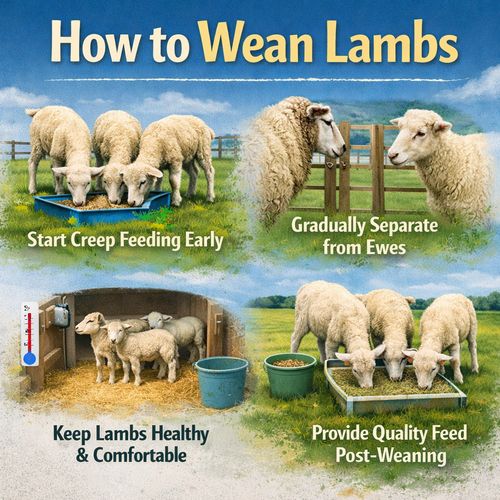
Preparation reduces shock and improves post-weaning performance. Introducing creep feed early encourages rumen development and teaches lambs to eat independently. High-quality creep feed rich in protein and energy supports muscle growth and digestive adaptation.
Access to clean water from an early age strengthens rumen function and encourages feed consumption. Offering fresh forage familiarizes lambs with grazing behavior and reduces anxiety after separation. Gradual exposure to solid diets ensures the digestive system can handle the nutritional shift.
Gradual Weaning Versus Abrupt Weaning
Gradual weaning lowers stress by slowly reducing milk access. This may involve separating lambs from ewes for part of the day and extending separation periods over several days. Lambs adjust their behavior and appetite without sudden deprivation.
Abrupt weaning involves immediate separation and complete milk removal. This method saves time and labor, yet it often causes higher stress levels, vocalization, appetite loss, and immune suppression. Gradual weaning supports smoother adaptation and better weight maintenance in most production systems.
Managing Separation Stress
Separation causes emotional stress because lambs form strong bonds with their mothers. Reducing visual and auditory contact between ewes and lambs helps shorten the distress period. Housing lambs out of sight and sound range from ewes lowers their vocalization and pacing.
Keeping lambs in familiar pens with known companions provides comfort and reduces fear. Introducing gentle human handling during this stage helps maintain calm behavior and prevents panic injuries.
Nutrition After Weaning
Post-weaning nutrition determines growth rate and health stability. Lambs require high-quality forage, clean water, and balanced concentrate rations. Protein supports muscle development, while energy fuels daily activity and immune function.
Sudden diet changes should be avoided. Maintaining the same creep feed used before weaning for several weeks supports digestive stability. Gradual forage introduction prevents bloating, diarrhea, and feed refusal. Monitoring feed intake ensures lambs continue gaining weight steadily.
Preventing Digestive Disorders
Weaning increases the risk of digestive upsets such as scours, acidosis, and bloat. Providing consistent feed schedules, adequate fiber, and fresh water reduces these risks. Avoid overcrowding around feeders to prevent competition and uneven intake.
Observation remains essential during this phase. Lambs showing lethargy, diarrhea, or reduced appetite require prompt attention. Early intervention prevents growth setbacks and disease spread.
Supporting Immune Health During Weaning
Stress weakens immunity, making lambs more vulnerable to infections. Maintaining clean housing, dry bedding, and proper ventilation protects respiratory and digestive health. Adequate mineral supplementation strengthens resistance against disease.
Vaccination schedules should align with weaning periods to provide protection when immunity dips. Deworming plans may also be adjusted to reduce parasite burdens during this sensitive stage.
Managing Ewes During Weaning
Ewes require careful management to prevent mastitis and udder discomfort. A gradual reduction in feed intake lowers milk production and reduces udder pressure. Monitoring udders daily helps detect swelling, heat, or pain early.
Limiting access to lush pasture during early weaning days supports natural drying off. Providing clean resting areas and stress-free handling protects udder health and prepares ewes for the next breeding cycle.
Housing and Environmental Management
Comfortable housing reduces anxiety and improves feed intake after weaning. Pens should provide adequate space, dry bedding, and protection from wind and rain. Overcrowding increases stress, disease transmission, and growth variation.
Maintaining stable group composition avoids social disruption. Introducing lambs to new pens gradually helps preserve feeding behavior and resting patterns.
Monitoring Growth and Behavior
Regular weighing confirms growth targets are met after weaning. Healthy lambs show steady weight gain, alert behavior, and consistent feeding activity. Any drop in performance signals nutritional gaps or health challenges.
Behavioral observation reveals stress levels. Calm grazing, rumination, and group resting indicate successful adaptation. Persistent bleating, pacing, or isolation suggests ongoing distress that requires management changes.
Record Keeping for Weaning Success
Accurate records support better planning and performance evaluation. Tracking weaning dates, weights, feed intake, and health treatments helps refine future strategies. These records identify which methods produce stronger lambs and faster recovery.
Digital tools such as My Sheep Manager allow farmers to document weaning data, monitor growth trends, and track health events for each lamb. Organized records simplify management decisions and improve long-term flock productivity.
Conclusion
Weaning lambs without stress requires thoughtful timing, careful preparation, and attentive management. Gradual milk reduction, proper nutrition, comfortable housing, and close monitoring protect lamb health and support steady growth. Supporting immune strength and managing ewe welfare ensures the entire flock benefits from a smooth transition.
When farmers understand the biological and behavioral needs of lambs during weaning, they create healthier animals and more efficient production systems. Stress-free weaning builds a foundation for strong performance, improved survival, and profitable sheep farming across every season.
Join Our Community ()
The future of farming is at your fingertips. Reduce stress, boost efficiency, and manage with ease. Download now!
