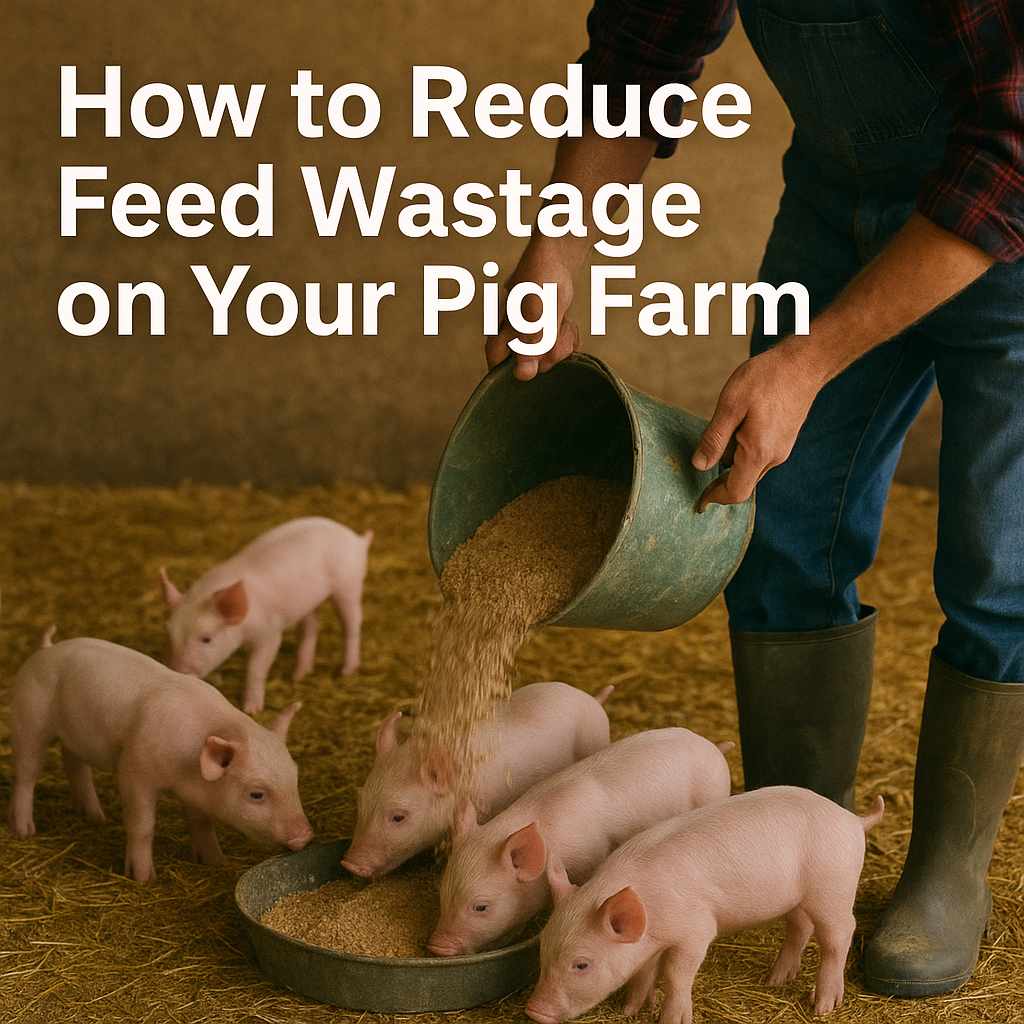
How to Reduce Feed Wastage on Your Pig Farm.
Save time, reduce mistakes, and enjoy farming again. Our apps make it possible. Get started today!
Feed is the most expensive input in pig farming. Any wastage directly increases production costs and reduces profit margins. Many farmers lose up to 15–25% of their feed through poor feeder design, wrong feeding methods, and avoidable management mistakes. Understanding how to reduce feed wastage on your pig farm can significantly improve your bottom line and ensure healthier, faster-growing pigs.
This guide explains the most practical and proven methods to minimize feed losses and boost feed efficiency across different production stages.
Choose the Right Feeder Design
Feeder design has a major impact on feed wastage, as large open troughs usually cause spillage, contamination, and trampling. When feed is easily pushed out or exposed to dirt, pigs waste more of it, increasing production costs and reducing efficiency. Choosing feeders that control how pigs access feed helps limit unnecessary losses and keeps the feeding area cleaner.
Different feeder styles offer unique advantages that help reduce wastage. Dry feeders limit moisture spoilage and allow pigs to eat with less scattering, while wet-dry feeders combine water and feed in one unit to improve feed conversion and encourage more controlled intake. Feeders with adjustable openings make it possible to regulate feed flow based on the size and age of the pigs, ensuring that they receive the right amount without overfilling or spillage.
An effective feeder should be designed so pigs can eat comfortably without being able to push large quantities of feed out of the trough. Proper feeder height and spacing help reduce competition and aggressive behavior, which are common causes of feed being flung onto the ground. When pigs have sufficient access and feel less pressure during feeding, they handle feed more calmly, resulting in far less wastage.
Adjust Feeder Settings Daily
Many farmers lose a significant amount of feed because the feeder opening is left too wide. When feed flows too freely, pigs easily scatter it with their snout, pushing large quantities onto the floor, where it becomes dirty and unusable.
This simple oversight leads to daily wastage that quickly adds up, especially in larger herds. Inspecting feeders at least once each day helps prevent this issue and ensures pigs receive feed at a controlled rate.
To manage feeders correctly, the opening should be adjusted so that only a thin layer of feed is visible in the trough, which encourages pigs to eat neatly without pushing excess feed out.
Overfilling should be avoided because it creates opportunities for waste, and any blockages should be cleared immediately to prevent sudden feed dumps that cause spillage. Consistent adjustments make feed consumption more controlled and reduce overall losses, improving efficiency and lowering feeding costs on the farm.
Feed the Correct Amount Based on Age and Weight
When pigs receive more feed than they can consume at one time, the excess often ends up being pushed around, stepped on, or played with instead of eaten. This behavior leads to large amounts of feed being scattered on the floor, where it quickly becomes dirty and unusable, turning what should have supported growth into avoidable loss.
A more controlled feeding routine minimizes this issue by matching feed portions to the pigs’ actual needs. Young pigs benefit from having their meals split into two or three sessions a day, which keeps consumption steady and reduces waste.
Finishers should receive feed quantities that align with their weight gain targets and daily intake requirements. Tools such as feeding charts and feed calculators make it easier to provide the right amount for each age group and production goal. When feed is given in measured amounts, every portion contributes to growth and farm profitability rather than being wasted in the pen.
Keep Feed Fresh and Dry
Keeping feed fresh and dry is essential because pigs reject feed that is wet, moldy, or contaminated. Once feed loses its palatability or nutritional value, it leads to immediate waste since pigs refuse to eat it.
Maintaining feed quality involves storing bags on wooden pallets away from moisture, using airtight containers in humid areas, covering feeders to protect them from rain or water spillage, and removing old feed before adding new. These simple practices keep feed clean and encourage pigs to finish their portions without avoidable spoilage.
Grind and Mix Feed Correctly
Feed particle size has a direct impact on how pigs consume and digest their feed. When particles are too coarse, pigs tend to sort through the ration and leave behind the larger pieces, creating unnecessary waste. Feed that is too fine can lead to dust-related losses and even digestive issues, which reduces overall feed efficiency.
A medium grind works best because it encourages uniform intake and reduces selective feeding. Thorough mixing prevents ingredients from separating, and using reputable feed mills or reliable on-farm mixers helps maintain consistency. In some cases, binders or moisture regulators can be added to reduce dust. Well-prepared feed supports better consumption and minimizes wastage caused by sorting.
Maintain Proper Water Supply
Water availability strongly affects how much feed pigs consume. When pigs lack consistent access to clean water, their feed intake drops, leaving uneaten feed in the trough. This leftover feed quickly absorbs moisture, becomes contaminated, and must be discarded, leading to unnecessary wastage.
Good water management helps prevent this problem by ensuring pigs have enough clean drinking points and by keeping drinkers positioned where they won't drip into the feeder. Regular cleaning of water lines and nipples maintains proper flow and hygiene. When pigs have constant access to clean water, they eat more efficiently, and feed remains dry and usable instead of turning into softened waste.
Reduce Competition and Overcrowding
Overcrowded pens often cause aggressive behavior, with pigs pushing each other and tossing feed while competing for space at the feeder. This results in large amounts of feed ending up on the floor, where it is trampled and spoiled, creating unnecessary waste.
Maintaining proper stocking density and providing enough feeding space allows pigs to eat calmly, reducing competition and feed loss. Separating slower-growing or weaker pigs prevents bullying and ensures that all animals can consume their portions efficiently, helping to minimize wastage and improve overall feed utilization.
Control Rodents and Birds
Rodents and birds can quickly consume a large portion of stored feed and often contaminate what remains, causing pigs to reject it. This not only increases feed wastage but also creates hygiene risks that can affect the health of the herd.
Preventing these losses requires sealing storage rooms and cracks along walls, using rodent traps, and installing bird-proof netting. Keeping feed bags sealed between feeding sessions and maintaining strict cleanliness in storage areas ensures that feed stays safe and usable. Protecting feed from pests allows pigs to consume what is provided efficiently, reducing unnecessary waste and costs.
Train Workers to Handle Feed Properly
Human error is a significant cause of feed wastage on farms, as employees who overfill feeders or fail to adjust them properly can unintentionally increase daily losses. Even small mistakes repeated over time add up to considerable amounts of wasted feed, affecting both costs and efficiency.
Training farm workers on correct feeder adjustments, appropriate feeding quantities for each stage, and early identification of feed spoilage helps prevent these losses. Establishing routine cleaning and inspection schedules ensures consistent feed management. Well-trained staff reduce feed wastage and improve overall farm productivity and efficiency.
Keep Accurate Feed Records
Recording daily feed usage allows farmers to track patterns of waste and identify where losses occur. Relying on estimation makes it difficult to pinpoint problems and take corrective action, which can lead to ongoing feed wastage.
Farmers should record the amount of feed offered, any feed refusals, purchase dates and batch numbers, growth rates, feed conversion ratios, and feeder cleaning schedules. Keeping these records helps monitor feed efficiency and makes it easier to improve management practices.
Using record-keeping apps such as Piggery Manager simplifies data tracking and helps farmers monitor feed efficiency more accurately.
Conclusion
Reducing feed wastage on your pig farm requires consistent management, smart feeder design, proper feeding techniques, and strong recordkeeping practices. The goal is to ensure every kilogram of feed contributes directly to growth and profitability.
With the right strategies in place, farmers can reduce losses, improve feed conversion, and create a more productive and sustainable pig farming operation.
Join Our Community ()
A happier, more productive farm is just a click away. Take charge and simplify with our apps today!
