How Long Does It Take for a Cow to Recover After Calving?
Don’t let paperwork hold you back. Empower your farm, save time, and grow smarter. Download now!
Calving is one of the most demanding stages in a cow’s life. After giving birth, the cow’s body goes through major physical and hormonal changes as it returns to normal reproductive and metabolic function. The recovery period after calving is extremely important because it affects milk production, fertility, body condition, and overall herd performance.
Many farmers expect cows to return to normal immediately after calving, yet recovery takes time and proper management. The duration depends on factors such as nutrition, calving difficulty, health status, age, and housing conditions. A healthy recovery ensures that the cow regains strength, produces milk efficiently, and prepares for future breeding.
Understanding the normal recovery timeline and recognizing warning signs of complications help farmers provide better care during this sensitive stage. This blog explains how long it takes for a cow to recover after calving, the stages of recovery, common challenges, and practical ways to support faster healing and improved productivity.
Understanding the Post-Calving Recovery Period
The recovery period after calving refers to the time required for a cow’s body to heal and return to normal function after giving birth. This includes uterine recovery, hormonal balance, restoration of appetite, and rebuilding energy reserves.
Most cows require several weeks to recover physically, while full reproductive recovery may take longer. During this period, the cow is vulnerable to stress, infections, metabolic disorders, and nutritional deficiencies.
Proper management during recovery has a direct effect on milk yield, fertility, and long-term health.
How Long Does Recovery Take After Calving?
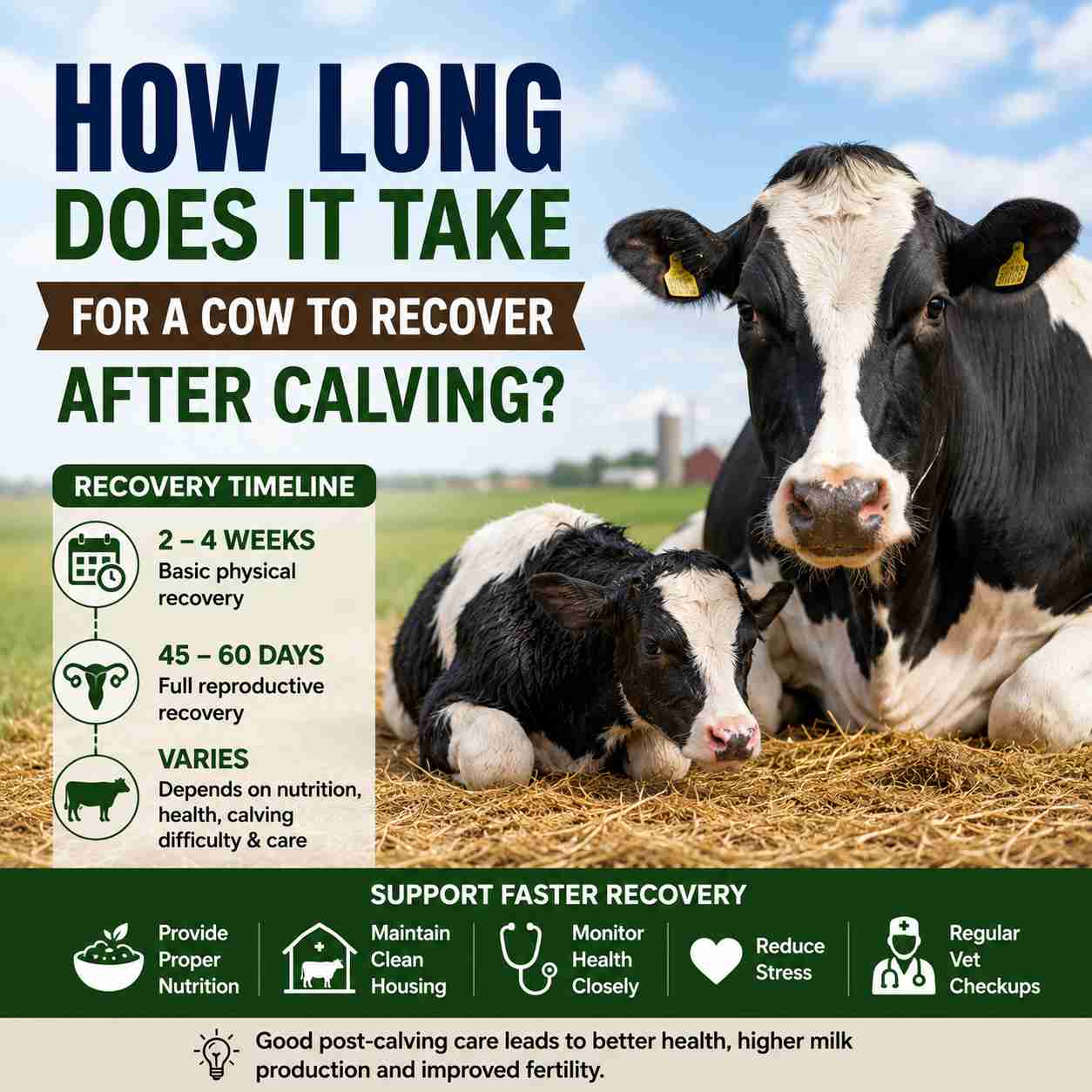
In most healthy cows, basic physical recovery takes about 2 to 4 weeks after calving. During this time, the cow regains strength, appetite improves, and swelling gradually decreases.
Full reproductive recovery usually takes around 45 to 60 days. This is the period needed for the uterus to shrink back to its normal size and for reproductive hormones to stabilize.
Some cows may recover faster, while others take longer, depending on calving conditions and health status.
Stages of Recovery After Calving
The First 24 Hours After Calving
The first 24 hours after calving are extremely important for the cow’s recovery and overall health. During this period, the cow is usually weak and tired after labor, so she needs adequate rest, clean water, and nutritious feed to regain strength. Proper care at this stage helps reduce stress and supports faster recovery.
Several important changes also occur during this time. The placenta should be expelled naturally, milk production begins, and the cow starts bonding with her calf. Appetite may return slowly as the body adjusts after calving. Close monitoring during these first hours helps farmers quickly identify any complications that may require attention.
Farmers should closely monitor the cow for excessive bleeding, weakness, or difficulty standing.
The First Week After Calving
During the first week, the cow’s body begins healing internally. The uterus starts shrinking, and vaginal discharge known as lochia may appear. This discharge is normal as long as it does not have a foul smell.
Feed intake gradually increases during this period. Proper nutrition is essential to support milk production and recovery.
The cow should also be monitored for fever, mastitis, or retained placenta.
Two to Four Weeks After Calving
By this stage, most cows regain much of their strength and activity level. Appetite improves significantly, and milk production stabilizes.
Swelling around the reproductive tract usually reduces, and the uterus continues returning to its normal size.
Healthy cows become more alert and active during this period.
Forty-Five to Sixty Days After Calving
This stage marks near-complete reproductive recovery in most cows. Hormonal cycles resume, and cows may begin showing signs of heat again.
Farmers often prepare cows for breeding during this period, provided body condition and health are satisfactory.
Factors That Affect Recovery Time
Calving Difficulty
Difficult births often extend recovery time. Cows that experience prolonged labor, assisted delivery, or injuries require more time to heal.
Internal damage or stress from difficult calving can delay uterine recovery and increase the risk of infections.
Nutrition
Proper nutrition is essential after calving. Cows require energy, protein, vitamins, and minerals to support healing and milk production.
Poor-quality feed weakens the immune system and slows recovery. Calcium deficiency and energy imbalance are common problems during this period.
Body Condition Score
Cows that calve in poor body condition often struggle to recover quickly. Underweight cows lack energy reserves, while overweight cows are more prone to metabolic disorders.
Maintaining an ideal body condition before calving improves recovery speed and reproductive performance.
Health Problems
Post-calving diseases can delay recovery significantly. Conditions such as mastitis, metritis, milk fever, and ketosis affect appetite, energy levels, and fertility.
Early treatment is essential to prevent complications.
Housing and Hygiene
Clean and comfortable housing reduces stress and infection risk. Wet or dirty environments increase the chances of bacterial infections after calving.
Proper bedding and ventilation improve cow comfort and support healing.
Common Problems During Recovery
Retained Placenta
A retained placenta occurs when the fetal membranes are not expelled within 24 hours after calving. This condition increases infection risk and delays recovery.
Affected cows may show fever, foul-smelling discharge, and reduced appetite.
Metritis
Metritis is a uterine infection that commonly occurs after calving. Symptoms include fever, weakness, foul discharge, and reduced milk production.
Prompt veterinary treatment is necessary.
Milk Fever
Milk fever results from low blood calcium levels after calving. Cows may become weak, unable to stand, or lose appetite.
This condition requires immediate treatment to prevent serious complications.
Ketosis
Ketosis occurs when cows cannot meet their energy demands after calving. Signs include weight loss, reduced appetite, and decreased milk production.
Balanced feeding helps reduce the risk.
Signs of Healthy Recovery
Farmers should monitor cows daily for signs of normal recovery. Healthy cows usually show:
Good Appetite
A healthy cow usually regains her appetite soon after calving. Regular feeding and normal rumination show that the digestive system is functioning properly and the cow is recovering well. Poor appetite may indicate illness, pain, or metabolic problems.
Normal Body Temperature
Maintaining a normal body temperature is a strong sign that the cow is free from infection or serious health complications. Fever after calving may suggest conditions such as metritis, mastitis, or retained placenta, which require immediate attention.
Increasing Activity Levels
As recovery progresses, cows become more alert and active. They begin moving comfortably, interacting with the herd, and showing normal behavior. Weakness or prolonged inactivity may signal health problems or delayed recovery.
Steady Milk Production
Consistent milk production indicates that the cow is adapting well after calving. Healthy milk yield reflects good nutrition, proper hydration, and overall recovery. A sudden drop in milk production can be a warning sign of illness or stress.
Clean Vaginal Discharge Without Foul Odor
Mild vaginal discharge after calving is normal as the uterus cleans itself. The discharge should gradually decrease and should not have a strong or unpleasant smell. Foul-smelling discharge often indicates uterine infection and requires prompt treatment.
Gradual Return to Normal Body Condition
Healthy cows slowly regain strength and body condition after calving. Improved muscle tone and stable weight show that the cow is recovering and receiving enough nutrients. Excessive weight loss may indicate poor nutrition or underlying health issues.
How to Support Faster Recovery After Calving
Provide High-Quality Nutrition
Mineral supplementation helps prevent deficiencies.
Maintain Clean Housing
Keep calving areas dry and hygienic. Clean bedding reduces bacterial contamination and infection risk.
Comfortable housing also lowers stress levels.
Monitor Health Closely
Early intervention prevents severe illness.
Reduce Stress
Avoid overcrowding and excessive movement after calving. Allow the cow enough rest during the recovery period.
A calm environment improves healing and feed intake.
Schedule Veterinary Checkups
Routine veterinary examinations help ensure proper recovery. Post-calving health checks identify hidden issues before they become serious.
Long-Term Importance of Proper Recovery
The recovery period after calving affects future fertility, milk production, and overall herd productivity. Poor recovery can lead to delayed breeding, lower milk yield, and increased medical costs.
Cows that recover properly are more likely to maintain good reproductive performance and stay productive for longer periods.
Good post-calving management improves farm profitability and animal welfare.
Conclusion
Recovery after calving is a critical stage that directly affects a cow’s future fertility, milk production, and overall health. While many cows regain strength within a few weeks, full reproductive recovery can take up to two months, depending on nutrition, calving conditions, health status, and management practices. Careful monitoring during this period helps farmers detect complications early and provide timely support.
Providing balanced nutrition, clean housing, stress-free conditions, and regular health checks helps cows recover more efficiently and reduces the risk of post-calving diseases. Observing signs such as good appetite, steady milk production, normal body temperature, and increasing activity levels gives a clear indication that recovery is progressing well.
Farmers who invest in proper post-calving care create healthier and more productive herds. Strong recovery after calving supports better breeding performance, improved milk yield, lower treatment costs, and long-term success in cattle farming.
Join Our Community ()
Transform your farm into a well-oiled machine! Streamline tasks, save time, and focus on growth. Download now!
