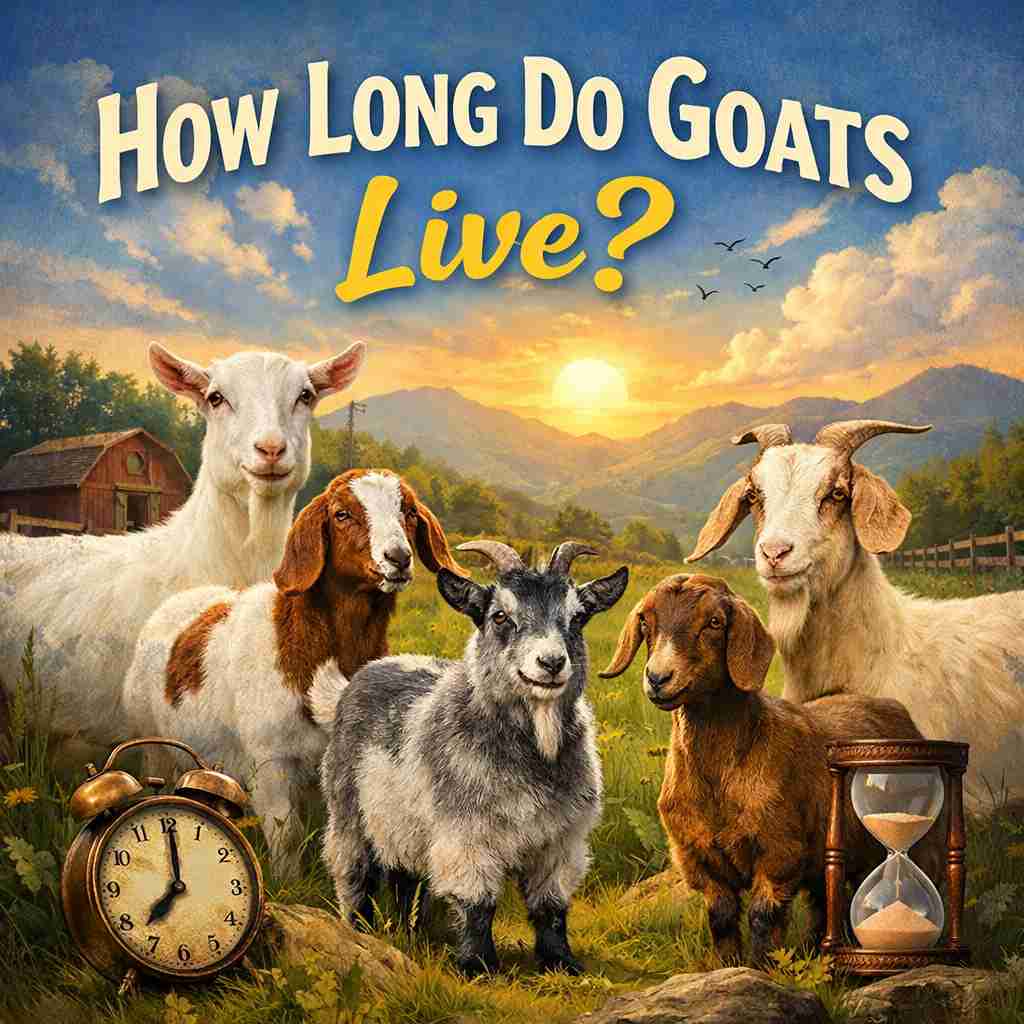
How Long Do Goats Live? Lifespan by Breed and Care.
Don’t let paperwork hold you back. Empower your farm, save time, and grow smarter. Download now!
Understanding how long goats live is essential for every farmer planning a sustainable and profitable goat enterprise. Whether you are raising goats for meat, milk, or breeding, knowing the average goat lifespan helps you make informed decisions about replacement stock, health management, and long-term productivity. Several factors, including breed, nutrition, disease prevention, housing conditions, and overall farm management practices, influence goat longevity.
In this detailed guide, we explore the average lifespan of goats, differences between breeds, and practical steps you can take to help your goats live longer, healthier lives.
What Is the Average Lifespan of a Goat?
The average goat lifespan ranges between 10 to 18 years, depending on breed and management. In well-managed environments with proper nutrition and veterinary care, some goats can live beyond 18 years. However, commercial meat goats are often culled earlier due to production cycles rather than natural lifespan limits.
Dairy goats typically live longer when managed for multiple lactations. Meat goats may have shorter productive lifespans due to faster turnover systems. Pet goats often live the longest because they experience less production stress.
Environmental conditions also influence longevity. Goats raised in harsh climates with limited feed resources tend to have shorter lifespans compared to those kept under controlled and well-managed systems.
Goat Lifespan by Breed
Different goat breeds have different life expectancies due to genetics, body size, and production demands.
Boer Goats (Meat Breed)
Boer goats are widely known for rapid growth and excellent meat production. Their average lifespan is around 8 to 12 years under normal farm conditions. In commercial meat production systems, they are usually sold or culled earlier for economic reasons.
Boer goats are hardy animals with strong resistance to certain environmental stressors. However, heavy body weight can contribute to joint stress and mobility issues in older animals. Proper nutrition and mineral balance are important to maintain structural health.
Kiko Goats (Meat Breed)
Kiko goats are known for their resilience and low maintenance requirements. Their lifespan often ranges from 12 to 15 years, sometimes longer under good management.
This breed thrives in extensive grazing systems and shows strong resistance to parasites and diseases. Their natural hardiness contributes to longer survival in challenging farming environments.
Saanen Goats (Dairy Breed)
Saanen goats are popular dairy goats recognized for high milk yield. Their lifespan generally ranges from 10 to 15 years. Dairy goats can remain productive for several lactations when managed properly.
High milk production demands good feeding programs, especially adequate energy, protein, and calcium intake. Poor nutrition during lactation may shorten their productive years.
Nubian Goats (Dual-Purpose Breed)
Nubian goats are valued for milk with high butterfat content and moderate meat production. Their lifespan is usually 10 to 15 years, depending on management.
They adapt well to warm climates. Consistent parasite control and vaccination programs are important for maintaining long-term health.
Pygmy Goats (Companion Breed)
Pygmy goats often live the longest among goat breeds, with lifespans reaching 15 to 18 years or even more in pet settings.
Their smaller body size reduces joint strain and metabolic stress. When kept as companion animals with proper veterinary care, they tend to achieve maximum lifespan potential.
Key Factors That Affect Goat Lifespan
Nutrition and Feeding Management
Proper nutrition directly affects goat longevity. Goats require balanced diets containing energy, protein, fiber, vitamins, and essential minerals. Deficiencies in copper, selenium, or calcium can lead to long-term health issues.
Quality pasture, supplemented with concentrate feeds during critical stages such as pregnancy and lactation, supports immune strength and body condition. Access to clean water at all times is necessary for digestion and metabolic function.
Overfeeding energy-rich diets can lead to obesity, while underfeeding weakens immunity. Both extremes reduce lifespan.
Disease Prevention and Health Care
Regular vaccination programs protect goats from common infectious diseases. Strategic deworming and parasite control are critical, especially in humid climates where worm burdens are high.
Routine health checks allow early detection of lameness, mastitis, respiratory infections, and reproductive disorders. Early treatment prevents chronic conditions that may shorten lifespan.
Biosecurity measures reduce disease introduction into the herd. Quarantining new animals before mixing them with the main herd protects long-term herd health.
Housing and Environmental Conditions
Dry, well-ventilated housing reduces respiratory problems and hoof infections. Goats are sensitive to wet and muddy environments, which can cause foot rot and stress.
Adequate space prevents overcrowding, reduces aggression, and lowers disease transmission rates. Clean bedding materials, such as straw or wood shavings, improve comfort.
Protection from extreme heat or cold also supports longevity. Heat stress can reduce feed intake and weaken immunity over time.
Breeding Management
Early breeding before full maturity can strain young does and shorten their productive life. Most breeds should be bred only after reaching adequate body weight and age.
Proper kidding management reduces complications such as dystocia and uterine infections. Frequent breeding without adequate recovery time may reduce lifespan in high-production animals.
Maintaining accurate breeding records helps farmers monitor reproductive efficiency and health trends across years.
Genetics and Selective Breeding
Genetic background strongly influences lifespan. Animals selected from strong maternal lines with good disease resistance often live longer.
Avoiding inbreeding maintains genetic diversity and reduces the risk of hereditary defects. Selecting breeding stock based on health, structural soundness, and productivity supports long-term herd sustainability.
Productive Lifespan vs. Natural Lifespan
It is important to distinguish between productive lifespan and natural lifespan. A goat may live up to 15 years naturally, yet its productive years for milk or reproduction may end earlier.
Dairy goats often produce efficiently for 6 to 8 lactations. Meat goats may remain productive for 5 to 7 years in breeding systems. After that period, fertility and performance may decline.
Farmers must balance economic efficiency with animal welfare considerations when making culling decisions.
How to Help Your Goats Live Longer
To improve goat lifespan on your farm, each management practice should be applied consistently and monitored closely. Below are summarized explanations of each key point.
Provide balanced nutrition throughout all life stages
Balanced nutrition supports growth, reproduction, immunity, and long-term productivity. Kids need colostrum and protein-rich feed for proper development, while pregnant and lactating does require higher energy, protein, and mineral intake. Mature bucks need controlled diets with proper mineral balance to prevent metabolic disorders. Consistent access to quality forage, minerals, and clean water prevents deficiencies that can shorten lifespan.
Implement routine vaccination and parasite control programs
Preventive healthcare protects goats from infectious diseases and heavy parasite burdens that weaken immunity. A structured vaccination schedule reduces sudden deaths and production losses. Strategic deworming based on need rather than routine overuse helps maintain drug effectiveness and prevents resistance. Healthy goats experience fewer chronic illnesses and remain productive for more years.
Maintain clean, dry housing
Dry, well-ventilated housing reduces respiratory infections, hoof problems, and stress. Regular manure removal lowers bacterial buildup and ammonia levels. Adequate space minimizes aggression and injury. Comfortable housing conditions strengthen immune response and support steady growth and reproduction.
Avoid early breeding of immature does
Breeding goats before they reach proper body weight and maturity can cause kidding complications and long-term reproductive damage. Allowing does to grow fully before first breeding improves fertility, reduces stress, and extends productive years. Adequate recovery time between kidding cycles also protects long-term health.
Keep detailed health and breeding records
Accurate records help track vaccination dates, breeding history, kidding outcomes, growth rates, and treatments. Identifying patterns early allows timely intervention and better culling or breeding decisions. Well-documented herds are easier to manage and tend to perform more consistently over time.
Select breeding stock from strong genetic lines
Choosing animals from healthy, productive, and long-living bloodlines improves herd resilience. Good genetics enhances fertility, disease resistance, structural strength, and overall longevity. Avoiding inbreeding maintains vigor and reduces inherited defects that may limit lifespan.
Use farm management tools like My Goat Manager to track performance
Digital farm management systems simplify record-keeping and improve decision-making. The My Goat Manager app helps farmers track breeding records, health treatments, vaccinations, weight gain, expenses, and productivity in one organized platform. Automated reminders ensure timely vaccinations and pregnancy checks.
Having accurate, accessible data helps detect health trends early and supports informed management decisions. Efficient tracking leads to healthier goats, improved productivity, and longer herd lifespan.
Common Signs of Aging in Goats
As goats age, several physical and productive changes become noticeable. Recognizing these early signs helps you adjust management and maintain their comfort and health.
Worn or missing teeth
Older goats often develop worn, loose, or missing teeth, which reduces their ability to graze efficiently. This can limit feed intake and gradually affect body condition if diets are not adjusted.
Reduced body condition
Aging goats may struggle to maintain weight even with adequate feeding. Slower metabolism and dental issues often contribute to gradual muscle loss and thinner body appearance.
Lower fertility
Reproductive performance declines with age, leading to reduced conception rates and smaller litter sizes. Hormonal changes and overall body condition influence breeding efficiency.
Decreased milk yield
Milk production typically drops in older does as udder tissue and metabolic efficiency decline. Lactation periods may become shorter with lower overall output.
Slower mobility
Joint stiffness and hoof wear can reduce movement and grazing activity. Arthritis and structural strain become more common in senior goats.
Conclusion
Understanding how long goats live helps farmers plan for sustainability, profitability, and long-term herd improvement. While the average goat lifespan ranges from 10 to 18 years, actual longevity depends heavily on breed, genetics, nutrition, healthcare, housing, and breeding management. Meat breeds such as Boer goats may have shorter productive years in commercial systems, while hardy breeds like Kiko goats and smaller breeds like Pygmy goats often live longer under proper care. Dairy breeds such as Saanen and Nubian goats require structured feeding and health programs to maintain both productivity and lifespan.
By focusing on balanced nutrition, preventive healthcare, clean housing, responsible breeding practices, strong genetic selection, and accurate record-keeping, farmers can significantly extend the productive and natural lifespan of their goats. Long-living goats contribute to improved herd stability, reduced replacement costs, and better overall farm performance. A well-managed herd is the foundation of a resilient and profitable goat enterprise.
Join Our Community ()
Make every moment on your farm count! Simplify, streamline, and succeed. Download our apps now!
