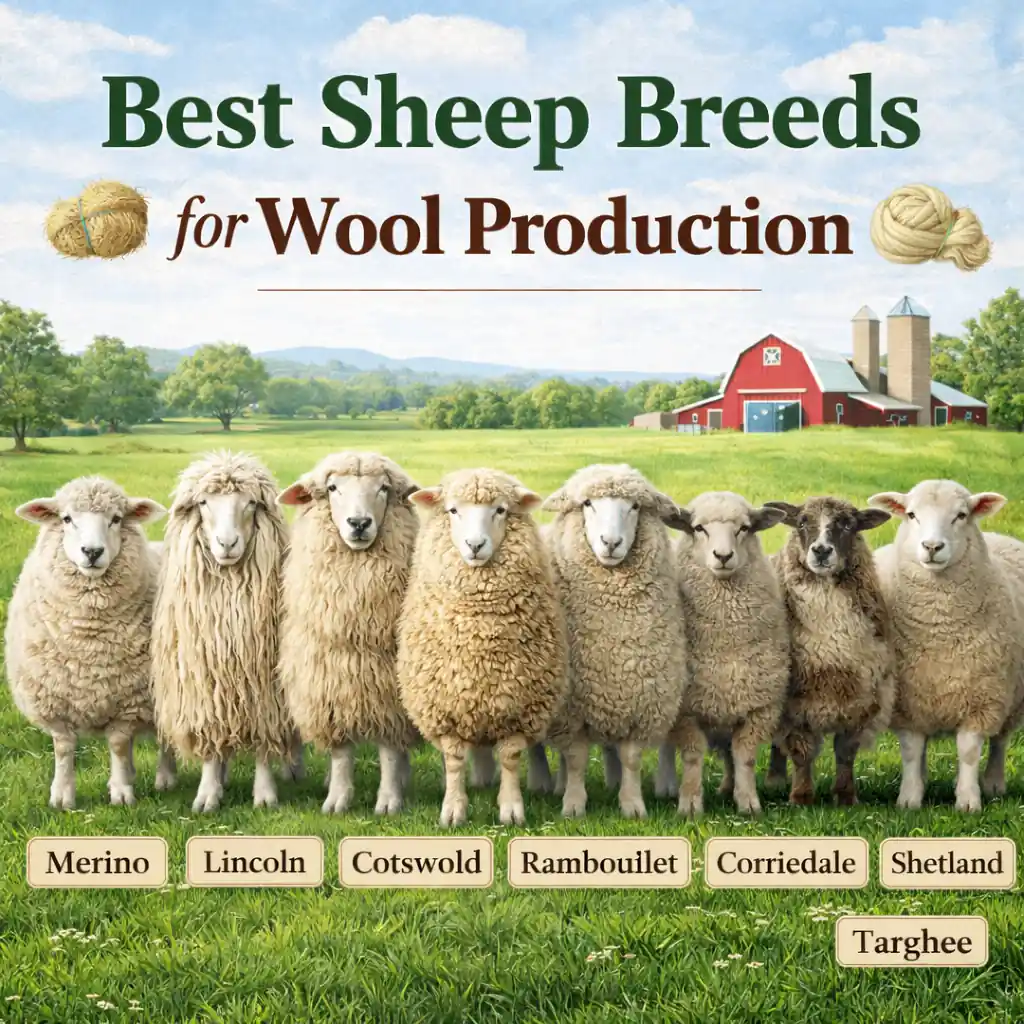
Best Sheep Breeds for Wool Production.
Farming smarter isn’t a dream—it’s a tap away. Organize, automate, and grow with our apps. Start today!
Wool remains an important product in the global livestock industry, supplying raw material for textiles, carpets, sweaters, blankets, and premium fashion fabrics. Sheep farmers who focus on wool production benefit from steady market demand, diversified income opportunities, and improved genetic performance within their flocks.
Wool quality depends on key characteristics such as fiber diameter, staple length, crimp, tensile strength, and cleanliness. Some breeds produce fine wool that is ideal for luxury garments, while others produce long or coarse wool used in carpets and heavy fabric industries. A productive wool breed should be hardy, disease-resistant, adaptable to the local environment, and capable of producing uniform fleece across multiple shearing cycles.
Selecting the right sheep breed strengthens flock profitability by creating opportunities to market both wool and meat, supply specialty fiber industries, and enhance long-term breeding programs. Farmers who understand breed performance, climate suitability, and fleece characteristics are better equipped to manage product quality, market value, and sustainability within their production system.
This guide highlights the most productive wool sheep breeds and helps farmers identify which options are best suited to their region and production goals
Merino Sheep – The Global Standard for Fine Wool
Merino sheep are widely recognized as the leading fine-wool breed in the world. Their fleece is soft, dense, elastic, and highly valued in the textile and fashion industry. Merino wool has an exceptionally small fiber diameter, which makes it breathable, lightweight, and comfortable when worn close to the skin. This quality makes Merino fleece ideal for sweaters, sportswear, luxury garments, and fine knitting.
Merino sheep thrive in dry and semi-arid climates and perform well in managed pasture systems. They are relatively hardy and adapt well to large flock production. The breed requires routine shearing because its wool grows continuously throughout the year. Farmers value Merino sheep for their high wool yield, premium market price, and strong demand from international buyers.
Rambouillet Sheep – Heavy Wool Producers with Strong Frames
Rambouillet sheep originate from France and are closely related to the Merino breed. They produce fine to medium-fine wool, making them suitable for both wool garments and general textile use. The fleece is dense and heavy, providing a high wool yield per shearing season. Rambouillet sheep are known for strong bodies, good flocking behavior, and high adaptability in harsh environments.
Their wool has excellent elasticity, which improves fabric durability and strength. Rambouillet sheep tend to grow larger than Merino, which gives farmers an advantage in dual-purpose production systems where both meat and wool contribute to income. This breed performs well on extensive rangelands and large grazing units.
Corriedale Sheep – A Balanced Medium-Wool Breed
Corriedale sheep are a popular medium-wool breed developed from crossing Merino and Lincoln bloodlines. Their fleece is dense, long-stapled, and highly uniform, making it suitable for knitting yarn, blankets, and woven fabrics. Corriedale wool has good strength and softness, with a balanced fiber diameter that appeals to hand spinners and small-scale textile producers.
This breed is calm, easy to manage, and well-suited for both pasture farms and mixed production systems. Corriedales are valued for steady growth rates, strong maternal ability, and consistent fleece output. Many small-scale farmers favor this breed because it delivers both meat and wool income while remaining manageable in diverse environments.
Lincoln Sheep – Producers of Long and Lustrous Wool
Lincoln sheep are known for producing some of the longest wool fibers among all sheep breeds. Their fleece is heavy, lustrous, and coarse, making it ideal for carpets, rugs, upholstery, and industrial textiles. The wool has a characteristic sheen that reflects light, giving it strong appeal in specialty wool markets.
Lincolns are large-framed sheep with strong legs and durable bodies. They perform well in cool and wet climates where pasture is abundant. Their long wool locks resist weather exposure and maintain structure during processing. Farmers who target niche spinning or craft markets often prefer Lincoln wool due to its strength and visual appeal.
Romney Sheep – Wool Suitable for Damp and Coastal Regions
Romney sheep are highly valued in regions with humid or coastal climates because their wool remains durable even in damp environments. The fleece is strong, long-stapled, and resistant to felting, which makes it ideal for carpets, outerwear, and textured fabrics. Romney wool holds dye evenly, making it a favorite among hand spinners and fiber artists.
The breed is hardy, disease-resistant, and capable of grazing on rough pasture. Romney sheep are widely used in temperate climates where rainfall is common. Their calm temperament and strong maternal traits contribute to efficient flock management. Many farmers choose Romney sheep for both wool and meat production in mixed farming systems.
Cheviot Sheep – Durable Medium-Wool Producers
Cheviot sheep produce medium wool characterized by resilience, springiness, and good crimp. The fleece is widely used in tweed fabrics, blankets, and durable garments. Cheviot wool is firm and elastic, making it useful in textile products that require structure and strength.
The breed is energetic, alert, and highly adaptable to hill and upland grazing systems. Cheviots withstand cold temperatures, uneven terrain, and low-quality pasture better than many fine-wool breeds. Their strong survival traits make them an excellent choice for farmers operating in rugged environments where hardiness is essential.
Selecting the Right Wool Sheep Breed for Your Farm
The most suitable wool breed depends on the farmer’s production goals, local climate conditions, market demand, and overall management capacity. Every wool breed performs differently in terms of growth rate, fleece characteristics, feed efficiency, and adaptability, so farmers benefit from evaluating these factors carefully before expanding or establishing a wool-focused flock.
Climate tolerance and adaptability play a major role in breed selection because sheep must thrive in the environmental conditions where they are raised. Breeds such as Merino and Rambouillet perform well in dry and semi-arid climates, while Romney and Lincoln adapt better to cool and humid regions. Selecting breeds suited to the local climate improves flock health, wool growth consistency, and long-term productivity.
Wool quality and intended market use influence which breeds create the best economic returns. Fine-wool breeds supply premium textile and fashion industries, medium-wool breeds serve general apparel and hand-spinning markets, and long-wool breeds support carpet, upholstery, and craft fiber sectors. Farmers who match fleece characteristics to specific buyers can access stronger pricing and niche fiber markets.
Body size and dual-purpose potential determine whether a flock will generate income from wool alone or from both wool and meat. Medium-frame breeds such as Corriedale and Dorset provide balanced carcass traits along with good fleece production, while fine-wool breeds place greater emphasis on fiber quality. Choosing the right balance allows farmers to diversify income and improve financial stability.
Feed requirements and grazing ability influence management costs and pasture sustainability. Hardy and thrifty breeds perform well on natural grazing systems, while heavier sheep may require more concentrated feeding support. Understanding nutritional needs ensures better flock health, improved fleece growth, and efficient resource use across the farming system.
Availability of breeding stock in the region affects the practicality of long-term genetic improvement. Farmers benefit from selecting breeds with accessible rams, replacement ewes, and established breeder networks to support ongoing performance selection and flock expansion. Reliable access to quality genetics strengthens productivity and ensures consistent wool standards.
Fine-wool breeds such as Merino and Rambouillet are ideal for farmers targeting luxury textile industries due to their soft, high-value fleece. Medium-wool breeds such as Corriedale and Cheviot suit producers who want balanced wool and meat production within mixed farming systems. Long-wool breeds such as Lincoln and Romney are well-suited for carpet manufacturers, weaving, and specialty craft fiber markets where stronger and longer fibers are preferred.
Choosing the right mix of genetics strengthens flock performance, improves wool market opportunities, and supports long-term farm profitability. Farmers can enhance decision-making and record accuracy by using tools such as the My Sheep Manager farm app, which helps track fleece weights, breeding performance, lambing results, and financial records to improve flock planning and productivity over time.
Conclusion
Wool sheep farming creates unique opportunities in both traditional and specialty fiber markets. Each breed offers distinct qualities that influence fleece value, growth traits, and production efficiency. Farmers who understand breed characteristics can align their flocks with suitable markets, whether producing fine clothing fiber, industrial wool, or specialty craft materials.
Successful wool production depends on good breed selection, consistent flock management, and a clear understanding of market needs. With the right wool sheep breed, farmers can build a profitable and sustainable enterprise that supports both livestock productivity and a high-quality fiber supply.
Join Our Community ()
Imagine a farm where everything runs smoothly. Make it real—download our revolutionary apps now!
