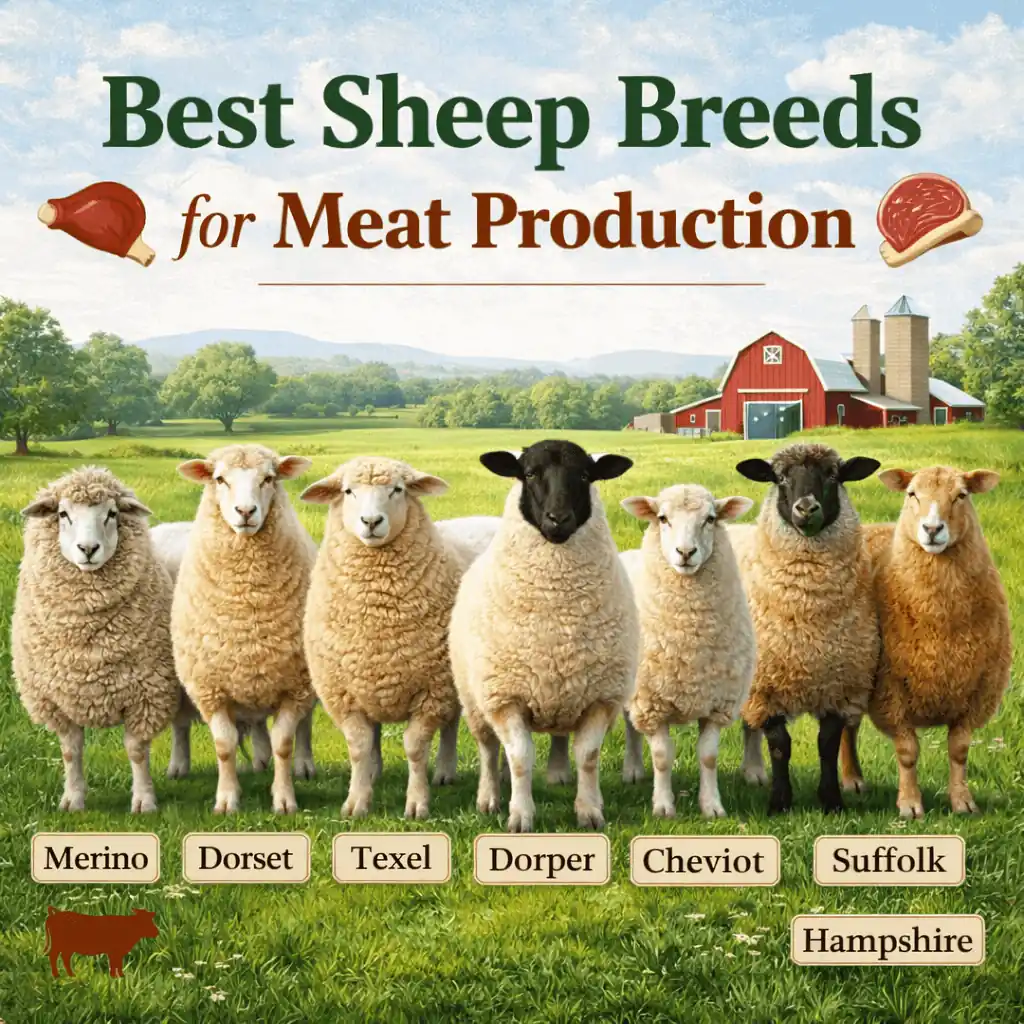
Best Sheep Breeds for Meat Production.
Unlock your farm’s full potential! Say goodbye to stress and hello to efficiency. Download now!
Sheep meat production is a profitable livestock enterprise when the right breeds are selected. Meat-focused sheep breeds are valued for fast growth, good feed conversion, strong carcass quality, and adaptability to different climates.
Choosing the correct breed determines growth rate, market weight, disease resistance, and overall farm income. Farmers who invest in suitable meat sheep breeds often experience lower production costs and better returns.
This guide explores the best sheep breeds for meat production, highlighting their characteristics, performance, and suitability for various farming systems. Whether you are a beginner or an experienced sheep farmer, understanding breed differences will help you make informed decisions that improve productivity and profitability.
Why Breed Selection Matters in Meat Sheep Farming
Breed selection directly influences how quickly lambs reach market weight, how efficiently they convert feed into muscle, and how well they perform under local conditions. Some breeds excel in intensive systems with high-quality feed, while others thrive in extensive grazing systems with minimal inputs.
Meat sheep breeds are usually selected for strong muscling, broad frames, and high dressing percentages. Many modern meat breeds have been developed through selective breeding to improve growth rate and carcass quality. Farmers who match breed traits with their environment and management style achieve better outcomes with fewer challenges.
Dorper Sheep
Dorper sheep are among the most popular meat breeds worldwide. Originating from South Africa, they were developed for meat production in harsh, dry environments. Dorpers are known for their rapid growth, excellent carcass yield, and strong adaptability.
This breed has a short hair coat that sheds naturally, reducing shearing costs. Dorper lambs grow quickly and reach market weight at an early age. Their meat is tender with good fat distribution, making it highly desirable in commercial markets. Dorper sheep perform well under both pasture-based and semi-intensive systems, which makes them suitable for many regions.
Suffolk Sheep
Suffolk sheep are a leading meat breed recognized for their black face, strong legs, and impressive growth performance. They are widely used in crossbreeding programs to improve carcass quality and growth rate.
Suffolk lambs grow rapidly and produce lean, well-muscled carcasses. This breed performs best in areas with good pasture and proper nutritional management. Suffolk sheep are especially valued in commercial meat production due to their consistency in producing high-quality lambs that meet market demands.
Merino Sheep
Merino sheep are widely known for wool production, yet they also play an important role in meat systems. Merino lamb meat is tender and flavorful, especially when animals are raised under good nutrition programs. Merino sheep are highly adaptable and perform well in dry and semi-arid climates.
While pure Merino sheep grow more slowly compared to specialized meat breeds, they are often used in crossbreeding programs to improve carcass quality and resilience. Their strong survival traits, disease tolerance, and efficient grazing ability make them valuable in sustainable meat production systems.
Dorset Sheep
Dorset sheep are highly valued for their ability to breed throughout the year, which allows continuous lamb production and a steady meat supply. They have good growth rates and produce well-muscled carcasses with excellent meat quality.
Dorset lambs finish well on pasture, reducing dependence on expensive concentrate feeds. Their calm temperament and strong maternal instincts simplify flock management. Farmers targeting consistent year-round meat production often choose Dorset sheep for their reliability and flexibility.
Cheviot Sheep
Cheviot sheep are hardy, medium-sized animals originally developed in hilly and cold regions. They are excellent for meat production in challenging environments where other breeds struggle. Cheviot sheep produce lean meat with a distinctive flavor preferred in niche markets.
Their strong legs, good grazing ability, and resistance to harsh weather conditions make them suitable for extensive systems. Cheviot ewes are good mothers and produce vigorous lambs that grow steadily under pasture-based feeding.
Texel Sheep
Texel sheep are known for superior muscling and exceptional meat quality. Originating from the Netherlands, this breed has gained popularity for producing lean meat with minimal fat cover.
Texels have a compact body, wide loin, and strong hindquarters, which contribute to high dressing percentages. Their lambs grow efficiently when managed well and are ideal for farms focusing on premium meat markets. Texel sheep are often used in crossbreeding to enhance carcass traits in local breeds.
Hampshire Sheep
Hampshire sheep are large-framed meat animals with excellent growth rates and feed efficiency. They are easily identified by their dark face and wool-free legs.
This breed produces fast-growing lambs that reach market weight quickly. Hampshire sheep are hardy and adapt well to different management systems. Their strong mothering ability supports higher lamb survival rates, which improves overall productivity. Hampshire meat is well-marbled and appealing to consumers.
Dorper Crossbreeds
Dorper crossbreeds combine the strengths of Dorper sheep with local or indigenous breeds. These crosses often show improved growth rate, better adaptability, and stronger disease resistance.
Crossbreeding helps farmers enhance meat yield while maintaining resilience to local environmental conditions. Dorper crosses are popular in tropical and semi-arid regions where adaptability is essential. They are suitable for smallholder farmers looking to improve meat output without investing in purebred stock.
Barbados Blackbelly Sheep
Barbados Blackbelly sheep are well-suited for hot and humid climates. They are hair sheep, which means they do not require shearing and have lower maintenance costs.
This breed is valued for lean meat and good reproductive performance. Blackbelly sheep have strong resistance to parasites and diseases common in warm regions. Their moderate growth rate is balanced by low input requirements, making them ideal for low-cost meat production systems.
Katahdin Sheep
Katahdin sheep are hair sheep developed in the United States for efficient meat production. They are adaptable, hardy, and easy to manage.
Katahdins grow well on pasture and produce good-quality meat without excessive fat. Their natural shedding reduces labor and management costs. This breed performs well in diverse climates and is suitable for farmers who prefer low-maintenance meat sheep with reliable performance.
Key Traits to Look for in Meat Sheep Breeds
When selecting sheep for meat production, farmers should focus on growth rate, feed efficiency, carcass quality, and adaptability. Fertility and mothering ability are equally important, as higher lambing rates improve overall output.
Disease resistance and tolerance to heat or cold reduce veterinary costs and losses. Breeds that perform well under available feeding systems offer better long-term sustainability. Evaluating these traits helps farmers select sheep that align with production goals and market demands.
Management Practices for Better Meat Production
Even the best sheep breeds require proper management to reach their full potential. Balanced nutrition supports fast growth and good muscle development. Clean housing, regular health checks, and parasite control improve survival and performance.
Accurate record keeping plays a vital role in improving productivity and profitability in sheep farming. Using tools like My Sheep Manager, record keeping helps farmers track growth rates, breeding performance, health treatments, and overall profitability with ease and accuracy.
Well-maintained records allow farmers to identify high-performing animals, make informed breeding decisions, manage costs effectively, and plan marketing strategies based on real farm data.
Proper marketing strategies ensure lambs are sold at optimal weights for maximum returns. Combining good breed selection with sound management leads to successful meat sheep farming.
Conclusion
Selecting the best sheep breeds for meat production is a critical step toward profitable sheep farming. Breeds such as Dorper, Suffolk, Texel, Merino, Dorset, Cheviot, and well-managed crossbreeds offer excellent meat yield and market value. Each breed has unique strengths that suit different climates and production systems.
Farmers who match breed traits with local conditions and management capacity achieve better growth rates, healthier flocks, and higher profits. With proper planning, nutrition, and care, meat sheep farming can become a reliable and sustainable source of income.
Join Our Community ()
Don’t let paperwork hold you back. Empower your farm, save time, and grow smarter. Download now!
