Cattle farming requires careful planning, consistent management, and accurate record keeping. Whether you manage a small dairy farm, a beef cattle operation, or a large commercial herd, keeping track of your animals' health, breeding, milk production, growth, and finances is essential for running a successful farm.
As farms grow, managing all these records using notebooks, spreadsheets, or scattered documents can become challenging. Information may get lost, records may be difficult to update, and important dates such as vaccination schedules, expected calving dates, and breeding cycles can easily be overlooked.
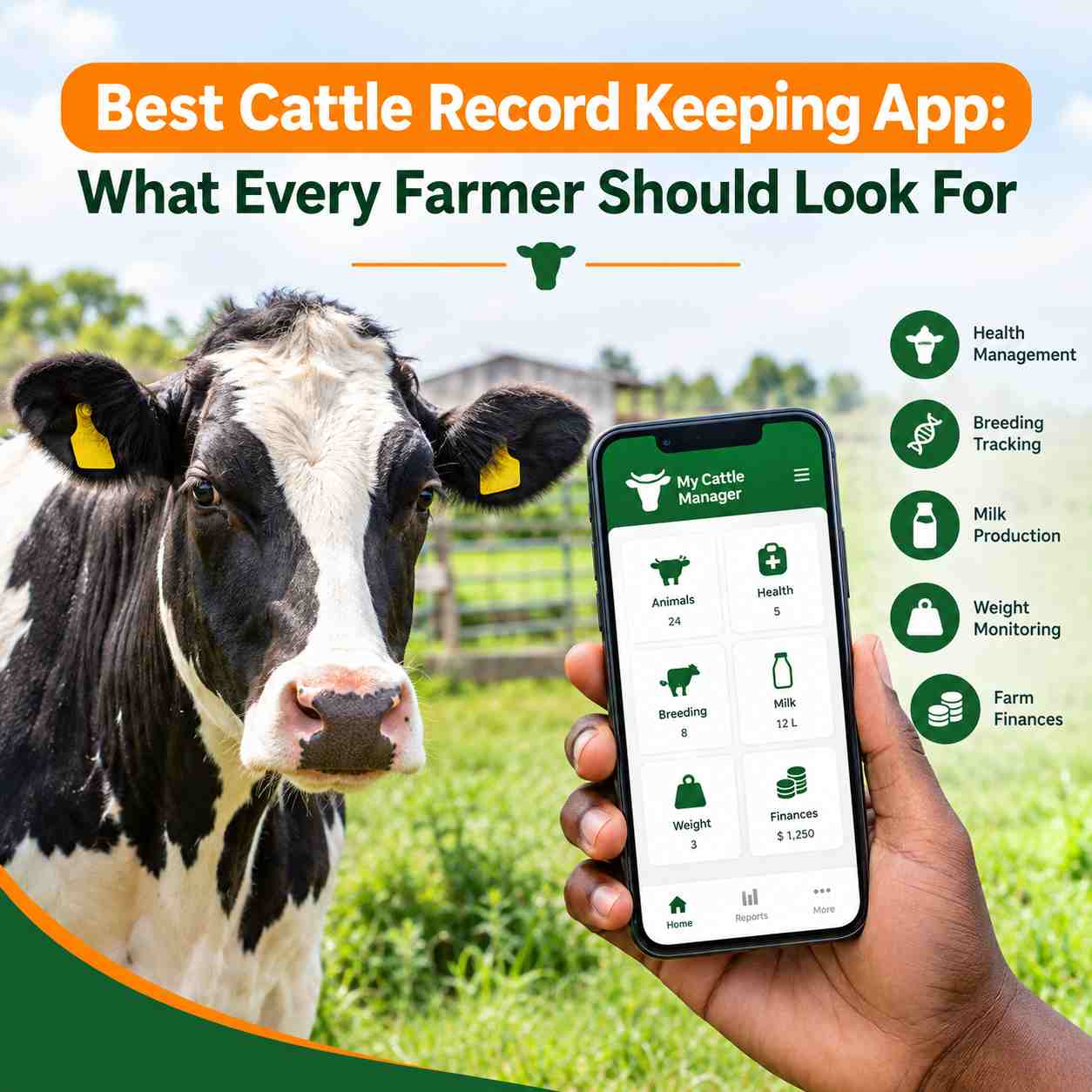
To make farm management easier, Bivatec developed My Cattle Manager, a cattle management app designed to help farmers organize their cattle records and manage important farm activities from their mobile devices. The app helps farmers keep track of individual animals, monitor health and breeding activities, record milk production and weight, manage farm finances, and generate useful reports.
With digital tools such as My Cattle Manager, farmers can spend less time searching through paper records and more time focusing on their animals and farm operations.
However, with several digital tools available, how do you choose the best cattle record keeping app for your farm?
A good app should do more than store information. It should help farmers maintain accurate records, monitor animal performance, manage daily activities, and make informed decisions that support farm productivity and profitability.
In this guide, we explore the essential features every farmer should look for when choosing a cattle record keeping app and how the right solution can improve farm management.
1. Individual Animal Identification and Record Management
Every animal on your farm has its own history, needs, and performance. A reliable cattle record keeping app should make it easy to identify each animal and maintain its individual records.
The app should allow farmers to register cattle using unique identification details such as tag numbers, names, breed, date of birth, sex, and other relevant information.
It should also provide a dedicated profile for every animal where farmers can access its records whenever needed.
For example, when checking a cow's profile, you should be able to see information such as:
- Animal identification number and name
- Breed and date of birth
- Current status and production stage
- Health and vaccination history
- Breeding and pregnancy records
- Milk production records
- Weight and growth history
- Events and important dates
Having all this information in one place makes it easier to monitor individual animals and understand their performance over time.
A good app should also support searching and filtering animals by different categories. This helps farmers quickly find specific cattle without manually checking the entire herd.
2. Health and Vaccination Management
Animal health is one of the most important factors influencing farm productivity and profitability.
A cattle record keeping app should help farmers maintain detailed health records for every animal, including vaccinations, treatments, illnesses, veterinary visits, and other health-related events.
These records help farmers understand the health history of their animals and identify recurring problems.
For example, if a cow has experienced repeated health issues, reviewing its previous treatment records can help the farmer and veterinarian understand what has happened and plan appropriate care.
The app should make it easy to record:
- Vaccination dates and types
- Treatments and medications administered
- Diseases or health conditions
- Veterinary visits
- Health observations
- Recovery and follow-up information
Keeping accurate health records can support better herd health management and help farmers maintain consistent care practices.
3. Breeding and Pregnancy Tracking
Breeding management is another essential feature to consider when choosing a cattle record keeping app.
For dairy and beef farmers, keeping track of breeding activities helps manage reproduction, plan for new calves, and monitor the performance of breeding animals.
A good app should allow farmers to record breeding events, including natural mating and artificial insemination.
It should also help track important reproductive information, such as:
- Breeding dates
- Bulls or semen used
- Pregnancy status
- Pregnancy examination results
- Expected calving dates
- Actual calving dates
- Previous breeding history
This information helps farmers follow the reproductive progress of their herd.
For example, when a cow is recorded as bred, the farmer can monitor its expected calving date and prepare for the arrival of the calf.
Having breeding information organized in one place makes it easier to plan herd replacement, monitor reproductive performance, and manage breeding activities more effectively.
4. Milk Production Tracking
For dairy farmers, milk production is a major source of income. Monitoring milk production helps farmers understand how individual cows perform and how the overall herd is progressing.
Farmers should be able to enter milk quantities for different milking sessions or production periods, depending on the app's capabilities.
Over time, these records can help farmers:
- Monitor daily milk production
- Compare production between cows
- Identify changes in milk output
- Track production trends
- Evaluate the performance of lactating cows
For example, if a cow's milk production suddenly decreases, the farmer can review its milk records alongside its health and breeding history to identify possible factors that need attention.
Accurate milk records also help farmers understand which animals contribute most to the farm's milk production.
5. Weight and Growth Monitoring
Monitoring cattle weight is important for farmers raising beef cattle, dairy replacements, and young animals.
A good cattle record keeping app should allow farmers to record animal weights at different stages of growth.
These records help farmers understand how animals are developing and whether they are meeting their expected growth targets.
Weight records can be useful when:
- Monitoring calf growth
- Evaluating feed management
- Preparing cattle for sale
- Assessing beef production performance
- Monitoring heifers before breeding
- Comparing growth between animals
For example, farmers can record a calf's weight at birth and update it during subsequent weighing sessions. Reviewing these records helps track its growth over time.
When weight records are maintained consistently, farmers can use them to make better decisions about feeding, breeding, and animal selection.
6. Financial Management and Farm Expenses
Successful cattle farming requires more than managing animals. Farmers need to understand how much their farm spends and how much income it generates.
A cattle record keeping app should provide tools for recording farm income and expenses.
Common farm expenses include:
- Animal purchases
- Feed and supplements
- Veterinary services
- Medicines and vaccinations
- Labour
- Transport
- Equipment and supplies
Farm income may come from milk sales, cattle sales, manure, breeding services, and other farm activities.
By recording these transactions, farmers can monitor their farm's financial performance and understand where money is being spent.
For example, if feed costs increase significantly over several months, farmers can review their expenses and investigate ways to improve feed management.
Financial records also help farmers evaluate whether their cattle operation is generating sufficient income to cover its costs.
7. Reports and Data Export
A good cattle record keeping app should make farm information easy to review and use.
Instead of relying on individual records, farmers should be able to generate reports that summarize important farm activities.
Useful reports may include:
- Breeding reports
- Pregnancy reports
- Calving reports
- Milk production reports
- Weight reports
- Health and event reports
- Income and expense reports
Reports help farmers identify patterns, compare performance, and understand what is happening across the herd.
For example, a breeding report can help farmers review breeding activities and monitor reproductive progress.
A milk production report can help dairy farmers compare production across different cows or periods.
Look for an app that supports exporting reports into formats such as PDF, Excel, or CSV. Exporting records makes it easier to share information with farm managers, veterinarians, accountants, and other stakeholders.
8. Easy to Use on Mobile Devices
Farmers often work in different areas of the farm throughout the day. They may need to record information while feeding animals, checking cattle, milking, or carrying out health activities.
A cattle record keeping app should be simple and convenient to use on a smartphone.
The interface should make it easy to add animals, update records, search for cattle, and access important information without navigating through complicated menus.
A user-friendly app saves time and encourages farmers to maintain accurate records consistently.
When choosing an app, consider whether it supports the devices you use and whether its features are suitable for your farm's daily activities.
9. Web Access and Multi-User Support
As cattle farms grow, more than one person may be involved in managing farm operations.
A farm manager, veterinarian, worker, or owner may need access to different types of farm information.
A cattle record keeping app with web access and multi-user support can make farm management more convenient.
Web access allows farmers to work with their farm records from a computer or laptop, which can be useful when reviewing reports, managing data, or performing administrative tasks.
Multi-user support allows different people to access the same farm account, depending on their assigned permissions.
This can help improve coordination between farm workers and managers while keeping farm information organized.
Before subscribing, check whether the app supports multiple users, whether different roles or permissions are available, and whether web access is included in the subscription.
10. Data Security, Backup, and Synchronization
Farm records are valuable. Losing important information about animal health, breeding, production, or finances can create serious management challenges.
A good cattle record keeping app should provide reliable data storage, synchronization, and backup options.
These features help farmers keep their records available across supported devices and reduce the risk of losing information.
Before choosing an app, consider how it handles:
- Data synchronization
- Record storage
- Account access
- Backup and recovery
- Device changes
Farmers should also understand how their records are managed and what happens when they change devices or lose access to a phone.
Choosing an app with reliable data management features helps protect the information that farmers have collected over time.
11. Farm Insights and Decision-Making
The best cattle record keeping app should do more than store information. It should help farmers use their records to make better decisions.
Farm insights can help farmers identify upcoming activities, monitor important dates, and understand their herd's progress.
For example, farmers may need to know:
- Which cows are approaching their expected calving dates?
- Which animals have upcoming health events?
- Which cows are currently lactating?
- Which cattle have recently been bred?
- Which animals have missing weight records?
Having access to this information makes farm planning easier and helps farmers manage their daily activities more efficiently.
When choosing an app, look for features that turn farm records into useful information rather than simply providing a place to enter data.
12. Choose an App Designed for Your Type of Farm
Not every cattle farm has the same needs.
A dairy farmer may focus on milk production, breeding, and lactation management.
A beef farmer may prioritize weight tracking, growth, breeding, and cattle sales.
A mixed cattle operation may need a combination of these features.
The best cattle record keeping app is one that supports the activities you perform most often on your farm.
Before choosing an app, consider your herd size, farm goals, daily management activities, and the type of records you need to maintain.
It is also helpful to review the available subscription plans and determine whether the app provides good value for your farm.
Manage Your Herd with My Cattle Manager
If you are looking for a practical way to organize your cattle records, My Cattle Manager by Bivatec is designed to help farmers manage important cattle farming activities from their mobile devices.
The app helps farmers keep records of individual animals and manage information related to health, breeding, milk production, weight, events, and farm finances.
With My Cattle Manager, farmers can:
- Register and manage individual cattle records
- Track breeding activities and pregnancies
- Record calving and other important events
- Monitor milk production
- Record cattle weights
- Manage farm income and expenses
- Generate reports for different farm activities
- Review upcoming farm events and important dates
The app also provides a web version for farmers who prefer managing their farm records from a computer.
By keeping important farm information organized, My Cattle Manager helps farmers spend less time searching for records and more time focusing on their animals and farm operations.
Conclusion
Choosing the best cattle record keeping app can make farm management easier, more organized, and more efficient. With features for tracking animal health, breeding, milk production, weight, and finances, farmers can make informed decisions and improve herd productivity.
My Cattle Manager helps farmers keep their cattle records in one place, monitor farm activities, and manage their herds with confidence.
Start simplifying your cattle management today with My Cattle Manager and take a step toward a more productive and profitable farm.
