Why Bulls Lose Libido: Causes, Signs, and Proven Solutions for Better Fertility.
Farming made easy, efficient, and stress-free. Take charge of your farm’s future. Start today!
Breeding efficiency in cattle farming depends heavily on the performance of bulls. A bull with a strong libido actively seeks out cows in heat and completes mating successfully, leading to higher conception rates and better herd productivity. When libido declines, even a genetically superior bull can fail to deliver expected results, causing missed breeding opportunities and economic setbacks.
Many farmers notice reduced mating activity and quickly assume infertility. In reality, low libido is often linked to manageable conditions such as nutrition, health status, environmental stress, or poor management practices. Identifying the root cause early allows for timely correction and recovery of reproductive performance.
This blog explains why bulls lose libido, how to recognize the warning signs, and the most effective ways to restore mating drive for consistent breeding success.
Understanding Libido in Bulls
Libido refers to a bull’s natural desire and ability to mate. It involves behavioral responses such as detecting cows in estrus, mounting, and completing mating. High libido ensures that cows are serviced at the right time, which is critical for achieving good conception rates.
Even when semen quality is normal, poor libido can limit reproductive success. Bulls with low mating drive may ignore cows in heat or fail to complete mating, leading to extended calving intervals and reduced herd productivity.
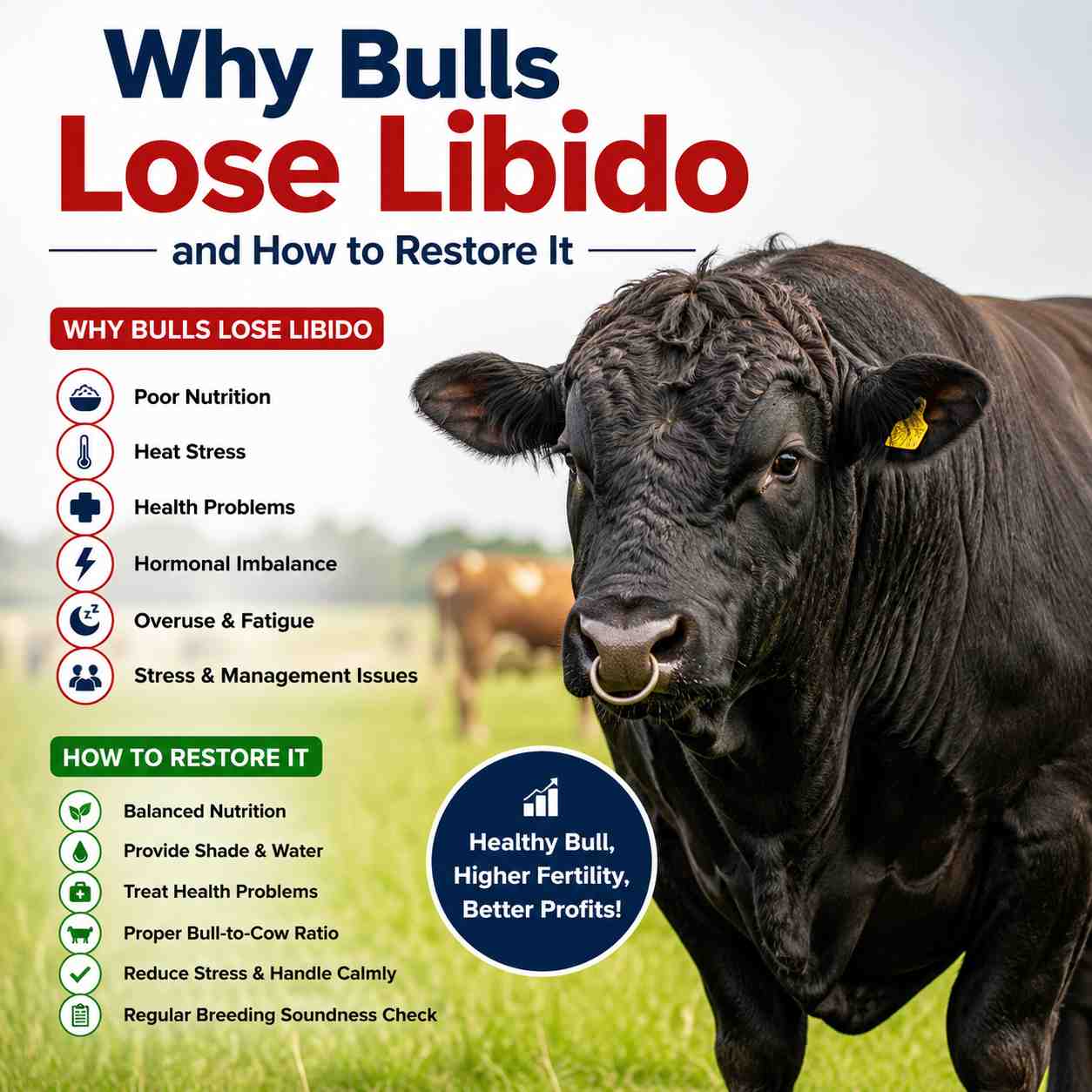
Why Bulls Lose Libido?
Nutritional Imbalance
Proper nutrition supports hormone production, energy levels, and physical fitness. Bulls require a diet that supplies adequate protein, energy, vitamins, and minerals.
Deficiencies in zinc, selenium, and phosphorus can interfere with testosterone production. Low energy intake weakens stamina, making bulls less active during breeding. Excess feeding may result in obesity, which reduces mobility and willingness to mate.
Poor pasture quality, irregular feeding schedules, and lack of mineral supplementation often contribute to reduced libido.
Poor Body Condition
Body condition score reflects the overall energy reserves of a bull. Animals that are too thin lack the strength needed for repeated mating. Overweight bulls often move slowly and tire quickly.
Maintaining a body condition score between 5 and 6 on a 9-point scale helps ensure that bulls remain active throughout the breeding season. Balanced condition supports endurance and mating efficiency.
Heat Stress and Environmental Pressure
High environmental temperatures can suppress sexual behavior. Heat stress affects hormone levels, reduces activity, and lowers semen quality.
Bulls exposed to extreme heat may spend more time resting and show little interest in cows. Lack of shade, poor ventilation, and overcrowded housing increase stress levels and reduce breeding performance.
Health Problems and Injuries
Health issues often lead to a drop in libido. Lameness is one of the most common causes, as pain discourages mounting. Injuries to the legs, hooves, or reproductive organs can limit movement and mating ability.
Diseases such as infections, parasitic infestations, and chronic illnesses drain energy and reduce sexual interest. Testicular problems may affect both libido and fertility.
Hormonal Disturbances
Testosterone drives sexual behavior in bulls. Any disruption in hormone production can reduce libido.
Young bulls may show inconsistent performance as they reach maturity. Older bulls may experience a gradual decline in hormone levels. Stress, illness, and poor nutrition can also interfere with hormonal balance.
Overuse During Breeding
Excessive workload can lead to fatigue. Bulls assigned to too many cows often become exhausted, leading to reduced mating interest over time.
Continuous breeding without rest reduces both physical capacity and willingness to mate. This is common in herds where bull-to-cow ratios are not properly managed.
Social Stress and Behavioral Issues
Bulls are sensitive to their social environment. Dominance conflicts can affect mating behavior, especially in multi-bull systems.
Subordinate bulls may avoid cows when dominant bulls are present. Frequent changes in grouping, transport stress, and unfamiliar surroundings can disrupt normal behavior and reduce libido.
Signs of Low Libido in Bulls
Low libido in bulls can be identified through a few key behavioral and physical changes. Bulls may show little or no interest in cows in heat and reduce or stop mounting activity. Some attempt to mate without success, leading to failed breeding.
They often become less active, spend more time resting, or isolate themselves from the herd. Changes in body condition, such as weight loss or excessive fat, can also affect mating drive. Lameness or any form of discomfort may prevent the bull from mounting.
Delayed response to estrus and reduced dominance behavior are also warning signs. Over time, poor conception rates and more cows returning to heat indicate a serious libido problem.
Early detection of these signs helps farmers take action quickly and maintain good breeding performance.
How to Restore Libido in Bulls
Improve Nutritional Management
A balanced diet is essential for restoring libido. Provide high-quality forage along with energy-rich concentrates to meet the bull’s demands.
Mineral supplementation should include zinc, selenium, and phosphorus to support hormone production and reproductive health. Consistent feeding routines help maintain stable energy levels.
Clean and sufficient water supply supports overall performance and prevents dehydration.
Maintain Optimal Body Condition
Regularly assess body condition and adjust feeding accordingly. Thin bulls should receive increased nutrition to rebuild strength. Overweight bulls benefit from controlled feeding and increased movement to improve fitness.
Maintaining proper condition ensures that bulls remain active and capable throughout the breeding period.
Reduce Heat Stress
Avoid overcrowding and provide access to water during hot periods. Cooling strategies help maintain activity levels and support normal reproductive behavior.
Address Health Issues Quickly
Routine health checks help identify problems early. Treat lameness immediately to restore mobility. Implement regular deworming programs to eliminate parasites.
Vaccination protects against infectious diseases that may affect reproductive performance. Seek veterinary evaluation for any signs of illness or injury.
Manage Breeding Workload
Ensure that bulls are not overworked. Assign an appropriate number of cows based on the bull’s age and condition.
Young bulls should handle fewer cows compared to mature ones. Rotating bulls during the breeding season allows rest and recovery, improving long-term performance.
Improve Handling and Reduce Stress
Maintain consistent routines and minimize sudden changes. Avoid unnecessary movement or transport during the breeding period.
Separate aggressive animals to prevent dominance issues. Calm handling encourages natural mating behavior and improves libido.
Conduct Breeding Soundness Evaluation
Regular breeding soundness exams assess physical condition, reproductive organs, and semen quality. These evaluations help identify underlying issues that may affect libido and fertility.
Early diagnosis allows for corrective measures before breeding performance declines further.
Long-Term Management for Sustained Libido
Sustaining libido requires year-round attention. Balanced nutrition, routine health care, and proper housing conditions support consistent reproductive performance.
Selecting bulls with strong fertility traits improves herd productivity over time. Keeping accurate records of breeding activity helps identify patterns and detect issues early.
A well-managed bull remains active, efficient, and capable of maintaining high conception rates across multiple breeding seasons.
Conclusion
Low libido in bulls can quietly reduce herd fertility and delay breeding progress, leading to economic losses over time. The issue is often linked to nutrition, body condition, health status, environmental stress, and workload. Careful observation and early identification of warning signs allow farmers to respond before the problem affects the entire herd.
Restoring libido requires a balanced feeding program, proper body condition management, reduced heat stress, and timely treatment of health issues. Ensuring that bulls are not overworked and maintaining a calm, stable environment support consistent breeding behavior.
Long-term success depends on routine management, regular health evaluations, and selecting bulls with strong reproductive traits. When these practices are followed, bulls remain active, efficient, and capable of delivering reliable breeding performance, helping farmers achieve better conception rates and improved herd productivity.
Join Our Community ()
Transform your farm into a well-oiled machine! Streamline tasks, save time, and focus on growth. Download now!
