Signs a Goat Is About to Give Birth: Complete Guide to Kidding Signs.
Stop struggling with paperwork and start farming with joy! Our apps make it simple. Take the first step today!
Goat kidding is one of the most important moments in any goat farming operation. Recognizing the early and late signs of labor helps farmers prepare the right environment, reduce stress on the doe, and increase the survival chances of both the mother and her kids. Missing these signs often leads to delayed assistance, weak newborns, or complications that could have been avoided with proper observation.
Every doe shows physical and behavioral changes as kidding approaches. Some signs appear weeks before delivery, while others occur only hours before labor begins. Understanding these signals allows farmers to act confidently and provide timely support. This guide explains each sign in detail, helping goat keepers recognize when kidding is near and how to respond correctly.
Understanding the Kidding Timeline
Goat pregnancy lasts about 145 to 155 days, depending on breed and nutrition. During the final month, hormonal changes prepare the body for birth. These changes affect the udder, ligaments, appetite, and behavior.
Tracking breeding dates gives a rough idea of when kidding may occur, yet physical signs remain the most reliable indicator. Close monitoring during the final two weeks helps prevent surprises and ensures that assistance is available when needed.
Udder Development and Filling
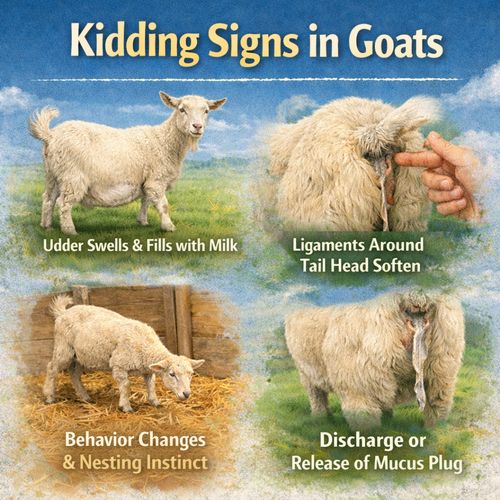
One of the earliest visible signs of approaching kidding is udder enlargement. The udder gradually fills with milk as delivery nears. In first-time does, this process may occur slowly over several weeks. In experienced does, udder filling can happen rapidly within days.
As kidding approaches, the udder becomes firm and tight. Teats appear swollen and shiny, often pointing outward. When the udder feels warm and full, birth is usually close. Clear or milky fluid may be released when the teats are gently squeezed, indicating readiness for lactation.
Changes in the Vulva and Tail Area
The vulva becomes swollen, elongated, and softer as kidding nears. This change occurs due to relaxing ligaments and increased blood flow to the birth canal. A clear or slightly cloudy mucus discharge may appear, signaling cervical dilation.
The ligaments on either side of the tail head loosen as delivery approaches. When these ligaments feel soft or nearly disappear, kidding often occurs within 12 to 24 hours. The tail may appear more raised or loose than usual.
Behavioral Changes in the Doe
Behavioral shifts are among the clearest signs that labor is near. A doe may separate herself from the herd, seek quiet corners, or appear restless. Some goats paw the ground, circle repeatedly, or lie down and stand up frequently.
Loss of appetite is common during the final hours before birth. Vocalization may increase, with soft bleating or groaning. Some does appear unusually affectionate toward their keeper, while others become distant or irritable.
Nesting and Isolation Behavior
As kidding approaches, many goats show nesting behavior. They may gather bedding, paw at the ground, or choose a clean, secluded area. This instinct helps create a safe environment for newborn kids.
Providing a clean kidding pen supports this natural behavior. Dry bedding, good ventilation, and minimal disturbance allow the doe to remain calm and focused during labor.
Discharge and Mucus Plug Release
The release of the mucus plug is a strong sign that kidding is close. This discharge appears as thick, stringy mucus hanging from the vulva or found on bedding. It indicates that the cervix is opening in preparation for delivery.
Once this discharge appears, labor may begin within a few hours or up to a day. Close monitoring during this stage is essential to ensure timely assistance if complications arise.
Restlessness and Repeated Position Changes
During early labor, goats often show restlessness. They may repeatedly lie down, get up, stretch, or kick at their belly. This behavior reflects uterine contractions and discomfort as the body prepares for delivery.
Grinding of teeth, soft bleating, or heavy breathing may occur. These signs indicate that active labor is approaching and that kidding is likely to happen soon.
Visible Contractions and Water Bag Appearance
As labor progresses, abdominal contractions become visible. The doe may push while lying down or standing. Shortly after, the water bag appears at the vulva. This clear, fluid-filled sac signals that delivery is imminent.
Once the water bag breaks, kids usually arrive within 30 to 60 minutes. If strong pushing continues without progress, intervention may be required.
Importance of Monitoring During Kidding
Close supervision during labor helps prevent losses. Normal deliveries progress smoothly, with the kid presenting front feet first, followed by the head. Delays, incorrect positioning, or prolonged pushing may require assistance.
Keeping clean gloves, lubricant, towels, and iodine ready helps manage emergencies. Calling a veterinarian early in difficult cases improves outcomes for both the doe and kids.
Post-Kidding Signs to Watch
After kidding, close observation of both the doe and her kids is essential to ensure proper recovery and early detection of problems. A healthy doe usually becomes calm and attentive to her newborns shortly after delivery. She should begin licking the kids to stimulate breathing and circulation, which also helps strengthen bonding. This behavior is a positive sign that maternal instincts are strong.
The placenta should pass naturally within a few hours after birth. A delay beyond 12 hours may indicate a retained placenta, which can lead to infection if not addressed. Mild discharge is normal during the first day, yet foul-smelling or excessive discharge signals a possible uterine infection and requires veterinary attention.
The doe’s appetite should gradually return within a few hours. She may drink water eagerly and begin eating hay or feed. Refusal to eat, weakness, fever, or depression may point to metabolic issues such as milk fever or infection. Monitoring body temperature during the first day helps detect early health concerns.
Kids should attempt to stand and nurse within the first hour after birth. Strong suckling ensures they receive colostrum, which provides essential antibodies and energy. Weakness, failure to nurse, or constant crying are warning signs that require immediate intervention. The navel area should be clean and dry to prevent infections such as navel ill.
Observation during the first 24 to 48 hours is critical. Any signs of lethargy, diarrhea, swollen udders, or abnormal behavior should be addressed promptly. Early detection and quick response greatly improve survival rates and support healthy growth during the critical first weeks of life.
Why Accurate Record Keeping Matters
Recording breeding dates, expected kidding dates, and observed signs improves future management. Tracking these details helps predict labor patterns and identify problem does.
Using tools like My Goat Manager allows farmers to log breeding data, monitor pregnancy stages, record kidding outcomes, and receive reminders. Organized records improve decision-making and help reduce losses during the kidding season.
Conclusion
Recognizing the signs that a goat is about to give birth plays a major role in successful kidding. Changes in udder size, vulva appearance, behavior, and appetite provide clear clues that labor is approaching. Close observation, clean facilities, and timely assistance protect both the doe and her kids.
Prepared farmers experience fewer losses, healthier newborns, and smoother kidding seasons. By understanding these signs and acting early, goat keepers can create a safer environment and improve overall herd productivity year after year.
Join Our Community ()
A happier, more productive farm is just a click away. Take charge and simplify with our apps today!
