How to Handle Aggressive Goats Safely on the Farm: Causes, Signs, and Solutions.
End the chaos on your farm! Our apps handle the paperwork so you can focus on what truly matters. Start today!
Goats are generally calm and easy to manage, though some can become aggressive under certain conditions. Aggressive behavior can lead to injuries, stress within the herd, and challenges in daily farm work. Farmers who understand how to manage such behavior can protect themselves and maintain a safer environment.
Handling aggressive goats requires patience, awareness, and proper techniques. By identifying the causes and taking preventive steps, farmers can reduce risks and manage their animals more effectively.
Why Do Goats Become Aggressive?
Goats become aggressive due to a mix of natural instincts and environmental conditions. One of the most common causes is the breeding season, especially in bucks. During this period, hormone levels increase, which makes them more territorial and likely to challenge both other goats and humans.
Fear causes aggressive behavior. Goats that feel threatened or stressed may react by headbutting or charging as a way to protect themselves. Sudden movements, loud noises, or rough handling can increase this reaction.
Competition within the herd can also lead to aggression. When goats do not have enough space or access to feed, they may fight to establish dominance. This behavior is more common in overcrowded conditions or when resources are limited.
Lack of early handling can make goats less comfortable around humans. Goats that are not used to human contact may react aggressively when approached. Regular and calm interaction from a young age helps reduce this behavior.
Poor management practices can increase stress levels, which leads to aggression. Sudden changes in environment, mixing unfamiliar goats, or irregular feeding routines can disturb the herd and cause tension. Proper management helps maintain calm behavior and reduces aggressive tendencies.
Signs of Aggressive Behavior in Goats
Aggressive goats often show clear body language before they act. One common sign is lowering the head while staring directly at a person or another goat. This posture usually means the goat is preparing to charge or headbutt.
Pawing the ground. The goat may scrape the ground with its front legs while keeping its focus on a target. This behavior shows rising tension and should be taken seriously.
Goats may also show repeated headbutting or pushing. They can test strength by nudging or striking, especially when trying to establish dominance. If directed at humans, this behavior can become dangerous.
Loud vocalization and sudden movements can indicate agitation. A goat may bleat more than usual or move quickly in a restless manner when it feels stressed or threatened.
Some goats display dominance by blocking paths or refusing to move when approached. They may stand their ground and challenge movement, showing they are trying to control space.
Recognizing these signs early helps prevent injury. Acting quickly and calmly when these behaviors appear can reduce the risk of a full aggressive attack.
Safety Precautions When Handling Aggressive Goats
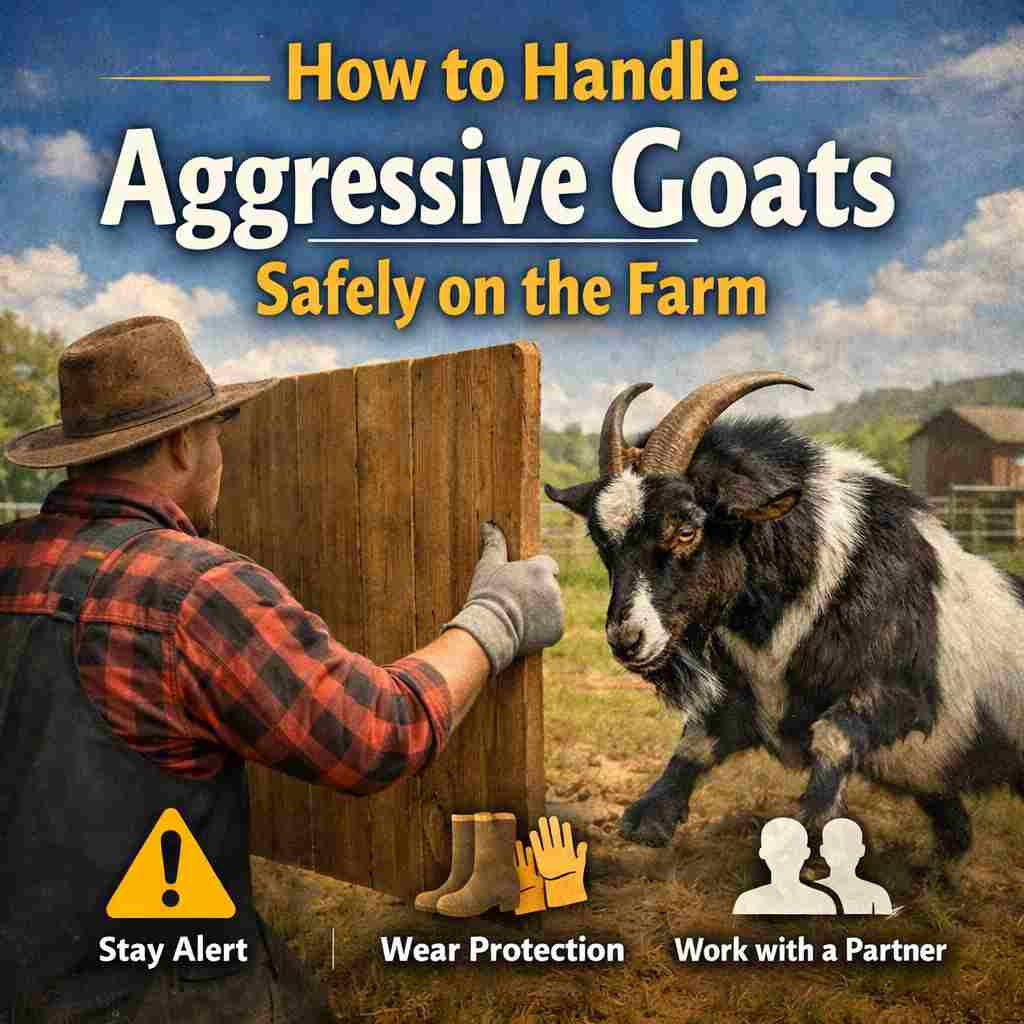
Handling aggressive goats requires a strong focus on safety to prevent injuries. Farmers should always stay alert and aware of the goat’s behavior. Avoid turning your back on a goat that shows signs of aggression, as this increases the risk of being attacked unexpectedly.
Maintaining a safe distance is important. Standing too close can trigger a defensive or dominant response. Position yourself to the side rather than directly in front of the goat, as this reduces the chance of being hit if it charges.
Wearing protective clothing such as strong boots and gloves helps reduce the risk of injury. Proper footwear provides better grip and stability, which is important when working around active or aggressive animals.
Working with a second person can make handling easier and safer. One person can guide the goat while the other maintains control or provides support if needed. This approach helps manage difficult situations more effectively.
Avoid sudden movements or loud noises, as these can provoke aggressive reactions. Calm and controlled actions help keep the goat from becoming more agitated and reduce the chance of escalation.
Using barriers such as boards or panels can create a safe space between you and the goat. These tools help guide the animal without direct contact and provide protection if the goat attempts to charge.
Planning your movements before approaching the goat helps prevent confusion and panic. Knowing where to stand and how to move allows for better control and reduces the risk of accidents
Proper Handling Techniques
Handling aggressive goats requires a calm and confident approach. Moving slowly and avoiding sudden actions helps prevent the goat from feeling threatened. When a goat senses fear or panic, it may become more aggressive, so staying composed is important.
Positioning yourself correctly reduces the risk of injury. It is safer to stand to the side of the goat rather than directly in front. This lowers the chance of being hit if the goat attempts to charge or headbutt.
Using a barrier such as a board, stick, or panel helps create space between you and the goat. This allows you to guide the animal without direct contact while protecting yourself from sudden attacks. The goal is to control movement, not to harm the goat.
Guiding the goat gently is more effective than forcing it. Applying too much pressure can increase resistance and aggression. Slow and steady handling helps the goat remain calm and easier to manage.
Proper restraint may be needed during treatment or movement. Holding the goat securely or using a pen or chute can prevent sudden movements and reduce the risk of injury to both the handler and the animal.
Consistency in handling builds trust over time. Goats that are handled regularly in a calm manner become easier to manage. Repeated gentle interaction helps reduce aggressive behavior and improves overall control.
Managing Aggression in Bucks
Bucks are more likely to show aggressive behavior, especially during the breeding season. Keeping a safe distance and avoiding unnecessary contact during this period is important.
Providing separate housing for aggressive bucks helps reduce conflicts. Limiting direct interaction and handling them only when needed can lower the risk of injury.
Consistent management helps control aggressive tendencies over time. Proper care and routine handling from a young age can improve behavior.
Reducing Aggression Through Management
Good farm management helps prevent aggressive behavior. Providing enough space reduces competition and stress among goats. Adequate feeding areas ensure that all animals have access to food without fighting.
Regular handling from a young age helps goats become familiar with human interaction. Calm and gentle handling builds trust and reduces fear-based aggression.
Maintaining a stable environment also helps. Sudden changes in housing, feeding, or grouping can increase stress and lead to aggressive behavior.
When to Separate or Remove Aggressive Goats
Some goats may remain aggressive despite good management. In such cases, separating them from the herd may be necessary to prevent injuries.
If a goat continues to pose a risk, culling may be considered as a last option. Keeping highly aggressive animals can endanger both people and other goats on the farm.
Making timely decisions helps maintain safety and protects the overall herd.
Common Mistakes Farmers Make
Ignoring early signs of aggression is a common mistake. Small warning signs can quickly develop into serious problems if not addressed.
Using force or harsh handling can make goats more aggressive. Gentle and consistent handling is more effective in managing behavior.
Overcrowding and poor feeding management can increase aggression. Providing enough space and resources helps reduce conflicts within the herd.
Conclusion
Handling aggressive goats safely requires understanding their behavior and taking the right precautions. Recognizing warning signs, using proper handling techniques, and maintaining good management practices help reduce risks on the farm.
Farmers who stay alert and manage their goats carefully can create a safer working environment. With patience and consistent care, aggressive behavior can be controlled, leading to better herd management and improved farm safety.
Join Our Community ()
Empower your farm and your life! Simplify tasks, save time, and grow smarter. Download our apps today!
