Goat Nutrition During Late Pregnancy: What to Feed.
Unlock your farm’s full potential! Say goodbye to stress and hello to efficiency. Download now!
Feeding goats correctly during late pregnancy is essential for ensuring healthy kids, smooth kidding, and strong milk production after birth. As a doe approaches the final stage of gestation, her body undergoes rapid changes that increase the demand for nutrients. This period determines the strength of the newborn kids and the future productivity of the doe.
Many farmers continue feeding the same ration used earlier in pregnancy, which can lead to poor outcomes such as weak kids, low birth weights, and reduced milk yield. Understanding what to feed during late pregnancy helps improve reproductive success and supports a more efficient goat farming system.
What Happens During Late Pregnancy in Goats
Late pregnancy in goats usually refers to the last six to eight weeks before kidding. During this stage, the unborn kids grow rapidly and gain most of their final birth weight. The doe’s body shifts its focus toward supporting fetal growth while preparing for milk production.
As the kids grow, they occupy more space in the abdomen, which reduces the capacity of the rumen. This can limit feed intake, even though the doe requires more nutrients than before. Because of this, feeding nutrient-dense diets becomes essential to meet her needs without relying on large volumes of feed.
Energy Requirements in Late Pregnancy
Energy is needed to maintain the doe’s body condition and support the rapid development of the kids. If the doe does not receive enough energy, she may lose weight, leading to weak kids and poor milk production after kidding.
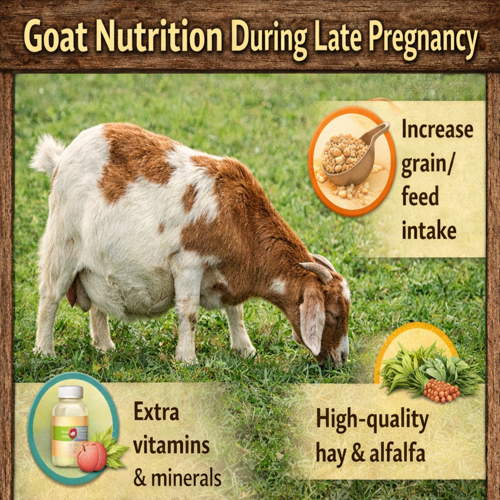
High-quality forage such as good hay should form the base of the diet. To meet the increased energy demand, farmers can introduce moderate amounts of concentrates like maize or barley. These feeds provide extra energy and help maintain the doe’s strength during this demanding period.
Overfeeding energy should be avoided, as it can lead to overweight does, which increases the risk of kidding difficulties and metabolic problems.
Protein Needs for Healthy Kid Development
Protein is essential for the growth of muscles, organs, and tissues in developing kids. A deficiency in protein can result in low birth weight and weaker offspring.
Feeds such as legume hay, oilseed cakes, and formulated concentrates can provide the required protein. Ensuring a steady supply of good-quality protein helps the doe maintain her condition while supporting proper fetal development.
Importance of Minerals and Vitamins
Minerals and vitamins are critical during late pregnancy. Calcium and phosphorus are required for bone formation in the kids and preparation for milk production in the doe. An imbalance can lead to serious conditions such as milk fever.
Trace minerals like selenium and zinc support immunity and reproductive health. A lack of these nutrients can result in weak kids and complications after kidding.
Vitamins A, D, and E are equally important. They support growth, improve immune response, and help prevent deficiencies that could affect both the doe and her kids. Providing a mineral supplement ensures consistent intake of these nutrients.
Best Feeds for Goats in Late Pregnancy
Providing the right feeds during late pregnancy is essential to support rapid fetal growth, prepare the doe for kidding, and ensure good milk production after birth. At this stage, the focus should be on nutrient-dense, easily digestible feeds since rumen space is reduced as the kids grow.
High-quality forage should form the foundation of the diet. Good hay, especially legume hay such as alfalfa, is highly recommended because it supplies both protein and calcium. Clean, leafy forage improves intake and supports rumen health, which is critical during late pregnancy.
Concentrates are important to meet the increased energy and protein demands. Grains like maize, barley, or oats can be included in moderate amounts, along with formulated goat concentrates if available. These feeds help maintain body condition and provide the extra nutrients needed for developing kids. The quantity should be adjusted based on the doe’s condition and the number of fetuses she is carrying.
Protein-rich supplements such as oilseed cakes can be added to improve fetal growth and support the doe’s overall strength. These feeds are especially useful when forage quality is not sufficient to meet protein requirements.
Mineral supplementation is essential during this period. Providing a balanced mineral mix ensures adequate intake of calcium, phosphorus, and trace minerals, which are necessary for bone development, immune function, and preparation for lactation.
Fresh, clean water must always be available. Water intake increases during late pregnancy, and it supports digestion, nutrient absorption, and overall health.
Feeding a combination of high-quality forage, controlled concentrates, protein supplements, and essential minerals ensures that pregnant does remain healthy, kid successfully, and produce strong, healthy offspring.
Managing Body Condition in Pregnant Does
Managing body condition in pregnant does is essential for ensuring smooth kidding, healthy kids, and strong milk production. A doe should enter late pregnancy in moderate condition, where she has enough body reserves to support fetal growth without being overly fat. If she is too thin, she may lack the energy needed for pregnancy and kidding, which can result in weak kids and low milk yield. If she is overweight, the risk of kidding difficulties and metabolic problems increases.
Regular observation of body condition helps farmers make timely feeding adjustments. A healthy doe should have a smooth body outline, with ribs not sharply visible and no excessive fat deposits around the tail head or brisket. Monitoring these physical signs allows early correction through diet changes.
Feeding should be adjusted based on the doe’s condition. Thin does require more energy-dense feeds such as quality forage and moderate concentrates to rebuild body reserves. Does in good condition should receive a balanced ration that maintains their weight without causing excess fat gain. Over-conditioned does may need controlled feeding to avoid complications during kidding.
Late pregnancy is not the ideal time for drastic weight gain or loss. Gradual and consistent feeding ensures the doe remains stable and prepared for kidding. Providing adequate minerals and clean water supports overall health and helps maintain proper body condition.
Careful management of body condition during pregnancy leads to easier kidding, healthier kids, and better milk production. It also supports faster recovery after birth and improves the doe’s performance in future breeding cycles.
Common Feeding Mistakes to Avoid
One common mistake is underfeeding, which leads to weak kids and poor milk production. Some farmers assume that feeding less will make kidding easier, which often results in negative outcomes.
Overfeeding concentrates can cause excessive weight gain and increase the risk of metabolic disorders. Balanced feeding is necessary to avoid these problems.
Poor-quality forage limits nutrient intake and reduces overall performance. Sudden changes in diet can disrupt digestion and reduce feed intake. Lack of mineral supplementation can also lead to deficiencies that affect both the doe and her kids.
Practical Feeding Strategies for Farmers
Planning a balanced ration helps meet the nutritional needs of pregnant does. Providing smaller, frequent meals can help maintain intake when rumen capacity is reduced.
Gradual introduction of concentrates helps the doe adapt to dietary changes and reduces digestive stress. Monitoring body condition regularly allows farmers to make timely adjustments to feeding programs.
Maintaining a consistent feeding routine and reducing stress in the environment helps improve feed intake and overall health. A calm and well-managed environment supports better reproductive outcomes.
Benefits of Proper Nutrition During Late Pregnancy
Proper nutrition during late pregnancy in goats leads to the birth of strong and healthy kids, as the developing fetus receives the nutrients needed for proper growth. This results in better birth weights, improved immunity, and higher survival rates, which are essential for a productive herd.
Well-fed does are better prepared for kidding, which reduces the risk of complications such as difficult births and retained placenta. A doe in good condition recovers faster after delivery and is able to care for her kids more effectively.
Adequate nutrition supports better milk production after kidding. When the doe enters lactation with sufficient body reserves, she can produce enough milk to support the early growth and development of her kids.
Good feeding during this stage helps prevent metabolic disorders such as pregnancy toxemia and mineral deficiencies. Providing a balanced diet ensures that the doe’s body functions properly during this demanding period.
Proper nutrition also improves future reproductive performance. Does that are well-managed during late pregnancy return to heat more efficiently and have better chances of successful breeding in the next cycle.
Overall, feeding goats correctly during late pregnancy improves herd performance, increases productivity, and supports a more sustainable and profitable goat farming system.
Conclusion
Feeding goats correctly during late pregnancy is essential for ensuring healthy kids, smooth kidding, and strong milk production. A balanced diet that includes adequate energy, protein, minerals, and vitamins supports fetal growth and prepares the doe for the demands of lactation.
Careful feeding, regular monitoring, and proper management during this stage lead to better outcomes for both the doe and her kids. By focusing on nutrition during late pregnancy, farmers can improve herd productivity, reduce health risks, and build a more sustainable goat farming system.
Join Our Community ()
Stop struggling with paperwork and start farming with joy! Our apps make it simple. Take the first step today!
